DAWA ZANGMO | Thimphu
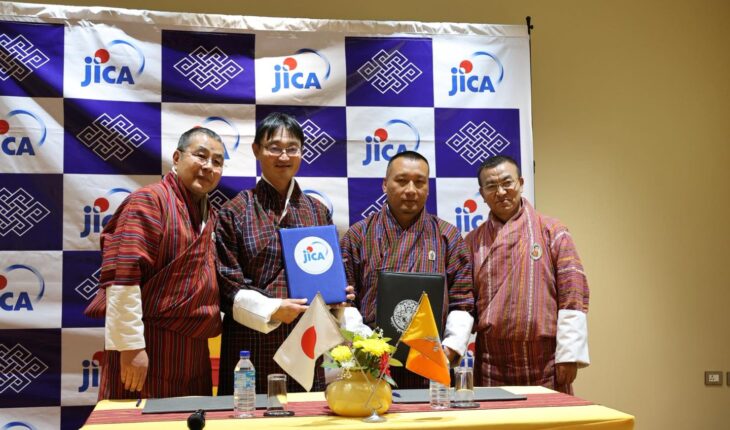
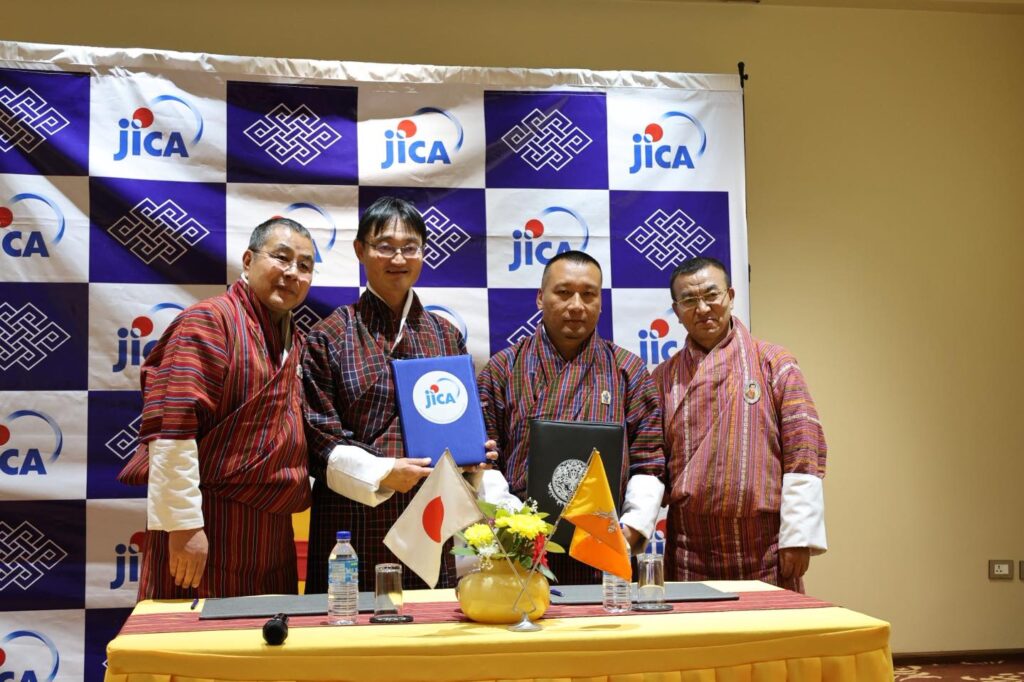
Bhutan’s healthcare system is set to receive a major upgrade with Japan extending a 600 million Yen (approximately Nu 345 million) grant aimed at improving essential diagnostic services and emergency medical response. The agreement was formalized on December 2, 2025, in Thimphu between the Department of Macro-Fiscal and Development Finance under the Ministry of Finance and the Japan International Cooperation Agency (JICA) Bhutan Office.
The support is intended to address significant gaps in medical diagnostics and emergency care while reducing waiting time for patients and enhancing early detection and treatment of non-communicable diseases. As part of the initiative, the grant will finance the procurement of a Magnetic Resonance Imaging (MRI) machine and a Computed Tomography (CT) scanner for the Jigme Dorji Wangchuck National Referral Hospital (JDWNRH). In addition, five fully equipped ambulances will be provided to strengthen emergency medical services across the country.
The ambulances will be stationed in Thimphu, Paro, Punakha, and Nganglam in Pemagatshel, where improved emergency transportation is expected to support timely evacuation and better access to urgent care, particularly in remote areas.
Director General of the Department of Macro-Fiscal and Development Finance, Tshering Dorji, and JICA Bhutan Chief Representative, Yoichiro Kimata, signed the agreement on behalf of their respective institutions. During the ceremony, Finance Minister Lekey Dorji and Health Minister Tandin Wangchuk expressed Bhutan’s appreciation for Japan’s continued support to the country’s health sector.
According to officials, the introduction of the new MRI and CT machines is expected to significantly expand JDWNRH’s diagnostic capabilities. The hospital has been experiencing a growing patient load and operating with ageing equipment, leading to delays in diagnosis and treatment. The upgraded machines are expected to ease these challenges and provide more reliable and timely diagnostic services.
The initiative forms part of Japan’s wider development cooperation framework for Bhutan, which emphasizes self-reliant and sustainable national development with a focus on balanced growth between rural and urban areas. JICA’s cooperation strategy for Bhutan prioritizes inclusive economic development, improved resilience, and strengthened social services, particularly in the health sector.
Japan has consistently been one of Bhutan’s key partners in advancing healthcare infrastructure. Over the years, JICA has supported multiple initiatives aimed at improving diagnostic services, emergency response, and overall health system preparedness in the country. Between 2011 and 2016, Japan funded the replacement of 55 ambulances in two phases under the Ambulance Replacement Project, contributing a total of 333 million Yen. These ambulances helped the health system improve patient transport and emergency care across various districts.
Further strengthening Bhutan’s diagnostic capacity, JICA provided three CT scanners, X-ray machines, and a digital mammography unit worth 551 million Yen to referral hospitals in Thimphu, Gelephu, and Mongar during the 2017–2018 financial year. The equipment modernized diagnostic services and enhanced the detection of various health conditions, including cancer and trauma-related injuries.
The newly signed grant builds on this longstanding cooperation and falls under JICA’s Improving Social Services programme, which aligns with Bhutan’s ongoing efforts to enhance healthcare delivery and public health infrastructure.
In addition to the latest grant, Japan is currently supporting two major health projects in Bhutan. The first is a 3.75 billion Yen initiative to construct the Royal Centre for Infectious Diseases in Gidakom, Thimphu. Once completed, the facility will house 80 beds, with the capacity to increase to 100 during emergencies.
It will also include Bhutan’s first and only negative pressure chamber, a facility designed to prevent the spread of airborne infections. This centre is expected to significantly enhance the nation’s preparedness for future pandemics and improve its ability to manage infectious disease outbreaks.
The second ongoing project is the 535 million Yen “Project for Strengthening Health Care Services in the Eastern Area.” This initiative focuses on improving maternal and child health services in six eastern dzongkhags by supplying two X-ray machines, six ultrasound systems, and 16 infant warmers. These additions aim to bolster essential healthcare access in regions that continue to face service shortages and logistical challenges.
Chief representative of JICA Yiochiro Kimata note that the collective enhancements ranging from advanced diagnostic machines to emergency transport and upgraded health facilities are expected to reduce medical referrals to larger hospitals, cut down on waiting times, and improve overall service delivery. Strengthened diagnostic abilities and emergency response are also anticipated to contribute to Bhutan’s long-term objective of ensuring equitable and accessible healthcare for all citizens.
The collaboration between Bhutan and Japan continues to extend beyond the health sector, covering infrastructure development, agriculture, governance, and social services. The consistency and breadth of Japan’s support underscore the strong bilateral ties shared by the two countries.
With the newest grant now formalized, Bhutan’s health authorities are preparing for the procurement and deployment of the machines and ambulances. The improvements, officials emphasize, will play a crucial role in addressing existing service gaps and supporting the country’s broader goals for a more robust and responsive healthcare system.