TIL BDR GHALLEY | Thimphu
The Economic Stimulus Programme (ESP) under Bhutan’s 13th Five Year Plan (FYP) has recorded an overall fund utilisation rate of 61.21 percent as of October 31, 2025.
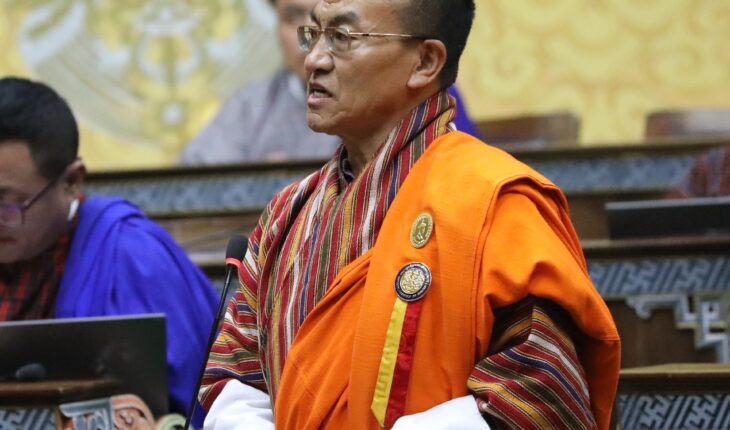
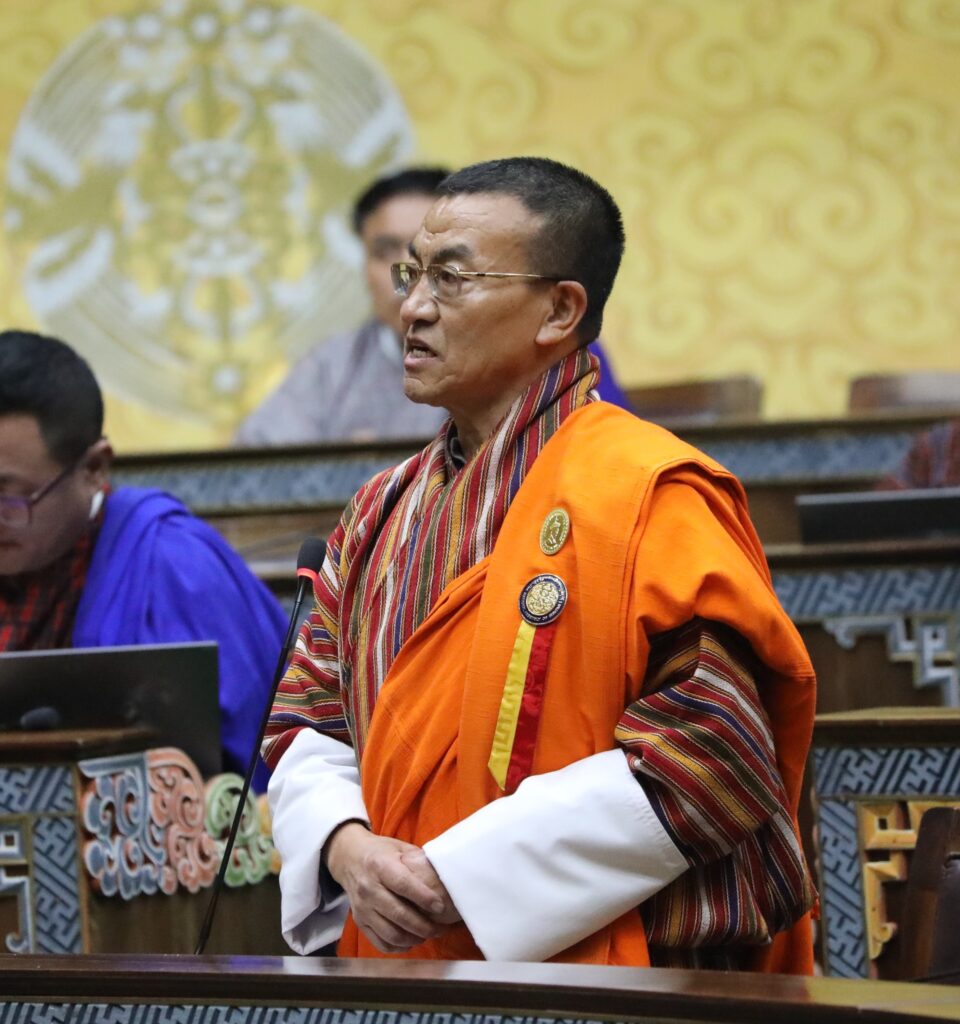
The finance minister Lyonpo Lekey Dorji provided updated details on the status of the Nu 15 billion ESP fund, including allocations, expenditure, implementation progress, and beneficiary coverage.
Answering a query from Bartsham – Shongphu MP Rinchen Wangdi on the questions related to 13th Five Year plan, the minister said that of the total ESP allocation of Nu 15,000 million, the Government of India (GoI) has released Nu 10,000 million so far. From the total fund, Nu 14,960.987 million has been fully allocated to implementing agencies and financial institutions.
As of October 31, 2025, total expenditure under the ESP stood at Nu 7,298.556 million, translating to a utilisation rate of 61.21 percent.
From the total ESP fund, Nu 3,300 million has been allocated for concessional credit facilities, while Nu 2,000 million has been earmarked for the Business Reinvigoration Fund. The remaining allocations support multiple sectoral interventions, including agriculture, tourism, youth engagement, skills development, education loans, and insurance coverage for crops and livestock.
Under the concessional credit loan scheme implemented by the Bhutan Development Bank Limited (BDBL), a total of 3,969 applications were received. As of October 28, 2025, 2,314 applications were approved, amounting to Nu 3,109.6 million. Of this approved amount, Nu 1,825.36 million has been disbursed to 2,171 approved accounts.
The finance minister informed the House that all applications under the concessional credit scheme have been assessed, and loan disbursements are being carried out in a phased manner based on the progress of approved projects.
Under the Business Reinvigoration Fund, a total of 278 applications were submitted through seven participating financial institutions. Of these, 144 applications were approved, with an interest subsidy amounting to Nu 500.4 million to be provided over the next three years.
As of June 2025, Nu 92.09 million has been disbursed as interest subsidy under the reinvigoration fund.
Under the Price Guarantee Scheme (PGS), 1,927 farmers were engaged in the production of six priority crops: rice, maize, wheat, quinoa, peanut and soyabean. In addition, 96 farmers were engaged in the production of pork and chicken.
The ESP also includes support for the National Crop and Livestock Insurance Scheme, with Nu 800 million allocated from the ESP fund. The scheme will pilot four crops—rice, maize, potato and ginger—and three livestock commodities: piggery, poultry and cattle.
The insurance premium for crops is set at five percent per annum, while the premium stands at 10 percent for cattle and 6 percent for piggery and poultry. Premium costs will be shared equally between the government and farmers.
Tourism sector support under the ESP included skill training for 2,319 tourism personnel, comprising guides, frontline officials, local government officials, and village homestay operators.
Under the Desuung Skilling Programme, 8,869 youths received skills training across various sectors. Additionally, 20,500 Desuups were deployed in various national service activities.
The ESP also supported 60 youths engaged in the production of 150,000 fruit tree seedlings under the One Gewog One Product initiative.
Under the Youth Engagement and Livelihood Programme (YELP), 114 interns were supported for placements ranging from one to six months. In addition, 1,148 youths were placed with various firms and organizations for durations of one to 12 months.
Support was also extended to the creative industry, with 45 youths receiving assistance for content creation, aimed at achieving the target of supporting 50 youths with at least 100,000 subscribers.
The ESP further supported 14 informal sector beneficiaries with equipment and machinery. Capacity building on hard skills was provided to 78 cottage and small industries, while 75 participants were trained and certified under the Training of Trainers programme on new business creation and counselling within incubation and startup initiatives.
As part of ESP interventions in the education sector, the Bank of Bhutan Limited received 548 applications for concessional education loans at an interest rate of four percent as of September 25, 2025.
Of these, 476 applications were approved, amounting to Nu 348.85 million. From the approved amount, Nu 49 million has been disbursed to 454 students.
The finance minister stated that assessments of all applications under both concessional credit and the Business Reinvigoration Fund have been completed. Loan disbursements are ongoing and are being carried out in phases depending on the progress of the approved projects.
The ESP remains one of the key fiscal interventions under the 13th Five Year Plan, with funds allocated across concessional financing, agriculture, youth employment, skills development, tourism, education, and insurance support.