RENUKA RAI | Bumthang
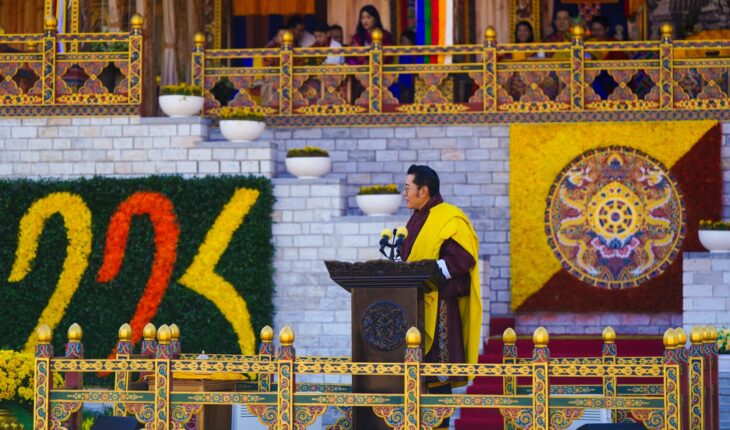
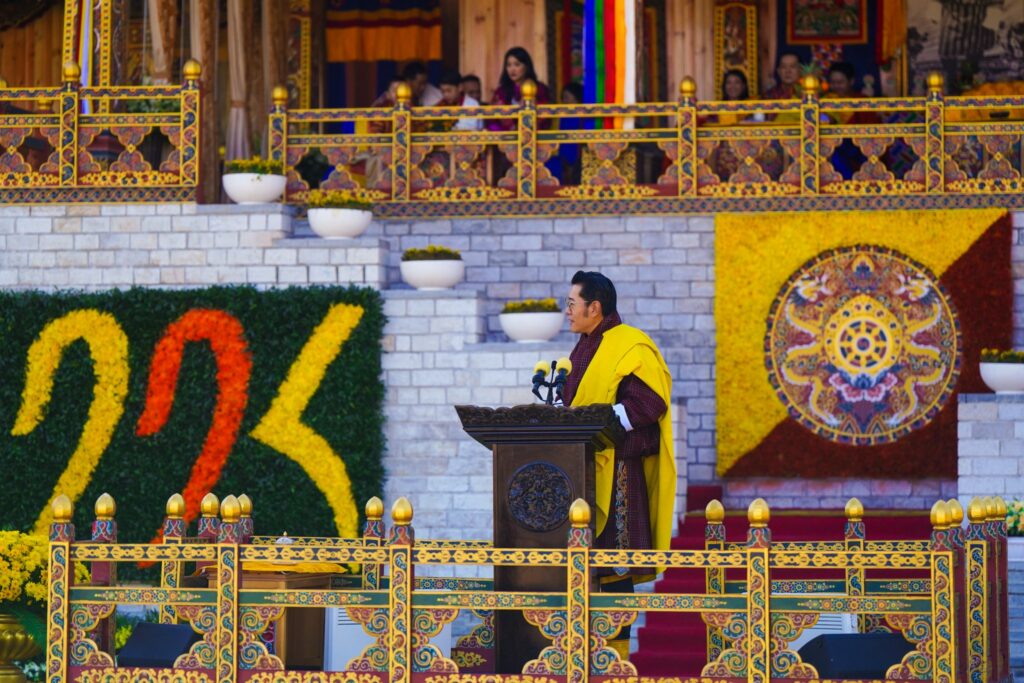
The 118th National Day of Bhutan has emerged as a defining moment in the nation’s contemporary history. His Majesty the King’s far‑reaching and deeply reflective address placed the Gelephu Mindfulness City (GMC) firmly at the centre of Bhutan’s future trajectory. Delivered from the sacred grounds of Wangduechhoeling Palace in Bumthang, the address also coincided with the 70th Birth Anniversary of His Majesty the Fourth Druk Gyalpo, weaving together Bhutan’s past, present, and future into a single, purposeful national vision.
Speaking from a site steeped in spiritual and historical significance, His Majesty described the occasion as one of rare convergence. “This National Day is especially meaningful as we celebrate the 70th Birth Anniversary of His Majesty the Fourth Druk Gyalpo,” he said, noting that it also comes “at a time when, in the nearly twenty years of my own reign, we are engaged in a national endeavour of profound significance which will shape the future of Bhutan.” That endeavour, His Majesty made clear, is the creation of GMC.
Bumthang, he reminded the nation, is “a sacred land blessed by Guru Rinpoche and Longchenpa, the birthplace of Pema Lingpa, and the ancestral home of the Wangchuck dynasty.” Choosing Wangduechhoeling Palace—built by Jigme Namgyel and the birthplace of Gongsar Ugyen Wangchuck—was deliberate and symbolic. “There could be no more fitting place to honour our forefathers and to reaffirm our pledge to serve Bhutan with courage, determination, and unwavering dedication,” His Majesty said, extending a heartfelt message to Bhutanese everywhere: “You are in our hearts wherever you are.”
From the outset, His Majesty emphasized that GMC is neither a conventional urban expansion nor a short‑term economic project. It is a carefully conceived national undertaking, designed to secure Bhutan’s long‑term prosperity, resilience, and relevance in an uncertain global landscape. Its success, he stressed, depends not merely on financial investment or infrastructure, but on unity, trust, and the collective participation of the Bhutanese people.
That trust has already been demonstrated in extraordinary ways. Over the past year, more than 17,000 volunteers from across the country participated in three major programmes in Gelephu, spanning four generations from children to the elderly. His Majesty shared a personal reflection, noting that he and Her Majesty the Gyaltsuen, along with their children, also took part. Seeing revered figures such as Lopen Basokarp, a spiritual master in his 90s, working alongside ordinary citizens was, he said, deeply moving.
While outsourcing such work might have been more efficient, His Majesty observed, it would have lacked the deeper meaning of shared effort. “Nothing compares to the warmth and specialness of a home‑cooked meal,” he said, “and nothing compares to the joy and meaning of our own people coming together to physically build our future.” This spirit of collective ownership, he added, gives GMC a moral foundation no financial contract could replicate.
A similar sense of national commitment was reflected in the response to the GMC Nation Building Bond. Bhutanese at home and abroad contributed their hard‑earned savings not for immediate returns, but out of a shared belief in the project’s long‑term purpose. For His Majesty, this was a powerful affirmation of public confidence in GMC and in the values that underpin it.
Central to that vision is the idea that Gelephu must not become just another modern city, but a place that embodies Bhutan’s spiritual heritage. Describing Gelephu as “a beautiful, green, and fertile land, surrounded by forests,” His Majesty drew parallels with Bumthang’s sacred character. Just as Bumthang is revered for its spiritual legacy, Gelephu too must carry a sense of sacredness.
To realize this, His Majesty invited the Je Khenpo, the Dratshang, Lams, Trulkus, and spiritual leaders to establish lhakhangs, dzongs, temples, and spiritual centres within GMC. The response was immediate and enthusiastic: within a year, 30 applications were received, with 14 already approved. These include projects such as Jarong Khasho Chorten, Shambhala Dzong, Guru Nangsi Zilnon Lhakhang, the Kangyur Labyrinth, and the Maitreya Temple, among others. “When visitors arrive in Gelephu Mindfulness City,” His Majesty said, “they should encounter a place grounded in spirituality and cultural depth, reflecting the best of what our blessed Kingdom has to offer.”
Connectivity forms another critical pillar of GMC’s development. The Gelephu International Airport, expected to be completed by 2029, is central to this vision. More than a transport facility, the airport represents a transformative national effort. Drawing a historical parallel, His Majesty said that just as the Thimphu–Phuentsholing highway transformed Bhutan, the airport is today’s equivalent undertaking. The work being done there, he said, carries profound karmic merit, likening it to “building ten thousand Zangdopelri.”
Economic ambitions are equally integral. His Majesty revealed that more than 50 international companies have applied to establish offices in Gelephu, with 28 approved for the coming year and 33 under review. To accommodate them, 70 buildings in the existing Gelephu town are being renovated to blend Bhutanese architectural aesthetics with international standards. The arrival of these companies will create well‑paying jobs and, more importantly, provide Bhutanese youth with exposure to global expertise. However, His Majesty cautioned against dependence on foreign professionals, emphasizing that Bhutanese must ultimately lead and manage GMC themselves.
To this end, the Pelsung programme was launched to empower youth by allowing them to shadow international experts with the explicit goal of eventual national leadership. His Majesty said he was deeply encouraged by the enthusiasm and dedication shown by young Bhutanese participants.
A landmark announcement further strengthened GMC’s long‑term foundation: Bhutan has committed up to 10,000 Bitcoin—valued at approximately one billion US dollars—from its sovereign reserves to support GMC’s development. “This commitment is for our people, our youth, and our nation,” His Majesty said.
Land management, he cautioned, is critical. “Much of the private land within GMC belongs to rural families, including many who received Kidu from His Majesty the Fourth Druk Gyalpo. This land is precious, and if it were to leave the hands of its rightful owners due to rumours, impatience, or lack of information, it could create serious challenges.” To ensure fairness, GMC will be structured as a company, with landowners retaining shares tied to their holdings, while 94 percent of the one million acres of state land will be reserved for the nation and shared among all 205 gewogs. This model, His Majesty said, ensures intergenerational equity and shared prosperity.
Concluding his address, His Majesty expressed unwavering confidence in the unity of the Bhutanese people. As long as the nation stands together behind a common purpose, he said, success is assured. Reaffirming his commitment with humility, he declared that he remains privileged above all to serve Bhutan and its people as King.
More than a policy announcement, the 118th National Day address was a statement of national purpose—placing justice, spirituality, innovation, and shared responsibility at the heart of Bhutan’s future. As GMC moves steadily from vision to reality, every Bhutanese stands as both stakeholder and beneficiary of this historic national endeavour.