RENUKA RAI | Thimphu
Bhutan is preparing to take a bold step toward strengthening its economy, focusing on trade, industry, and infrastructure.
The National Council, through its Special Committee for Business Plus (SC4B+), has laid out a series of recommendations aimed at removing long-standing obstacles in cross-border trade, improving connectivity, and supporting local industries.
At a time when the country is gradually recovering from the impacts of the COVID-19 pandemic, these proposals reflect a renewed commitment to building a resilient, future-ready economy, particularly for the youth who are expected to drive Bhutan’s growth in the coming decades.
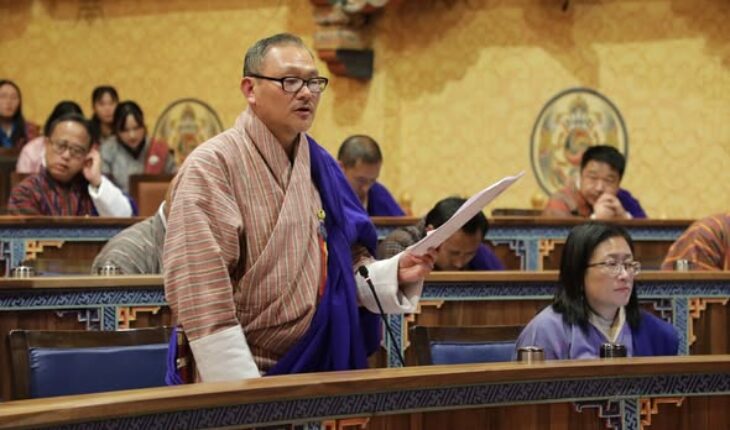
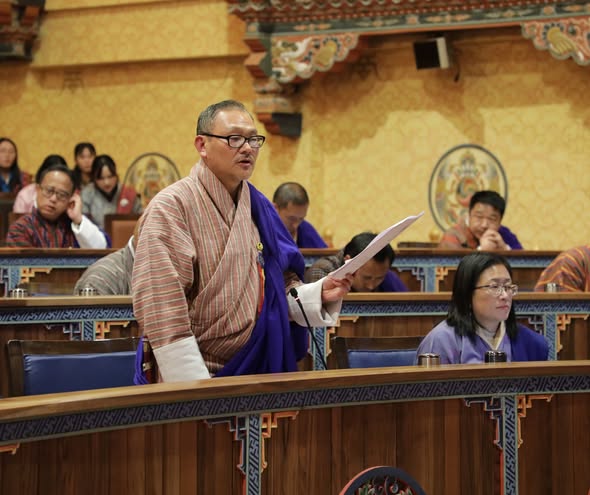
Eminent member Phuntsho Rapten and Chairperson of the Special Committee for Business Plus (SC4+), presented the final recommendations on the Review Report on 25 December to the National Council.
Central to the National Council’s plan is the development of new trade routes and railway connections that promise to make exports faster, cheaper, and more efficient.
The Golakganj and Sonarhut Land Customs Stations (LCS) have been highlighted as strategic points that could unlock significant benefits for exporters. For communities around Gelephu and Lhamoizingkha, these routes provide vital links to Bangladesh, a key trading partner.
At present, inland water transport remains limited due to port capacity and river draft constraints in Dhubri, leaving Bhutanese exporters with few viable alternatives. Streamlining these routes could transform trade logistics, enabling goods to move across borders with greater ease and reduced costs.
The railway connection via Haldibari and Chilahati stands out as another transformative project. With the infrastructure on both sides of the Indo-Bangla border already completed, this rail line has the potential to ease congestion at Changrabandha and Fulbari, two key border points that have struggled under heavy traffic due to inadequate infrastructure.
For regions such as Samtse and Phuentsholing, the operational railway could allow 500 to 600 trucks to move daily, significantly reducing transportation costs for heavy goods like stone aggregates.
By providing a faster and cheaper route to Dhaka, the railway promises to make Bhutanese products more competitive in regional markets, while also relieving pressure on road networks that currently experience frequent congestion.
Trade facilitation is not only about physical connectivity. The report has highlighted regulatory hurdles that continue to impede smooth cross-border movement. Suvidha charges and toll penalties at border points remain contentious issues, particularly for Bhutanese consignments.
The report recommended that the government engage in dialogue with the West Bengal authorities to either waive these fees or introduce standardized charges, creating a more predictable and business-friendly environment.
Beyond this, the report stressed the need to expedite the signing of a Mutual Recognition Agreement with India, allowing for mutual acceptance of conformity assessments. Such regulatory alignment would simplify procedures, reduce duplication, and foster stronger cross-border trade ties.
While external trade and connectivity are crucial, the Council’s report recommendations also focus on strengthening domestic industry and resource management. Bhutan’s timber and charcoal industries have long relied on imports, which account for billions of ngultrums in annual expenditure.
With the commissioning of new ferro-alloy industries and growing domestic demand for wood-based products, reliance on imports is projected to increase unless production within the country is scaled up.
The report recommended enhancing domestic timber and charcoal production by setting up units close to logging and harvesting areas.
This approach not only supports industrial growth but also keeps economic value within Bhutan, providing more opportunities for local entrepreneurs and workers.
Energy, another pillar of economic development, also received significant attention. The report noted that high-voltage consumers had incurred additional charges during the truing-up of tariffs in previous years, despite domestic generation being sufficient for certain periods.
To address this, it called for adherence to policies that prioritize the use of cheaper power sources first and recommended adjusting bills to reflect outages or supply fluctuations.
Additionally, the report suggested reviewing the composition of the Energy Regulatory Authority to ensure broader representation from private industry, which forms a significant portion of power consumption.
This is expected to align energy policy more closely with industrial realities and ensure fairness for businesses.
Supporting small-scale entrepreneurs emerged as another major theme in the recommendations. Cottage and small industries often face difficulty accessing financing under existing loan structures.
The report urged the government to incentivize financial institutions to relax these requirements and proposed establishing a dedicated low-interest loan fund tailored to the specific needs of these enterprises.
Such measures aim to stimulate entrepreneurship, generate employment, and enable small businesses to participate fully in Bhutan’s economic growth.
Agricultural and forest-based products, including high-value items like cordyceps, were also highlighted. Farmers and producers often depend on limited market channels, resulting in fluctuating prices and uncertain incomes.
The report recommended exploring alternative markets beyond traditional auction yards to provide reliable pricing and stable demand.
By opening up new avenues for sales, producers can secure better returns while reducing their vulnerability to market volatility, ensuring that rural communities benefit from economic growth.
The National Council’s proposals reflect a holistic approach to economic development, combining infrastructure upgrades, regulatory reform, industrial expansion, and support for local businesses.
Experts note that if implemented effectively, these measures could reshape Bhutan’s trade landscape, making exports more competitive and reducing reliance on imports.
By focusing on practical interventions such as new trade routes, rail connectivity, and domestic production, Bhutan can position itself as a stronger economic player in the region while creating opportunities for its youth and small enterprises.
Despite these hurdles, the National Council’s recommendations have been widely welcomed by business leaders and economists.
By addressing bottlenecks in trade, energy, and finance, while also empowering local producers, Bhutan is taking concrete steps toward building a resilient and inclusive economy.
The SC4B+ initiative signals a shift from planning to actionable reforms, with the potential to unlock long-term benefits for both urban and rural communities.