TIL BDR GHALLEY | Thimphu
Bhutan’s health care system is undergoing a period of significant transition as growing workforce shortages continue to affect service delivery across the country. Driven by retirements, resignations, and the migration of health professionals in search of better opportunities abroad, the shortage of nurses has emerged as one of the most pressing challenges facing the sector.
During the 23rd meet the press session, Dr Kuenzang Wangdi, the Director of National Medical Services, said the entire country currently has 1,696 nurses against an
approved standard of 2,376. This shortfall has had a direct impact on health facilities, particularly referral hospitals where patient loads remain high.
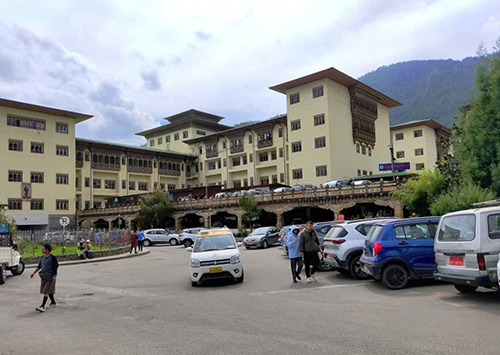
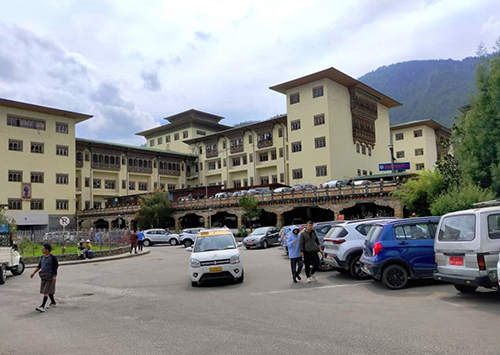
“At the Jigme Dorji Wangchuck National Referral Hospital (JDWNRH) in Thimphu, 703 nurses are currently in service against an approved strength of 881. Of these, 39 are on extraordinary leave and 15 are undergoing long-term training, further reducing the available workforce for daily clinical operations”, the Director added.
The impact of workforce attrition has intensified in recent years. In 2022, the attrition rate among nurses stood at 4.01 percent. This rose sharply to 16.1 percent in 2023, before easing slightly to 11.6 percent in 2024. During 2024 alone, 170 nurses left the system. These departures, largely attributed to retirement, resignations, and migration for overseas employment, have placed sustained pressure on health facilities and frontline services.
In response, the Ministry of Health initiated the recruitment of foreign nurses as an interim measure to ensure continuity of patient care. The initiative was designed as a short-term solution while longer-term strategies to strengthen the domestic nursing workforce are implemented. Indian nurses were recruited to fill immediate gaps, particularly in high-demand departments at the national referral hospital.
The Director further added that all foreign nurses recruited under this arrangement have been deployed at JDWNRH. Within the hospital, they are assigned to various departments based on service requirements, working alongside Bhutanese nurses. This approach allows them to integrate into existing systems while adhering to national nursing standards and clinical protocols. All recruited foreign nurses hold a minimum qualification of a Bachelor of Science in Nursing.
The remuneration structure for foreign nurses has been aligned with the national pay framework. Salaries range from Nu. 65,291 to Nu. 86,105, depending on professional experience. Nurses with two to five years of experience receive Nu. 65,291, those with six to ten years receive Nu. 72,985, and those with more than ten years of experience receive Nu. 86,105. These rates correspond to the P4A to P2A pay levels applicable to national nurses.
In addition to basic pay, foreign nurses receive a 30 percent contract allowance and a monthly house rent allowance of Nu. 15,000. The inclusion of the housing allowance followed challenges in attracting candidates under the earlier compensation package, which included only the contract allowance. Despite the revised package, recruitment has remained challenging, and progress has been gradual.
All salaries for foreign nurses are fully financed through the Government of India’s Project Tied Assistance (PTA) grant. There is no financial contribution from the national health budget or the Essential Services Program. The arrangement allows the health system to address immediate staffing gaps without placing additional fiscal pressure on domestic resources.
To date, 25 foreign nurses have been recruited and deployed. Interviews for an additional 76 candidates were conducted recently in India, and the selection process is ongoing. In total, 115 foreign nurses have been identified for recruitment under the current arrangement.
While the engagement of foreign nurses has helped stabilize services, authorities continue to emphasize that this is a temporary measure. Parallel efforts are underway to strengthen the national workforce through increased training and recruitment of Bhutanese nurses. In 2025 alone, 312 Bhutanese nurses were recruited, including 83 clinical nurses and 229 staff nurses. Recruitment of Bhutanese nurses returning from overseas employment has also continued.
“While the recruitment of Indian nurses has been necessary, the MoH continues to invest in training, retention, and professional development of Bhutanese nurses.”
Longer-term measures focus on expanding domestic training capacity. Enrollment in nursing programs has increased steadily across institutions. At the Faculty of Nursing and Public Health, annual intake rose from 54 students in 2021 to 60 in 2025. The Royal Thimphu College expanded its intake from 34 to 140 students during the same period. The Apollo Bhutan Institute of Nursing increased enrollment from 91 to 250 students, while the Arura Academy of Health Science expanded from 51 to 200 students.
In addition, plans are underway to increase enrollment in health assistant and technical training programs at the Khesar Gyalpo University of Medical Sciences of Bhutan. These efforts aim to build a sustainable pipeline of trained health professionals to meet future demand.
As Bhutan continues to navigate workforce shortages, the combined approach of short-term recruitment and long-term capacity building remains central to maintaining the continuity and quality of healthcare services. The evolving strategy reflects an effort to balance immediate service delivery needs with long-term workforce sustainability