KINZANG DORJI TSHERING | Thimphu
The Ministry of Agriculture and Livestock (MoAL) has acknowledged serious challenges faced by potato farmers this season, including hoarding, declining auction prices, competition from Indian potatoes, and weak demand for small-sized Bhutanese produce. The response follows issues observed during a visit by Lyonpo Younten Phuntsho to the Food Corporation of Bhutan Limited (FCBL) auction yard recently.
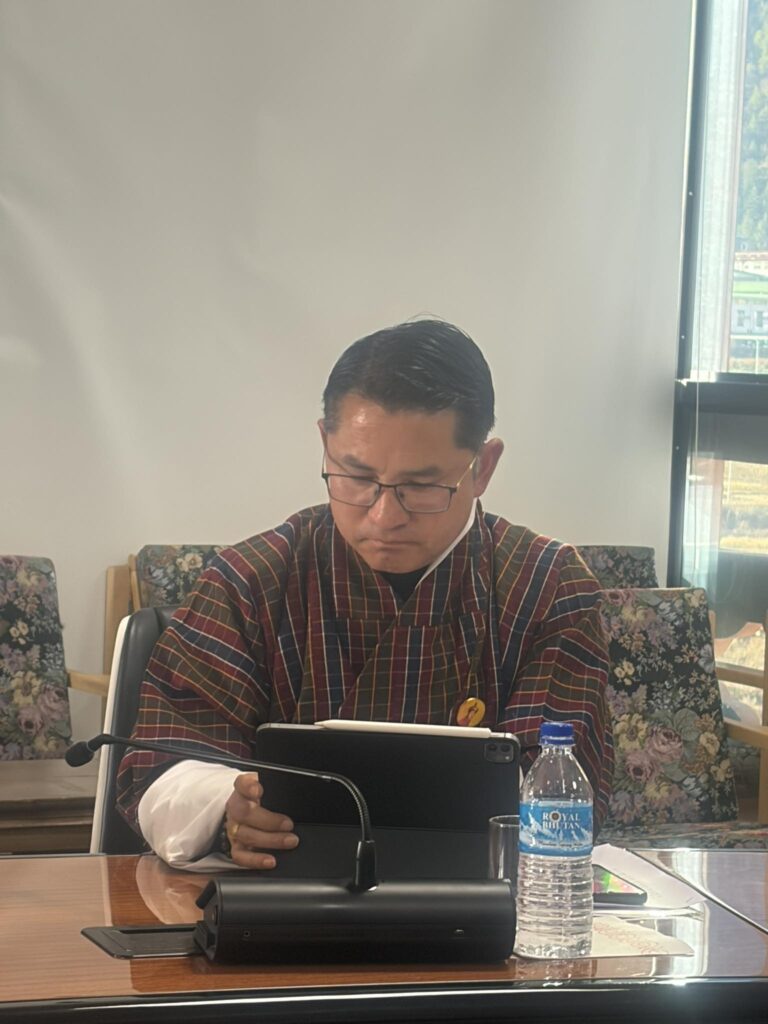
During the 23rd meet the press session held on 31 December, Lyonpo Younten Phuntsho said the concerns raised regarding potato auctions and the prices realized this season are understood and taken seriously. He said the ministry recognizes the difficulties faced by farmers and is addressing the matter with urgency while taking into account the realities of the market.
The Minister said the current situation must be understood within the broader context of seasonal production cycles in Bhutan and India. Bhutan produces potatoes mainly in two seasons: a summer crop grown at higher altitudes between 2,000 and 3,000 metres, planted around May and harvested in August and September, and a crop grown in the southern foothills, planted in November and harvested between March and April. Bhutan’s key export window runs from June to November, when demand in India increases due to lower domestic production. However, India begins its own production from October to December under the Kharif season and again from February to March under the Rabi season, during which demand for Bhutanese potatoes declines.
According to the minister, the marketing challenges experienced this season were caused by multiple interrelated factors. Last year, shortages in the Indian market due to low yields and weather-related issues led to unusually high prices for Bhutanese potatoes, with auction prices exceeding Nu. 60 per kilogram. These prices encouraged many farmers to expand production this year. By the third quarter of the calendar year, about 39,488 metric tonnes of potatoes were produced, of which 19,348.50 metric tonnes had been exported as of 22 December 2025.
Lyonpo added that many farmers withheld their potato stocks for more than two months in anticipation of higher late-season prices, despite repeated advisories issued by FCBL since April 2025. Market conditions were further affected by the early arrival of new potato harvests from neighbouring Indian states such as West Bengal from early December 2025. Buyers preferred fresher and cheaper Indian potatoes over stored Bhutanese produce, leaving Indian traders with unsold stocks of about 625 metric tonnes.
The situation was compounded by a general weakness in the Indian potato market during the season. Prices across all grades declined sharply between November and December, with reductions of 40 to 60 percent depending on size and quality, significantly reducing export opportunities for Bhutanese potatoes. The Ministry also noted that Indian farmers are increasingly sourcing high-quality, pest-free seed potatoes from specialized producers in Punjab, which has reduced demand for Bhutanese seed potatoes.
To over these challenges, the Department of Agricultural Marketing and Cooperatives, conducted a joint potato awareness campaign covering five Dzongkhags and twelve Gewogs, involving more than 1,173 potato growers from 15 May 2025. The campaign focused on timely delivery to auction yards, discouraging hoarding, proper curing of potatoes, and auction procedures, including online platforms. Twelve informal Telegram groups were created to disseminate auction prices and related information.
When Indian traders were unable to sell auctioned potatoes, the MoAL & FCBL informed the public and potato growers through various media not to bring potatoes to the auction yard due to market saturation. Following Government intervention, the auction period was extended until 22 December 2025, even though traders formally communicated their withdrawal from auctions through a letter dated 3 December 2025. During the extended period, farmers were able to auction an additional 49 metric tonnes of potatoes.
The Ministry also deployed officials to assess potato stocks in Haa, Paro, Chukha, Wangduephodrang, and Bumthang Dzongkhags, identifying 1,889.2 metric tonnes still held at source as of 26 December 2025. Officials were further sent to Falakata, West Bengal, India, where they found that fresh potato harvests from Falakata and Punjab had arrived nearly a month earlier than usual, affecting demand for Bhutanese potatoes. Potatoes there were selling at Nu. 10 to Nu. 17 per kilogram, while cold-stored potatoes fetched only Nu. 6 to Nu. 7 per kilogram. Indian farmers storing potatoes in Falakata cold stores were unable to recover even storage costs, with at least one facility, Gourahari Cold Store, considering distributing potatoes free of cost.
To support farmers domestically, the Ministry reached out to twenty-two vegetable importers supplying Bhutanese markets. As of 29 December 2025, twelve vendors had procured 8.7 metric tonnes of potatoes from farmers in Phobjikha. The Ministry said it is also exploring the possibility of FCBL procuring potatoes at a reasonable price based on the average auction price of the season and distributing them through domestic markets and public institutions such as schools, Gyalsung Academies, hospitals, and the armed forces.
The Ministry said that, in the medium term, it will conduct a comprehensive assessment of potato markets in Assam, West Bengal, and other key producing regions in India to better understand market dynamics and buyer preferences. In the long term, the Ministry said it recognizes the importance of diversifying export markets to reduce overdependence on a single market and is exploring opportunities in Bangladesh and Nepal, while maintaining India as Bhutan’s most important trading partner.
Public responses echoed some of the Ministry’s concerns. Dorji, a part-time farmer and private company employee based in Thimphu, said farmers need clear price information, storage support, and assured buyers to feel confident selling their produce on time. He said domestic institutions such as schools, hospitals, and the armed forces could help absorb excess produce during market downturns. He also said farmers should receive early market updates through cooperatives, radio, and mobile messaging, and noted that Bhutan is not yet fully prepared to diversify exports beyond India.
Similarly, Ugyen Rangshel, a college student in Thimphu, said farmers would benefit from clearer price information, coordinated planting schedules, and better sharing of demand forecasts from India. He said institutions such as schools, the armed forces, and hospitals could support farmers by purchasing excess produce and added that more effort is needed in quality control, certification, and trade linkages before Bhutan can expand exports to other countries.