DAWA ZANGMO | Thimphu
The Royal Audit Authority (RAA) has attributed persistent financial irregularities in government agencies to low public sector remuneration and weak internal control systems, according to its latest Annual Audit Report. The report underscores how financial strain, coupled with inadequate oversight, creates conditions that encourage unethical conduct among public officials.
According to the Annual Audit Report 2024-25 (AAR 2024-25), financial pressure on public servants is a significant but often overlooked factor contributing to unethical behaviour. It stated that misconduct frequently arises in environments where oversight mechanisms are weak, creating opportunities for individuals to rationalize irregular practices. The RAA observed that officials under financial stress may justify unethical actions when systemic controls fail to deter or detect wrongdoing.
The audit report highlighted that public servants earn substantially lower salaries compared to employees in the corporate sector. At the same time, the Bhutan Civil Service Rules prohibit civil servants from engaging in private trade or commercial activities to supplement their income. This restriction, the RAA noted, places additional financial constraints on public officials.
“As a result, some officials resort to unethical practices as a means of supplementing their income,” the RAA stated in the report.
Among the most common irregularities identified were inadmissible mileage claims, where officials received payments despite not using vehicles for official purposes. The audit also flagged cases involving travel and daily subsistence allowances claimed for journeys that could have been completed within a single day, making such claims ineligible under existing rules.
Other irregularities documented in the report included incorrect salary payments, improper leave encashment, and errors in retirement benefit calculations. The RAA also identified instances of inadmissible payments of salaries and allowances to employees who were on leave, further contributing to financial mismanagement across agencies.
In addition to individual misconduct, the RAA pointed to systemic weaknesses within public institutions. The report noted that a weak culture of accountability has led many agencies to focus primarily on clearing audit observations, rather than addressing the root causes of irregularities. This approach, the Authority warned, fails to strengthen systems and allows similar issues to recur in subsequent years.
The audit authority emphasized that internal control systems and oversight mechanisms remain inadequate in many agencies, exposing broader institutional vulnerabilities. Weak controls, coupled with gaps in communication and coordination among departments, were cited as major contributors to recurring financial irregularities.
Beyond salary-related concerns, the RAA recommended a range of systemic reforms aimed at strengthening governance and preventing misconduct. These include reinforcing internal control frameworks, closing communication gaps, and improving coordination across departments to ensure greater compliance with financial rules and procedures.
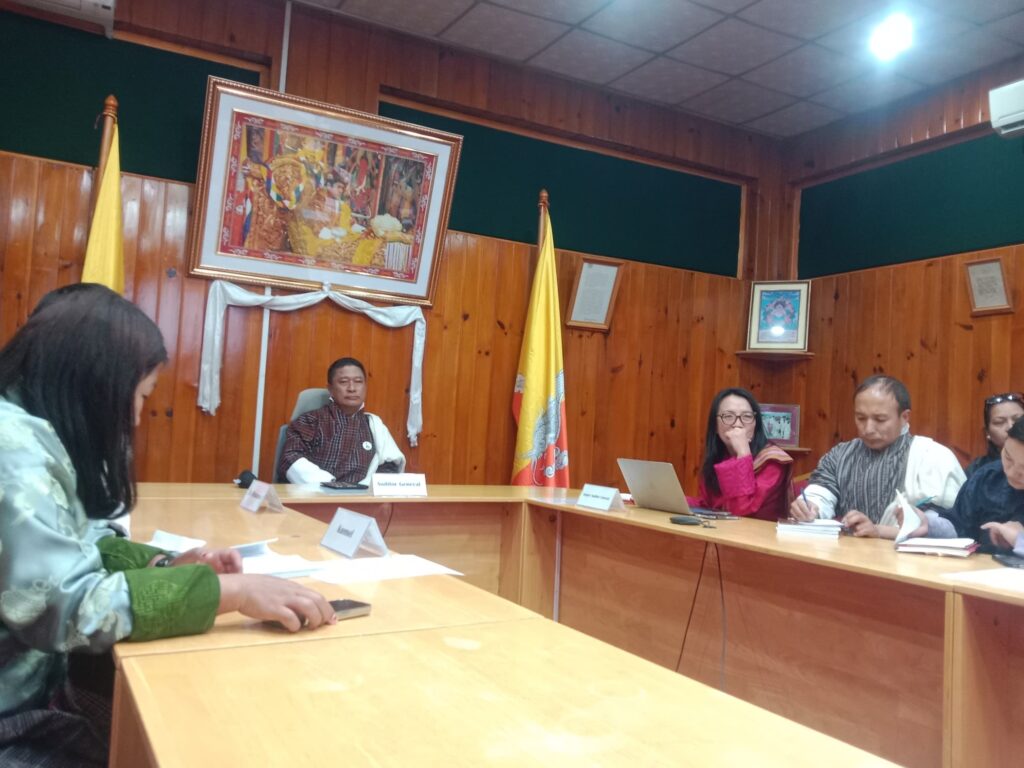
Deputy Auditor General Chhoden during the press conference held on 1 Jan, said that the importance of robust, system-driven oversight mechanisms. It highlighted the need for stronger accountability structures, particularly in the monitoring and regulation of Human Resource Officers, whose roles and responsibilities are critical in managing pay, allowances, leave, and benefits.
“Tighter accountability mechanisms are essential to reduce opportunities for irregularities,” she noted, adding that clearer role definitions and stronger supervision could help minimize errors and deliberate misuse of public funds.
To address the underlying drivers of misconduct, the RAA reiterated its recommendation for comprehensive public sector salary reform. The report stated that fair and competitive compensation should be viewed not merely as a financial cost, but as a strategic measure to promote ethical behaviour and strengthen good governance.
The RAA maintained that improving remuneration, alongside reinforcing oversight and internal controls, would help reduce financial pressure on public servants and lower the incentive for unethical practices. Without such reforms, the report warned, irregularities are likely to persist due to the combined effects of financial stress and systemic weaknesses.
The ARR2024-25 concludes that addressing financial irregularities in the public sector requires both structural and institutional reforms. While salary adjustments are a key component, the RAA emphasized that sustainable improvements depend on strengthening accountability, enhancing internal controls, and fostering a governance culture focused on prevention rather than post compliance.