DAWA ZANGMO | Thimphu
A Bhutanese waste management company, Ucykal Private Limited, is beginning to register visible changes in public waste disposal behavior through the installation of Reverse Vending Machines (RVMs) in major urban centers, including Phuentsholing, Paro, and Gelephu.
Working in collaboration with local governments and thromdes, the company aims to address growing concerns over plastic, glass, and metal waste by encouraging recycling through technology driven incentives.
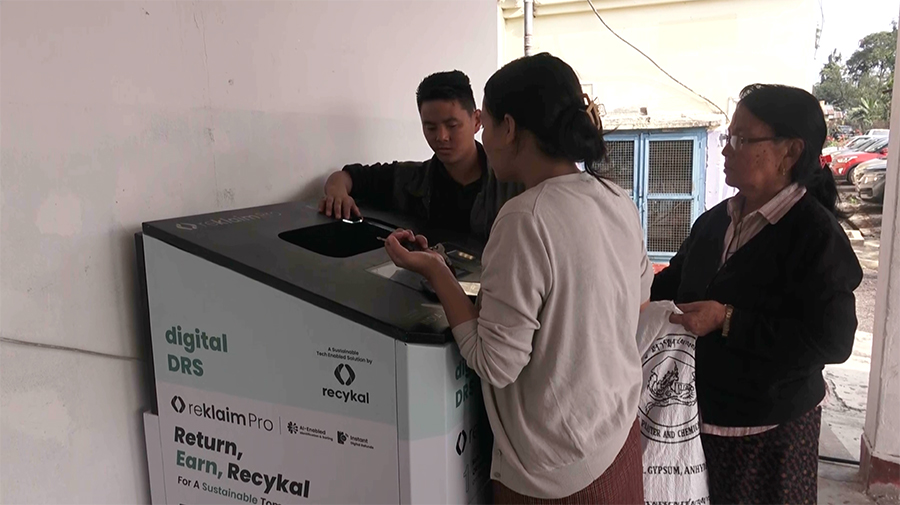
Ucykal’s RVMs allow members of the public to deposit used PET bottles, glass bottles, and aluminum cans into automated machines placed in accessible public locations.
Once an item is deposited, the system identifies the material using integrated digital technology, including artificial intelligence and internet-based monitoring systems.
Users are then rewarded with small monetary incentives, typically ranging from Nu. 1 to Nu. 2 per item, credited digitally or dispensed in cash, depending on the system configuration.
The machines are designed not only to collect recyclable materials but also to promote responsible waste handling habits and support a circular economy by turning discarded items into reusable resources.
By offering direct incentives, Ucykal hopes to encourage greater citizen participation in maintaining cleaner public spaces and reducing littering in towns and cities.
A staff member of Ucykal, Jamtsho, said that the initiative has already shown measurable results in certain locations. He noted that in Gelephu and Phuentsholing alone, approximately 13 million bottles have been collected since the introduction of the machines.
The company’s CEO Sangay Dorji shared that the goal is not profit but reducing waste, protecting water sources, keeping public spaces clean, and encouraging responsible waste management.
“There is a noticeable difference, especially when comparing Paro before and after the installation of the machines,” he said. “Changes in disposal habits are becoming more visible.”
Despite the early progress, Jamtsho acknowledged that the initiative has faced several challenges during its initial phase.
One of the primary difficulties, he said, is limited public understanding of how the machines work and what materials can be recycled.
“Some people are not yet familiar with the concept because they have not been previously engaged in similar systems,” he said.
“Operating the machines can be confusing for first-time users, and many people are unsure about which items are recyclable and which are not. A significant amount of time is spent explaining these aspects to the public.”
The company’s operations in some locations began less than two weeks ago, yet early data suggests encouraging trends.
According to Jamtsho, the machines have been operational for about 14 days, and the highest refund recorded so far stands at Nu. 1,200, earned by a single user through repeated deposits.
Public feedback, he added, has generally been positive, particularly regarding the acceptance of items that are often rejected elsewhere.
“People have told us that bottles not accepted by other companies are accepted here, which has been appreciated,” he said.
Local residents who have used the machines also report practical benefits. A Bar shop owner in Paro Town, Sherab Dorji, said the RVMs have provided a convenient way to manage waste generated from daily business activities.
“Previously, empty bottles would pile up, and disposal was irregular,” he said. “Now, I bring them to the machine, and the process is straightforward once you understand it. Receiving a small refund is an added benefit.”
In Paro, Sonam Yangden from Nemjo said the machines have influenced how her family handles household waste.
“We now separate bottles and cans instead of throwing everything away together,” she said. “The machine accepts glass and plastic, which makes it easier for us to recycle properly.”
Ucykal’s broader objectives include reducing litter in public areas, preventing recyclable materials from entering drainage systems and waterways, and building long-term awareness about waste segregation.
The company believes that sustained public engagement, combined with improved understanding of recyclable materials, will be key to the success of the initiative.
The machines are also equipped with tracking and data management systems that allow Ucykal and partner authorities to monitor the volume and type of waste collecte
This data is expected to support better planning and policy decisions related to urban waste management in the future.
While challenges remain in terms of public education and user familiarity, early indicators suggest that the introduction of RVMs has begun to influence waste disposal practices in the towns where they are installed.
Ucykal will continue working with local authorities to expand outreach and improve user experience as the program progresses.
According to Phuentsholing Thromde officials in Phuentsholing, the introduction of RVMs marks an important step in promoting citizen participation in waste management and fostering a cleaner, greener Phuentsholing.
“This initiative is designed to motivate the public to recycle and manage waste responsibly,” an official stated.
Residents and visitors are encouraged to make full use of the RVM facilities and contribute to maintaining a clean and safe environment.
The Thromde emphasized that proper waste management is not only a civic duty but also a shared responsibility essential to achieving sustainable urban living.
In a move towards smarter and more sustainable waste management, Phuentsholing Thromde, in collaboration with Ucykal Private Limited, has installed Reverse Vending Machines (RVMs) at three key locations — Central Park, the Integrated Vegetable Market (IVM), and the Multilevel Car Parking (MLCP) in October last year.