DAWA ZANGMO | Punakha
The Journalists’ Association of Bhutan (JAB) successfully conducted a three day training programme on Climate Change, Environmental Reporting, and Long-form Narrative Journalism from January 12 to 14. The training brought together more than 22 journalists from various media organizations across the country.
This training was supported by the Government of Australia’s Regional Media Support Fund through the ABC International Programme, this marked the second cohort in the ongoing training, which will be followed by a reporting grant.
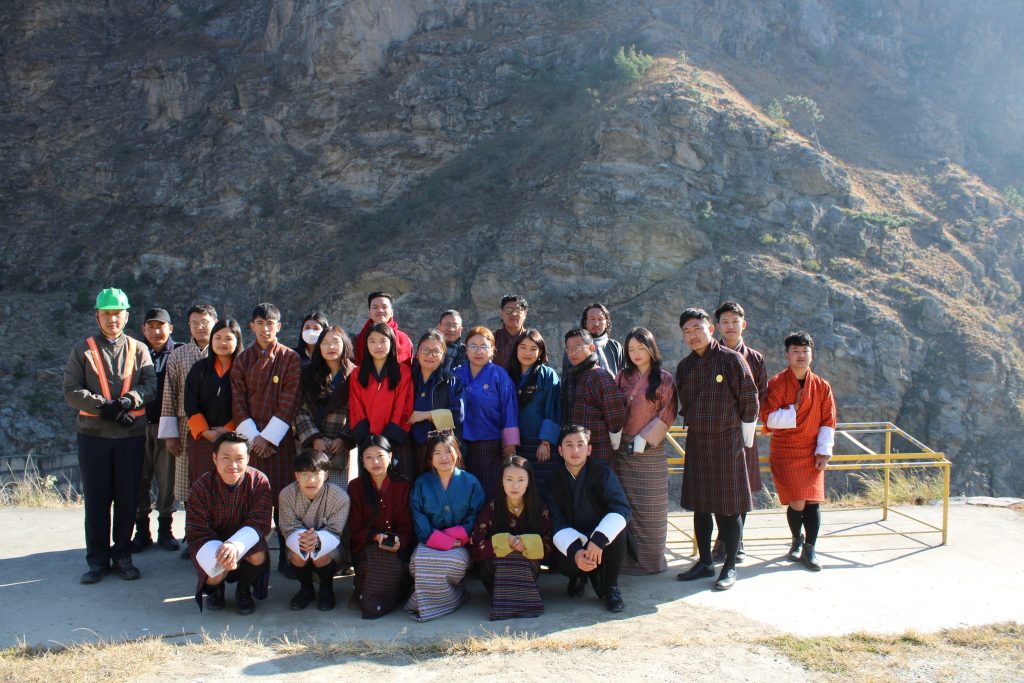
The programme combined classroom-based learning, interactions with experts, and practical field exposure. On January 14, participants visited the Punatsangchhu-I Hydroelectric Project (PHPA-I) to gain a hands-on understanding of renewable energy, as well as the environmental and social dimensions of hydropower development.
The training aimed to equip journalists with the skills and confidence to cover complex climate issues responsibly, translating scientific and technical data into human-focused stories.
According to Dechen Wangdi, a freelance journalist and participant, the programme “helped journalists gain clarity, confidence, and skills to report responsibly on complex climate issues, translating scientific data into human centred stories.”
Dechen Wangdi added that the sessions strengthened pitching skills, refined story angles, and provided opportunities for peer feedback. “The training helped freelancers overcome challenges such as limited editorial support and lack of funding. Participants learned to develop long-form narratives that connect local experiences with global climate contexts, including framing local stories within international negotiations such as COP,” he said.
Another participant, Yeshi Dolma, a reporter with Bhutan Today, highlighted how the programme broadened her understanding of climate change and its far-reaching impacts. “The training broadened my understanding of climate change by highlighting that environmental issues extend far beyond the environment itself. It demonstrated how climate change is closely linked to public health, agriculture and food security, economic stability and livelihoods, infrastructure development, and disaster risks,” she said.
The programme emphasized the vital role journalists play as communicators and translators of scientific and policy information. Yeshi Dolma said that, “The training reinforced the importance of journalists acting as translators, breaking down complex scientific and policy information into clear, accessible stories that the public can understand and relate to.”
Participants were also made aware of the information gaps in communities and the need to ensure that important voices are heard. “The programme highlighted that many communities remain under-informed, and that critical voices are often unheard. Journalists therefore have a greater responsibility to bridge these gaps and ensure accurate, inclusive, and people-centred reporting on climate and energy issues,” she said.
The training covered a range of thematic areas including climate change impacts, renewable energy, environmental policy, and sustainable development. Participants engaged in practical exercises designed to enhance story development, pitching, and long-form reporting techniques. The field visit to the Punatsangchhu-I Hydroelectric Project allowed journalists to observe firsthand the operational and environmental considerations involved in hydropower production.
JAB’s Executive Director, Rinzin Wangchuk, said the training was intentionally designed to be interactive rather than lecture-driven.
“These questions are not meant to criticise journalists,” he said. “They are meant to help us grow—as individuals and as a community of practice.”
The training programme aimed to foster responsible and informed reporting on environmental issues, connecting local realities with global climate concerns. By equipping journalists with the skills to interpret scientific data and policy frameworks effectively, the programme sought to strengthen the media’s role in raising public awareness about climate change and energy-related challenges.
The initiative also addressed the professional challenges faced by freelance journalists in Bhutan, including limited editorial support, financial constraints, and barriers to publishing in mainstream media. Through workshops, interactive sessions, and peer feedback, participants were encouraged to explore innovative approaches to storytelling and investigative reporting in the context of climate and environmental issues.
By the conclusion of the programme, participants expressed confidence in their ability to produce stories that not only convey scientific and policy information accurately but also resonate with audiences on a human level. The training underscored the importance of storytelling that highlights both challenges and solutions in addressing climate change and environmental sustainability.
Through this initiative, JAB aims to foster a cadre of journalists who are well-prepared to cover environmental issues comprehensively, bridging the gap between complex scientific knowledge and public understanding.
The training reaffirmed the media’s essential role in ensuring that climate change reporting is accurate, inclusive, and actionable, ultimately contributing to informed public discourse and community engagement on critical environmental challenges.