RENUKA RAI | Thimphu
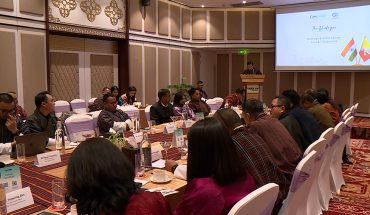
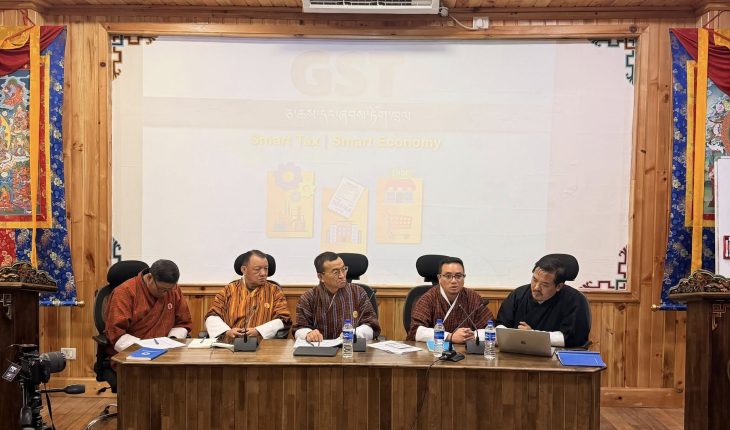
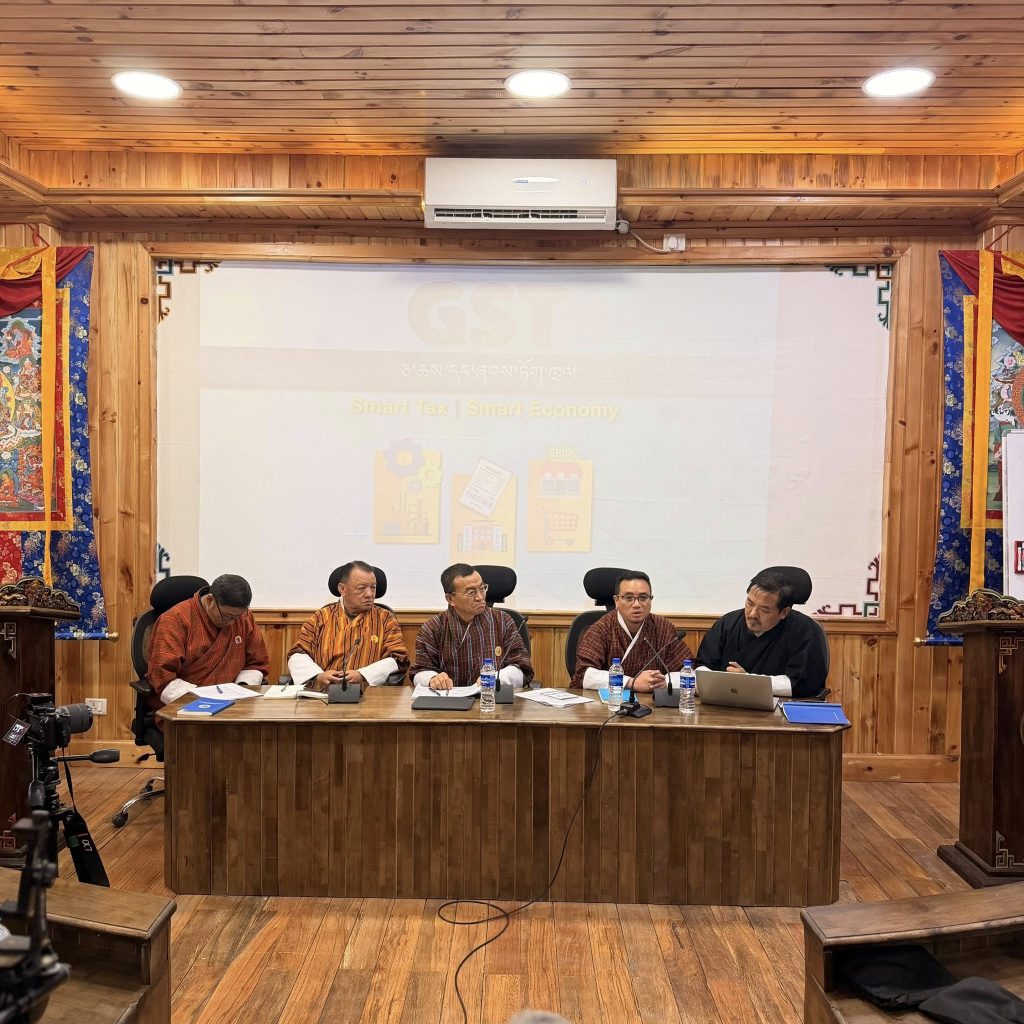
Bhutan’s transition to the Goods and Services Tax (GST) has drawn widespread attention, with both consumers and businesses seeking clarity on the new tax system. Since its implementation earlier this year, the rollout has sparked questions, confusion, and debates, prompting the Department of Revenue and Customs (DRC) and the Ministry of Finance to hold press briefings to clarify exemptions, outline the scope of GST, and address public concerns.
One area that has generated considerable public interest is the application of GST to banking services. An official from the DRC emphasized that not all banking activities are subject to the tax. “Banking services have been categorized into core and non-core activities,” a senior DRC official explained. “Core services, including managing deposit and current accounts and handling loans and credits, will not attract GST. Non-core services, such as loan processing fees, ATM and credit card usage charges, and account maintenance fees, will be subject to a 5 percent GST.”
For remittance services, the official clarified, “GST will apply only to the service fee and not to the total amount remitted, ensuring that consumers are not unduly burdened by the tax.” This distinction is intended to maintain affordability for both domestic and cross-border transfers while keeping essential financial services accessible.
Despite these clarifications, Bhutanese consumers have reported sudden price hikes across several essential commodities. The DRC attributes this to double taxation, which occurs when businesses sell old stocks imported before January 1 and inadvertently charge both the previous sales tax and the new GST. “The current price hike could be due to double taxation,” the DRC stated, “whereby businesses charge both GST and the sales tax when selling old stocks imported before January 1. Prices are likely to stabilize within three months as goods imported under the former Sales Tax regime gradually exhaust.”
The finance minister Lyonpo Lekey Dorji also addressed public concerns regarding exemptions under GST. “While there are five exemptions under the GST regime, certain items within those categories, such as extra virgin olive oil under the oil exemption, will still be taxed at five percent,” the Minister said. “Although people may face initial difficulties when GST is implemented, it is important to understand that this is not a new tax. GST will help create a uniform tax system while reducing administrative burden, ensuring transparency and fairness for all.”
Confusion persists among consumers regarding essential commodities. Although products such as rice, oil, salt, sanitary napkins, diapers, and wheelchairs are generally exempt, the exemptions do not apply uniformly to all varieties.
Kinzang Thinley, GST head explained, “Under Schedule 4c of the GST Act, one specific code of rice is exempted, two codes of oil are exempted, while all codes of salt, sanitary pads, diapers, and wheelchairs are exempted. Many brands or types of commodities come under one code, which may cause confusion, but these exemptions are applied according to the code system.”
The Competition & Consumer Affairs Authority (CCAA) also acknowledged the challenge of monitoring prices under the new tax regime. “Setting a reference price list of goods after GST is applied is near impossible,” Ugyen Penjore, Director – General of CCAA said. “There are thousands of commodities, prices keep fluctuating, and brands keep changing. While Bhutan does not have the concept of Maximum Retail Price (MRP), it can be used as a guide to understand the value of a commodity.” The statement highlights the complexities both businesses and consumers face during the early months of GST implementation.
To help navigate these challenges, the DRC has launched public awareness programs aimed at educating both consumers and businesses about GST compliance. “These initiatives are designed to clarify exemptions, billing procedures, and who is eligible to charge GST,” said Sonam Jamtsho DRC Director General. “By improving understanding, we aim to prevent overcharging, reduce confusion, and promote transparency across the market.”
Market surveillance has also been conducted through the DRC’s eight Regional Revenue and Customs Offices (RRCOs) to assess how businesses and consumers are adapting to GST. The Director General added, “Through this surveillance, we can understand the regime’s functioning and plan accordingly. It also provides insights into gaps in compliance and how to guide businesses and consumers effectively.
Since the GST rollout, more than 3,820 businesses have registered under the new regime, with 1,820 located in Thimphu. “Businesses with a turnover of Nu. 5 million and above are still registering,” the Director General stated. “Registration is crucial for compliance and ensures that businesses follow the correct GST procedures.”
The finance minister also reiterated the long-term benefits of GST. “GST ensures transparency, leaves no room for corruption, and applies equally to all businesses, creating a level playing field,” the Minister said. “While there may be initial challenges, GST is a structured system that promotes fairness, uniformity, and accountability.”
Authorities have also addressed regional variations in GST application, particularly in areas such as the Gelephu Mindfulness City, which falls under a different territorial tax jurisdiction. “Since GMC is a Special Administrative Region, we have to consider it separately,” a DRC official said. “There are some issues regarding GST, but we are in constant conversation with local authorities to resolve these matters.”
Looking ahead, the DRC and Ministry of Finance remain committed to monitoring the market, guiding businesses and consumers, and refining the GST system. “We expect that with continued education, market surveillance, and clear guidelines, GST will fulfil its goals of transparency, efficiency, and fairness,” the Director General stated. “Temporary price fluctuations are expected in the initial months, but the system will stabilize as businesses and consumers adjust.”
Experts note that GST represents a step toward modernizing Bhutan’s tax system and aligning it with international standards. By creating a uniform framework, authorities aim to simplify taxation, improve compliance, and promote a more accountable economic environment. “The implementation of GST is not just a tax reform; it is part of Bhutan’s journey toward a more structured and equitable economy,” the finance minister concluded.
As Bhutan navigates the first months of GST implementation, authorities continue to reassure the public that price stabilization is expected and that the system is designed to be fair and transparent. With ongoing surveillance, public awareness programs, and clear guidelines for businesses, the government is working to ensure that GST delivers its intended benefits while fostering trust and compliance among consumers.
The rollout of GST is a major milestone in Bhutan’s economic development, promising a more accountable and streamlined tax system. While initial challenges such as double taxation on old stock, confusion over exemptions, and temporary price fluctuations have caused concern, officials remain confident that with continued guidance and adaptation, the GST regime will provide a transparent, fair, and sustainable framework for taxation in Bhutan.