Declining farmland, rising livestock diversity, and shifting labor patterns signal major structural change in agrifood sector
TIL BDR GHALLEY | Thimphu
Agriculture and livestock sector is undergoing significant structural transformations, with shrinking cultivated areas, fluctuating crop outputs, evolving livestock populations, and a declining agricultural workforce, according to the Bhutan Agriculture and Livestock Statistics 2024 released by the Ministry of Agriculture and Livestock (MoAL).
The report provides a comprehensive overview of crop production, livestock populations, trade, labor force participation, land use, input supply, infrastructure, prices, meteorological data, government expenditure, and sectoral economic performance from 2015 to 2024.
Bhutan’s staple paddy crop continues to see a reduction in harvested area over the past decade. In 2024, paddy cultivation covered 22,276 acres, down from 23,290 acres in 2023. Despite the smaller area, total paddy production increased slightly to 41,537 metric tonnes from 40,804 metric tonnes the previous year.
Long-term data show that paddy production peaked at 86,385 metric tonnes in 2017 before declining steadily. Both irrigated and upland paddy fields contributed to output, but the long-term contraction in cultivated area highlights challenges in sustaining production levels.
“Paddy production peaked in 2017 at 86,385 metric tonnes before declining steadily over the decade,” the report notes.
Maize cultivation mirrored the paddy trend. Harvested area increased slightly from 17,141 acres in 2023 to 18,610 acres in 2024, while production rose to 27,636 metric tonnes from 25,118 metric tonnes. However, maize output remains significantly below the 94,052 metric tonnes recorded in 2017.
Other cereals, including wheat, barley, buckwheat, millet, and quinoa, also showed long-term declines in both area and output, with intermittent year-to-year variations.
Oilseed crops such as mustard, soybean, and groundnut exhibited mixed trends in 2024. Mustard cultivation declined from 902 acres in 2023 to 819 acres, with production dropping from 256 metric tonnes to 230 metric tonnes. In contrast, soybean production increased to 80 metric tonnes in 2024 from 66 metric tonnes in 2023.
Roots and tubers remain vital to domestic food production. Potato cultivation decreased from 8,016 acres in 2023 to 7,595 acres, while production remained stable at 37,778 metric tonnes—well below the 58,820 metric tonnes recorded in 2016.
Vegetables and fruits also displayed diverse trends. Chili output rose to 5,596 metric tonnes, despite a reduction in cultivated area, while cabbage production fell to 2,305 metric tonnes. Mandarin oranges remained Bhutan’s top fruit crop with 20,830 metric tonnes, down slightly from 21,170 metric tonnes in 2023. Areca nut production increased sharply to 14,405 metric tonnes, while apple production declined to 2,102 metric tonnes.
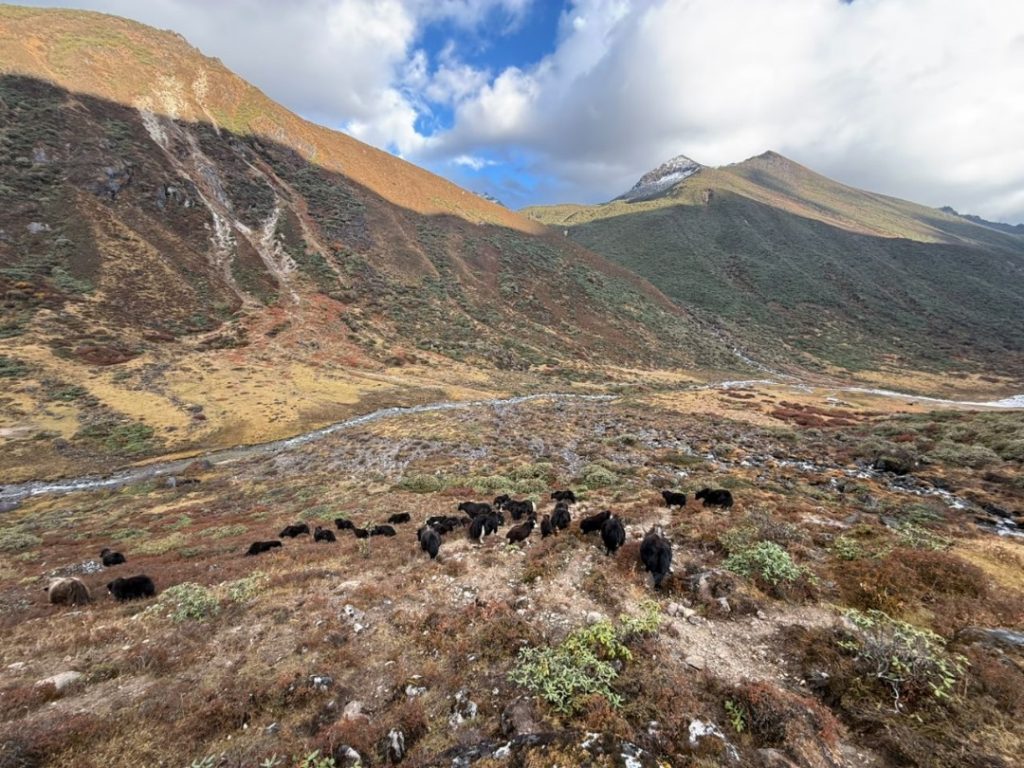
Bhutan’s livestock sector has undergone notable changes in species composition. Cattle numbers declined steadily from 302,744 in 2015 to 218,438 in 2024, while yak populations decreased from 38,222 to 29,432 over the same period.
Pig populations more than doubled, rising from 15,727 heads in 2015 to 34,059 in 2024. Poultry numbers fluctuated, peaking at over 1.38 million birds in 2021 before declining to 924,488 in 2024.
“Smaller livestock species are increasingly prominent in Bhutan’s domestic protein supply,” the report notes.
Milk production remained relatively stable at 44,038 metric tonnes in 2024, slightly up from 43,829 metric tonnes in 2023, but below the 58,197 metric tonnes recorded in 2020. Butter output stood at 1,695 metric tonnes, while cheese production increased to 2,584 metric tonnes, reflecting diversification in dairy products.
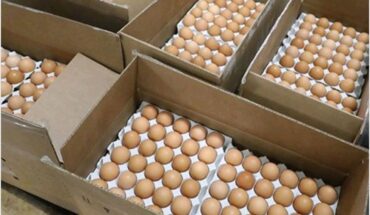
Meat production trends varied by type. Beef production fell from 1,475 metric tonnes in 2023 to 1,271 metric tonnes in 2024. Pork production remained high at 1,555 metric tonnes, while chicken meat increased to 1,208 metric tonnes. Egg production declined to 98,173 thousand eggs from 101,045 thousand in 2022. Honey production rose to 55 metric tonnes, and wool production stood at 10.78 metric tonnes.
The report highlighted a gradual structural shift toward smaller livestock and poultry in Bhutan’s domestic protein supply.
The report documents a sharp reduction in the number of people employed in agriculture. Between 2015 and 2024, the economically active population in the sector fell by approximately 22 percent. Young workers aged 20–29 experienced the steepest decline, with participation dropping by 66 percent over the decade.
This generational shift away from traditional farming raises concerns about long-term labor sustainability in rural communities.
Despite falling employment, the primary sector’s contribution to GDP rose in nominal terms from Nu 16.84 billion in 2015 to Nu 39.62 billion in 2024. Crop production contributed Nu 18.40 billion, while livestock added Nu 21.22 billion.
The report also examines government expenditure and sectoral productivity, highlighting changes in GDP per employed person within agriculture over the decade.
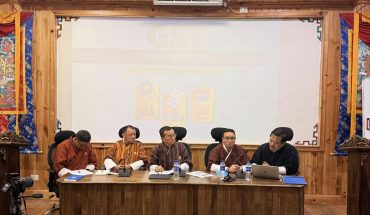
“The statistics provide carefully harmonized and validated data to support planners, policymakers, researchers, and academicians,” said Karma Tshering, Policy and Planning Division of MoAL.
The report draws from multiple official sources, including the National Statistics Bureau, Department of Agriculture, Department of Livestock, and other agencies, and is intended to support evidence-based policy and sectoral monitoring.
The 2024 statistics underscore long-term structural shifts in Bhutan’s agriculture and livestock sector. While staple crop areas continue to shrink and outputs fluctuate, livestock populations are diversifying, dairy and meat production remain steady, and agricultural employment is declining, all amid a growing contribution to GDP.
These trends provide critical insights for policymakers, planners, and researchers seeking to strengthen Bhutan’s agrifood sector, improve productivity, and ensure long-term sustainability and resilience.