RENUKA RAI | Thimphu
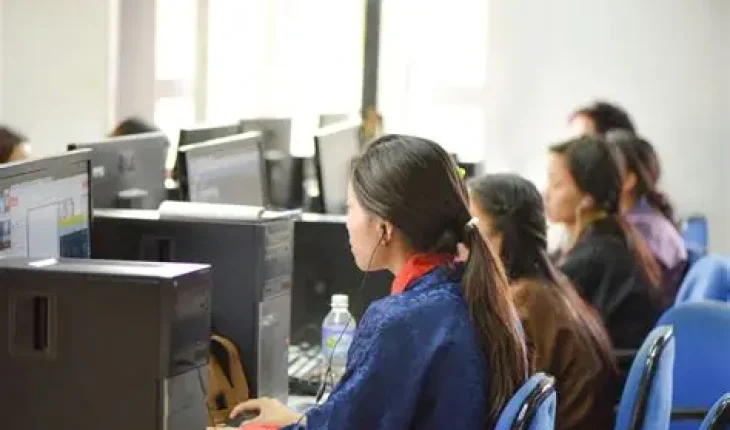
When new software is introduced at a workplace, the change rarely announces itself dramatically. There are no mass layoffs, no sudden disappearance of jobs. Instead, the transformation is quieter. Tasks move faster. Screens replace paperwork. Deadlines tighten. Over time, workers realize that their jobs feel different, even if their job titles remain the same. New data from the Jobs and Skills Survey (JSS) pilot study conducted in Bhutan, Georgia, and the Philippines shows that this subtle transformation is now widespread, with technology reshaping not just what people do at work, but how fast they do it, where they work, and how secure their livelihoods feel.
In Bhutan, the adoption of new workplace technologies has already reached deep into everyday work. According to the survey, fewer than 3 percent of workers across education levels reported no change in their tasks or work pace after new software or apps were introduced. For the overwhelming majority, technology altered job content in some way. The most common change was not task elimination, but speed. More than half of Bhutanese workers 54.7 percent with primary education and 53.3 percent with higher education said they now perform the same tasks at a faster pace.
Georgia displays a nearly identical pattern. Across education levels, speeding up existing tasks was the dominant adjustment, reported by roughly half of workers who experienced technology adoption. These figures suggest that in both Bhutan and Georgia, technology is primarily being used to enhance productivity rather than replace workers outright. However, productivity gains come with trade-offs. Faster task performance often translates into higher work intensity, with employees expected to complete more tasks in the same amount of time.
Education level plays a subtle but important role in how technology reshapes jobs. In Bhutan, workers holding certificate or diploma qualifications stood out, with 33.8 percent reporting that they no longer perform some tasks they previously did after new technologies were introduced. This share was notably higher than among workers with primary or higher education. The data suggests selective task replacement, where routine components of jobs held by mid-skilled workers are automated, while other responsibilities remain intact.
The experience in the Philippines is more disruptive. Across all education levels, more than 25 percent of Filipino workers reported that they no longer do some tasks that were previously part of their jobs following the adoption of new software or apps. This level of task replacement is significantly higher than in Bhutan and Georgia and points to deeper automation pressures. Analysts link this trend to the Philippines’ heavy concentration in routine-intensive service sectors, particularly business process outsourcing, where standardized cognitive tasks are more easily automated.
While technology is reshaping job tasks, it is also changing how work is organized. Digital platforms have enabled new forms of employment, including online freelancing, delivery services, and ride-hailing. Yet the JSS data shows that platform work remains marginal in Bhutan and Georgia. In Bhutan, daily participation in any form of platform work rarely exceeds 1.4 percent of workers, regardless of whether the work is home-based, task-based, or delivery-related. Georgia shows similarly low participation, with most platform work categories registering close to zero daily engagement.
Work–life balance follows a similar pattern. In Bhutan, traditional workers overwhelmingly reported that their work fits well with their personal lives. Platform workers’ experiences were more mixed. While delivery and driving platform workers reported no dissatisfaction, home-based and outside-home platform workers showed small but visible shares reporting that work fit “not very well” with their personal lives.
The survey also sheds light on where people work, revealing the limited reach of remote work in Bhutan despite global trends. In Bhutan, men most frequently worked daily at employer-assigned locations or in agriculture, while women were more likely to work every day on farms, at home, or in their own businesses. Working from home as a formal arrangement remained relatively uncommon, reflecting both occupational structures and infrastructure constraints.
Skills mismatches remain a major concern. In Bhutan, over 90 percent of workers reported that their skills match their jobs, indicating relatively low perceived mismatch. Georgia presents a different picture, with a high incidence of overqualification, particularly among university graduates, many of whom report that their education exceeds job requirements. The Philippines recorded the lowest skills matching, with substantial shares of workers reporting both overqualification and underqualification, highlighting inefficiencies in the education-to-employment pipeline.
Access to training further shapes how workers adapt to technological change. Higher-educated workers across all three economies are significantly more likely to receive employer-provided training or engage in self-learning when new technologies are introduced. In Bhutan, self-learning plays a particularly important role, while in Georgia, upskilling rates are notably low. In the Philippines, employer-led training is more common, reflecting structured training systems in large service-sector firms.
As Bhutan continues its digital transition, the data offers an early warning. Jobs are not disappearing overnight, but they are changing rapidly. Tasks are accelerating, skill demands are rising, and new forms of work are emerging alongside old ones. Whether these changes lead to better jobs or deeper inequalities will depend on how quickly institutions respond. The future of work, the data makes clear, is already unfolding quietly, steadily, and unevenly.