DAWA ZANGMO | Paro
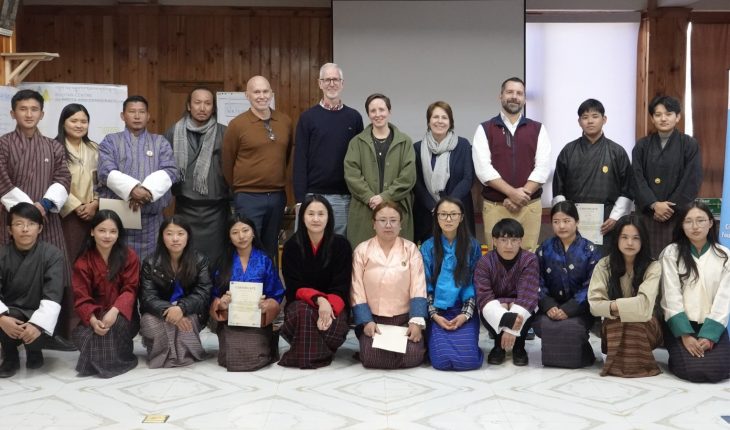
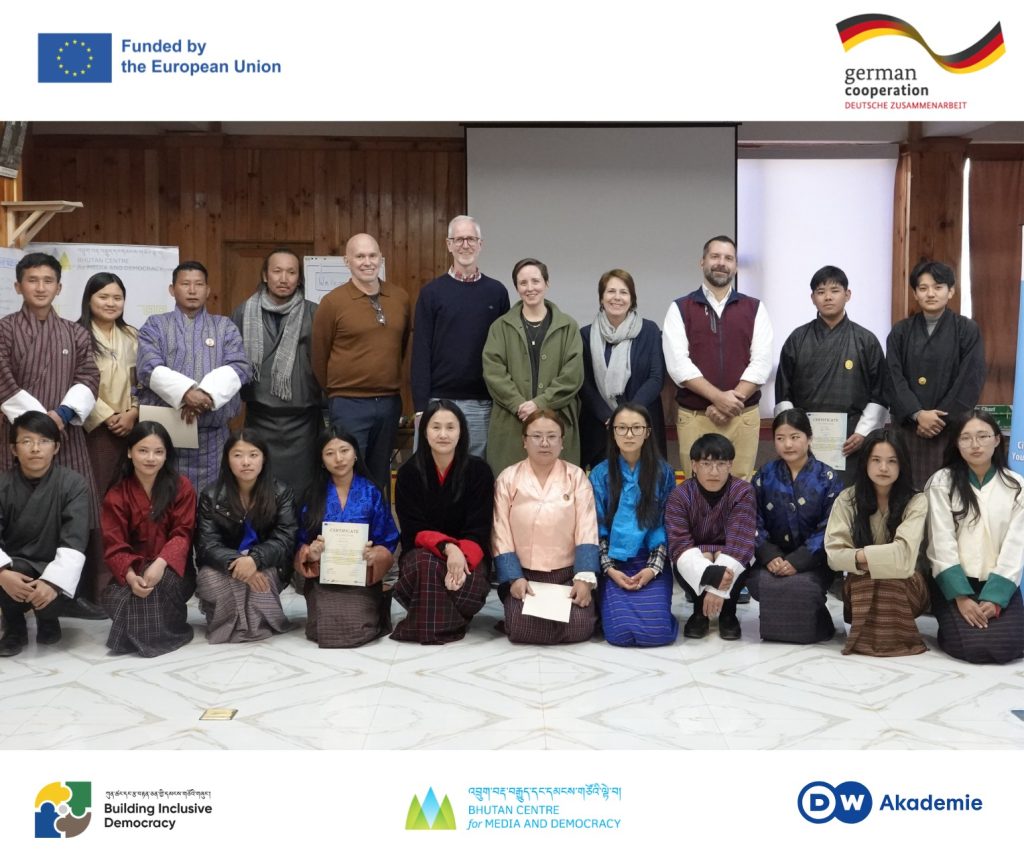
16 journalists representing five media houses took part in a five-day journalism training workshop being held from January 26 to January 30 in Paro.
The programme is being organized by the Bhutan Centre for Media and Democracy (BCMD) in partnership with DW Akademie under the European Union and BMZ funded project titled “Building Inclusive Democracy”.
It aims to foster civil society, parliamentarians, media and youth to help strengthen Good Governance in Bhutan. The sessions are facilitated by trainers from DW Akademie.
The workshop focuses on strengthening core journalistic competencies by addressing foundational principles, and applying essential quality journalism standards.
These standards include accuracy, verification, balance, ethical reporting practices, and accountability, all of which are central to maintaining public trust in the media.
Throughout the training, participants engaged in both individual and group-based exercises designed to examine how misinformation and bias can affect news reporting.
The activities highlighted the consequences of inaccurate or unverified information while reinforcing the importance of credibility, transparency, and professional responsibility in journalistic work.
Trainers also encouraged participants to critically assess sources, question assumptions, and apply rigorous verification methods beyond basic interviews.
Strong emphasis was placed on multimedia journalism, reflecting the evolving demands of digital newsrooms.
Journalists were trained to produce complete news stories that combine text, audio, and visual elements in a cohesive and ethical manner.
The sessions also stressed professional standards related to attribution, consent, and disclosure, particularly in relation to the use of artificial intelligence tools in news production.
According to BCMD, the training is part of a broader effort to strengthen the capacity of Bhutanese journalists to adapt to changing media environments while maintaining high ethical standards.
The programme aims to equip participants with the skills needed to deliver accurate, responsible, and innovative reporting that contributes to informed public debate and inclusive democratic participation.
BCMD Programme Officer Sonam Yangden said the training was developed in response to gaps identified through a needs assessment conducted among media houses, particularly in relation to the use of artificial intelligence in journalism.
She said the workshop represents BCMD’s first training initiative with a specific focus on AI and journalism, providing participants with practical skills while establishing a foundation for more advanced AI related capacity building programmes in the future.
She added that collaboration with DW Akademie, along with support from the European Union and BMZ, has strengthened BCMD’s efforts to promote ethical, credible, and inclusive journalism in Bhutan.
According to her, the partnership brings technical expertise, international best practices, and structured capacity-building opportunities that benefit local media professionals.
Sonam Yangden further said the training is designed to help journalists address challenges related to misinformation, bias, and the responsible use of AI tools.
By strengthening ethical standards, digital literacy, and multimedia reporting skills, the programme aims to support journalists in producing accurate, balanced, and responsible news content within rapidly evolving digital newsrooms.
Participants also shared their reflections on the training and its relevance to their professional work.
Yeshi Dolma, a reporter from Bhutan Today, said the sessions underscored the importance of critical thinking in journalism, particularly the need to question information, analyses context, and understand how bias can influence reporting and credibility.
She said the training helped her become more conscious of word choice, story framing, and source selection in order to avoid misleading audiences or reinforcing stereotypes.
She also noted that the sessions improved her understanding of how AI tools can be applied ethically and responsibly to support accurate, fair, and professional journalism.
Yeshi Dolma added that the workshop highlighted the value of independent verification beyond interviews and provided her with new skills in using photographs and videos to enhance multimedia storytelling.
Similarly, Ugyen Tshering, a reporter from The Bhutanese, said the training reinforced the role of critical thinking in journalism, including questioning information, analysing broader contexts, and recognizing how bias can affect credibility.
He said the sessions emphasized the importance of being careful with language, framing, and source selection to prevent the spread of misinformation and harmful stereotypes.
Ugyen Tshering further said the training deepened his understanding of the ethical and responsible use of AI tools in journalism, particularly in supporting accurate and fair reporting.
He also highlighted the importance of independent verification and noted that learning how to effectively use photos and videos strengthened his approach to multimedia storytelling.
The workshop reflects a growing recognition of the need to adapt journalistic practices to digital transformation while maintaining professional integrity.
By combining discussions on ethics, verification, and critical thinking with practical multimedia and AI-related skills, the training aims to prepare journalists to navigate complex information environments and uphold quality journalism standards.
The programme is expected to contribute to stronger newsroom practices and more informed public discourse by enhancing the skills and ethical awareness of journalists working across Bhutan’s media landscape.