NGAWANG JAMPHEL | Thimphu
The Lungta Art Festival 2026 was launched on February 21. marking the beginning of a year-long celebration of art, culture and environmental awareness in Bhutan.
This auspicious alignment provided a meaningful foundation for the festival and encouraged reflection inner virtues, personal responsibility and collective well-being. 2026 is observed as the year of the horse in the Bhutanese calendar, also carried special meaning
The festival was organised by VAST Bhutan under the leadership of its founder and artist Karma Wangdi.
It also commemorated the 46th birth anniversary of His Majesty The King. The festival paid tribute to His Majesty’s visionary leadership and unwavering dedication to the peace, unity, and well-being of the Bhutanese people.
The objectives of the festival were to promote the interconnectedness of social, cultural, and spiritual values for societal growth, peace, and harmony.
It also aimed to create awareness about the urgent need to protect Bhutan’s fragile mountain ecosystems and to inspire positive social and behavioural change through a shared process of community engagement.
The year-long festival unfolded in three transformative phases: Unveil (Discovery and Introduction), Untangle (Resolution and Restoration), and Unleash (Transformation and Empowerment). These stages guide participants on a journey of awareness, reflection, and action
The festival was organised by VAST Bhutan under the leadership of its founder and artist Karma Wangdi.
It also commemorated the 46th birth anniversary of His Majesty The King. The festival paid tribute to His Majesty’s visionary leadership and unwavering dedication to the peace, unity, and well-being of the Bhutanese people.
The objectives of the festival were to promote the interconnectedness of social, cultural, and spiritual values for societal growth, peace, and harmony.
It also aimed to create awareness about the urgent need to protect Bhutan’s fragile mountain ecosystems and to inspire positive social and behavioural change through a shared process of community engagement.
The year-long festival unfolded in three transformative phases: Unveil (Discovery and Introduction), Untangle (Resolution and Restoration), and Unleash (Transformation and Empowerment).
These stages guide participants on a journey of awareness, reflection, and action.
The Lungta Art Festival was founded on the profound symbolism of the Lungta, a significant trans-Himalayan concept that represented vitality, good fortune, and the power to overcome obstacles.
Lungta is believed to be an inner life force that influenced a person’s well-being. When one’s Lungta is “flying high,” a person is considered healthy, fortunate, and successful. When it is low or diminished, challenges and misfortunes are believed to follow.
The festival also honoured the compassionate leadership of His Majesty The King, whose strength and wisdom were said to reflect the spirit of the Lungta.
Organisers described the event as a national tribute celebrating loving-kindness and basic human goodness — the innate compassion and ethical responsibility that unite all sentient beings.
By combining contemporary art with Bhutan’s rich spiritual and cultural heritage, the festival offered opportunities for personal reflection and spiritual reconnection.
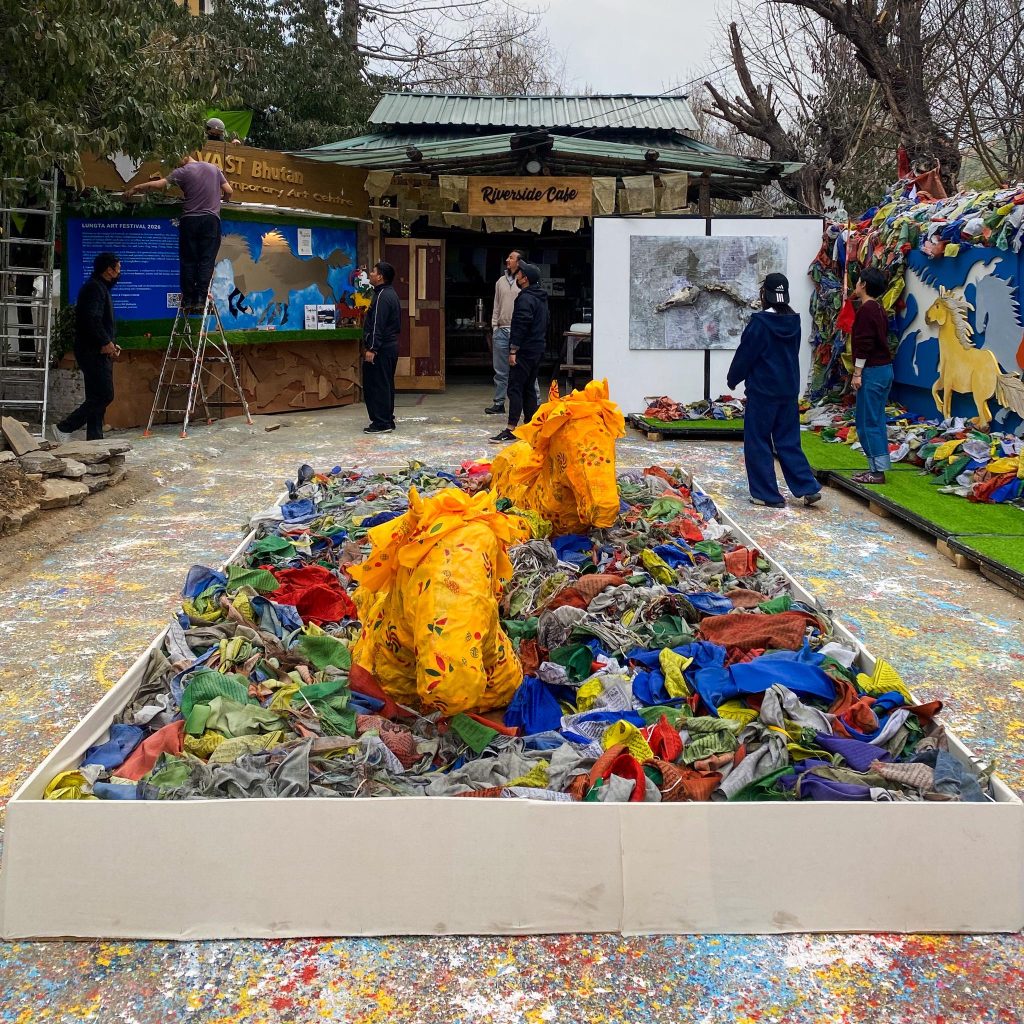
A key focus of the festival is the growing environmental concern over synthetic micro-plastic pollution in the Himalayan region.
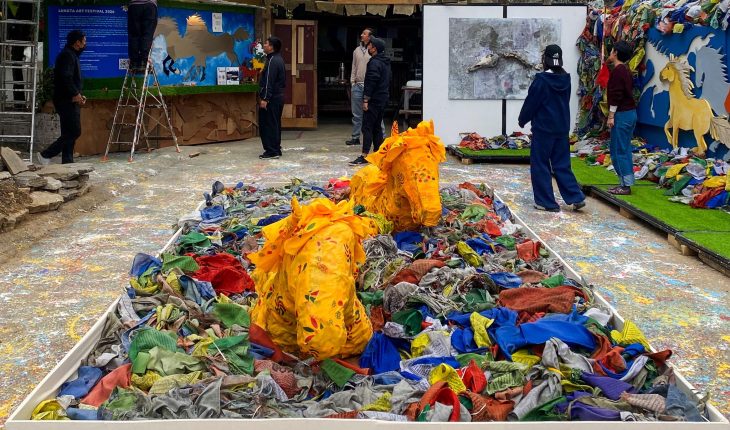
Organisers highlighted that many modern Lungta prayer flags were made from synthetic materials such as polyester and nylon. These materials take centuries to decompose and contributed to pollution in glaciers, snowfields, rivers, and forests.
Prayer flags are held in deep religious and cultural significance in Bhutan. Hoisting them is believed to spread prayers, blessings, and goodwill through the wind.
Traditionally, they are placed on mountain tops, near rivers, and in high open spaces so that positive energy could flow freely.
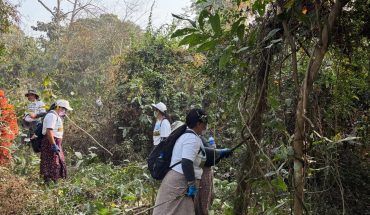
However, once the flags become old and torn, they are often left scattered and discarded across hillsides and forests. Many people are unaware of the environmental impact caused by these non-biodegradable materials.
During the festival, 60 artists displayed more than 140 artworks. Through paintings, installations, and mixed media creations, the artists educated the public about the spiritual meaning of Lungta prayer flags and the environmental issues linked to their improper disposal.
The artworks encouraged visitors to reflect on important questions: Where did prayer flags go after they faded? Were people aware of the materials used to produce them? How could faith and environmental responsibility be balanced?
As part of the year-long programme, VAST Bhutan conducted discussions and workshops on designing and producing biodegradable Lungta prayer flags.
The organisation involved artists, designers, and members of the public in exploring sustainable alternatives. The goal was to promote environmentally friendly materials that respected tradition while protecting nature.
Organisers expressed hope that the Lungta Art Festival 2026 would inspire citizens to adopt more mindful and responsible practices. They emphasised that protecting the environment was a shared duty.
By blending art, culture, spirituality, and environmental advocacy, the festival served as a powerful reminder that faith and ecological responsibility were closely connected.