From a first reading of ‘As I Am, So Is My Nation’
- By Dorji Thinley
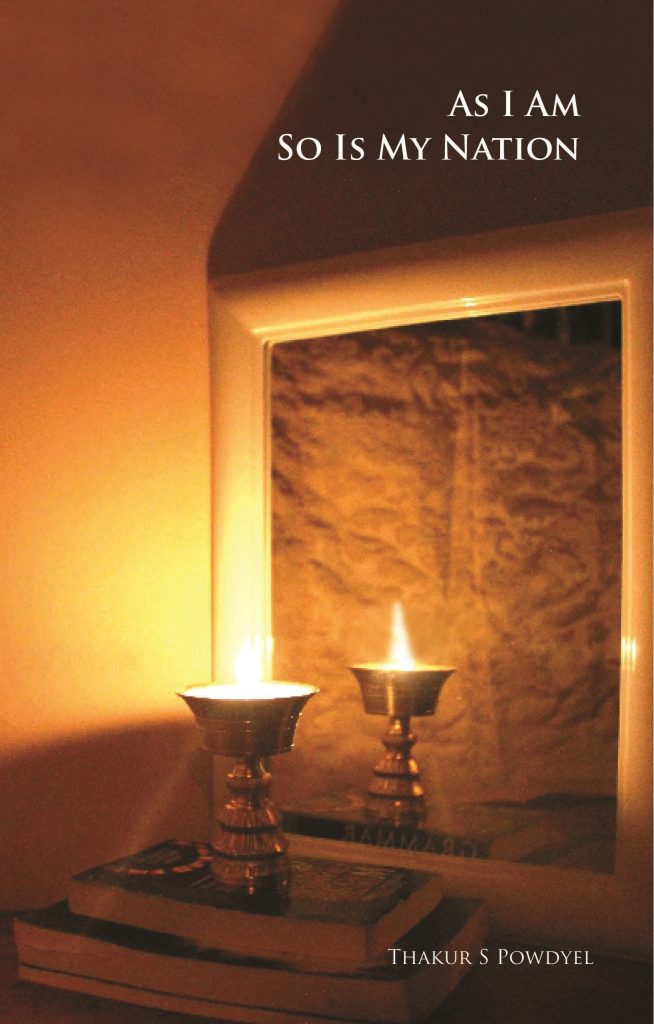
There is good news for book lovers. The second edition of former Minister of Education Thakur Singh Powdyel’s ‘As I Am, So Is My Nation’ has come out of the press as a refreshing contribution to the rich corpus of South Asian writing in English. An impressive collection of twenty-seven chapters, the work is a crystalline representation of the author’s intuitive and practical understanding of many of the questions we ponder as citizen, parent, son, daughter, educator, builder, bearer, or philosopher. The book’s free-flowing poetry, rich experiential wisdom, and deep practical insights give it the qualities of what the seventeenth century English poet John Milton called “a good book” that embodies the “precious lifeblood of a master spirit”. The recurrent theme of wholeness, “harmonized perfection”, or the interconnectedness of all phenomena weaves its many different pieces together as a splendid piece of art work. In this pattern, the reader sees a person’s inner and outer self and their resident motivations and actions in relation to those outside the narrow self, including the natural world. Through striking illustrations, telling allusions, and compassionate reminiscing, the book argues inexorably that the extent to which we understand the wisdom of interrelatedness (or oneness) or how far this profound understanding guides our everyday thought and action is dependent on how the mind is nurtured at home, in school, in office, and in society. Works of art, architecture, history, language, literature, or the values of democracy or diversity will only sustain on the strength and character of the mind.
The celebrated American writer and philosopher Henry David Thoreau once said that “A truly good book teaches me better than to read it. I must soon lay it down, and commence living on its hint”. ‘As I Am, So Is My Nation’ is a celebration of our innate ability to be good and to do good. This capability develops with the mind’s intelligent absorption of the myriad impressions it receives through our many faculties of seeing, hearing, smelling, tasting, feeling, perceiving, among others. Reading the chapter ‘Gifts of My Life’ brings all of the reader’s senses to full play – imbibing the majesty of the sun or the moon, the sound of solemn prayer or poetry, raindrops or sweet laughter. At the same time, powerful images such as the succulent “rose and rhododendron”, “cosmos and chrysanthemum” and numerous others that move like verdant spring in the text’s rich landscape not only evoke a sense of immediate affinity with nature, their tireless recurrence across the chapters also signals a painful reminder of how our mind is continually exposed to the trivial and the ephemeral, depriving itself of the native, natural and the valuable. That is why, the book projects the mind as the “fount of all enlightenment” as well as the “womb of all ignorance”.
Environmental compassion and sensitivity is at the heart of the book’s thematic character. The narrative is characterized by discerning allusions to our everyday actions in relation to nature. The reader experiences a riveting sense of awareness as well as guilt regarding what human beings do to the natural world. For example, “We burn the forest and kill the trees, hunt the deer and trap the hornbill … We foul up the air and besmear the seas … We do violence to the source of our life”. Without indulging in tall moralizing like an activist, the author thumps the message home through pithy references to our everyday actions such as “throwing rubbish into the river”, “writing filth on the walls” or “carving dirt on the desk”. Throughout, the reader’s own actions and mental habits are challenged. If read seriously, ‘As I Am, So Is My Nation’ will surely inspire the reader to commence living on the book’s hints about the good life.
To the developing mind, home and family are the “cradle of tenderness”. It is at home and with the love and care available in the family that a person first learns the values of love, goodness and grace, care and kindness, health and happiness, diligence and gratitude. Nurtured in the rich and enduring values of the family, a person learns to cultivate a kind of friendship outside the family domain that “knows no colour or community, race or religion, ethnicity or nationality”. Hence, “the circle of our friendship depends upon the size of our heart”, argues the book. Thus, friendship built on the values of love, belonging and solidarity will nurture societies that are sustained by the enduring values of goodwill, fellow-feeling, and mutual tolerance.
The irony of modern education, the author argues, is that “its inspiration comes from the open market and not from ideals and visions that elevate the mind and expand the heart”. Therefore, the role of school education is important. Deeply reflective yet starkly real, pensive and philosophical yet closely familiar and practical, the chapter ‘This, My Temple of Learning’ (the school) evokes the reader’s own memories of early life in school and provides a nostalgic, and at times sad, reminder of how the latter shaped the inner and outer characteristics of one’s personality. The school is the “home of plenty”. Here children from different backgrounds and experiences meet – those from “towns and villages, hills and valleys, farm-houses and road-side huts, rich mansions and humble shelters” – to celebrate diversity and construct their dreams together. The chapter offers penetrating insights into what school curricula and teaching can do to children’s intellectual, emotive and social development. Translating curricula into values and experiences that can transform a student’s inner and outer life will need teachers who come to school with their “unbroken, harmonious and committed self”.
An outstanding quality of the book lies in the depth of understanding it demonstrates regarding culture. A central argument that the book presents indefatigably is that culture “advances and blossoms through respect, sensitivity and honesty”, which will be possible through good education. Good cultural education nurtures goodwill and tolerance. No wonder, the ancient Greeks defined a ‘cultured’ person as someone with a “finely tempered nature” and in whom the quality of “harmonious perfection” manifested spontaneously.
The perspective on the pursuit of happiness as a development goal is profound. The emphasis, as the book suggests, should be on the value of living the ideals through commitment, passion and disinterested pursuit in one’s own life. This makes moralizing about or preaching GNH less valuable and acts, for example, of respect for nature or truth and honesty in daily life more meaningful and of positive benefit to self and others. Hence, “GNH is a template to set our own house in order. But if lived well, the examples set could also encourage efforts to “set the world in order”, the book argues.
The author confesses that the work is in some ways a statement of the way he has lived his life. Yet, the living may not have been as perfect, he admits, as it is dreamt in the many chapters that make this book. The reader feels the same way. Herein lies the power of this refreshing work of fine intellect, big heart, and spacious mind. It puts the reader under pressure to want to start life afresh on the books’ key messages. But one becomes increasingly convinced, page after page, that this can be pursued a lot more easily only if one is willing to undertake the inner journey to see how it shapes the outer. The act of learning should then never stop.
Coming from one of the country’s finest thinkers and writers, ‘As I Am, So Is My Nation’ is a precious gift to all those in search of a meaningful life. Everybody – teacher, student, parent, civil servant, lawmaker, law enforcer, gardener, artist, scientist, culture bearer, you name it – must read it. It is so relevant to our times.
_________________
Dorji Thinley (PhD) is Director of Research and External Relations in the Royal University of Bhutan.