DAWA ZANGMO | Thimphu
Fuel prices across the country have risen sharply, placing immediate financial pressure on taxi drivers, even as vegetable prices in local markets remain unchanged for now.
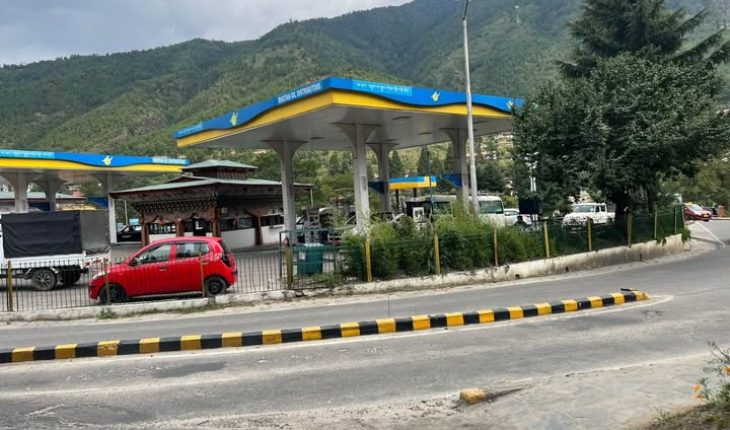
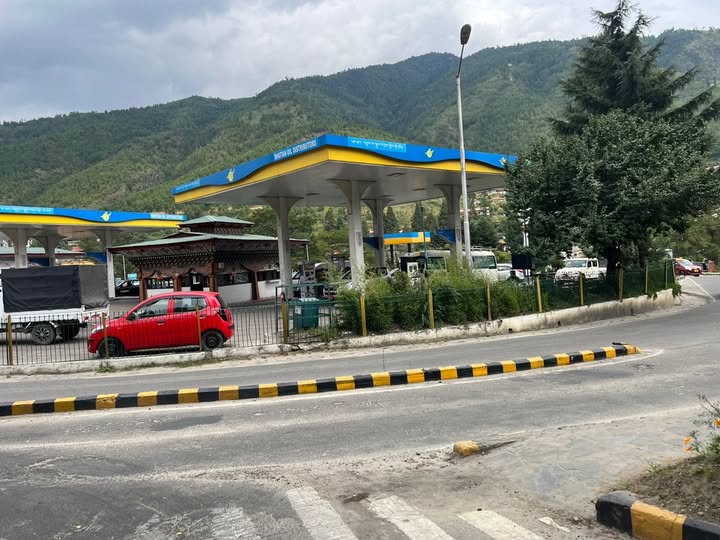
The latest revision has pushed diesel to Nu 108 per litre, petrol to Nu 85, and liquefied petroleum gas (LPG) to Nu 1,131 per cylinder. This reflects increases of nearly Nu 38 per litre for diesel, Nu 22 for petrol, and Nu 74 for LPG.
For taxi drivers in Thimphu, the impact has been immediate, with higher operating costs cutting into daily earnings while fare rates remain fixed.
Tshering Dorji who is taxi driver of Thimphu to Paro, said the surge in fuel prices has significantly reduced his ability to save. He explained that he previously managed to set aside between Nu 2,000 and Nu 3,000 a day, but now struggles to save even Nu 1,000.
He added that the cost of refueling has risen considerably. Filling 19 litres of diesel now costs more than Nu 2,050, compared to about Nu 1,330 earlier, marking an increase of over Nu 700.
Tshering Dorji also pointed out that rising living expenses have compounded the pressure. He noted that with costs such as food and accommodation increasing, managing daily expenses has become more difficult.
He also suggested that a revision of taxi fares by the Bhutan Construction & Transport Authority (BCTA) in line with fuel price changes would help drivers cope. Tshering added that taxi driving is his primary source of income and expressed concern about sustaining his family if the situation persists.
Another taxi driver Karma Wangchuk, who has been working in Thimphu for the past two years after previously operating in Wangdue, shared a similar experience.
He said the cost of filling a tank has nearly doubled, rising from around Nu 750 earlier to about Nu 1,400 now. He added that fixed fare structures prevent drivers from passing the additional costs on to passengers.
Sangay Tshewang, another driver, said that while his overall income has not changed significantly, fuel efficiency in terms of cost has declined. He explained that Nu 1500 worth of fuel used to last about one and a half days, but now lasts only a single day.
He further noted that the same amount of money now buys roughly 9 litres of diesel, compared to more than 14 litres previously. He added that if prices remain high, authorities should consider allowing more flexible or higher fare rates to support drivers.
Despite the sharp increase in transport costs, vegetable prices in Thimphu’s markets have not yet been affected.
Netisha Gurung, the owner of Ana Tshongkhang, Babesa, said prices have remained stable as he continues to sell from existing stock. However, she indicated that increases may be inevitable if fuel costs remain high.
She explained that grocery prices could rise between Nu 5 and Nu 50, as transporters may eventually begin charging higher rates due to increased fuel expenses.
Other vendors echoed similar concerns, stating that while current prices remain unchanged, continued increases in transport costs are likely to push up vegetable prices in the near future.
According to the Ministry of Industry, Commerce and Employment, the recent fuel price hike is largely driven by global developments rather than domestic policy decisions.
The ministry stated that the revision is based on fuel import invoices received from India, Bhutan’s sole supplier of petroleum products. It noted that the increase is linked to rising global crude oil prices as well as currency fluctuations.
Brent crude oil prices have risen significantly in recent weeks, increasing from around USD 70 to USD 106 per barrel. This surge has been attributed to supply uncertainties associated with the ongoing conflict in the Middle East.
Officials also pointed out that a substantial portion of India’s crude oil imports passes through the Strait of Hormuz, a key transit route that has contributed to market volatility.
As Bhutan relies entirely on fuel imports from India, such global market changes have a direct impact on domestic fuel prices. In addition, fluctuations in the Indian rupee against the US dollar have further increased the cost burden.
In a public advisory issued on March 19, the Prime Minister’s Office (PMO) clarified that the rise in fuel prices is not the result of new taxes or additional fees.
The PMO notified that Bhutan follows a pricing system based on international market rates and actual procurement costs.
While this approach ensures transparency in pricing, it also means that domestic fuel prices are more directly influenced by global market fluctuations.
The advisory acknowledged the strain that rising fuel prices place on households, transport operators, and businesses. It also stated that the government is exploring measures to ease the burden while maintaining a stable supply of fuel in the country.
The Royal Government of Bhutan has approved the National Fuel Price Smoothening Framework (NFPSF) as a measure to address the impact of rising fuel prices, following a special session of the Lhengye Zhungtshog held yesterday.
The decision comes amid one of the most severe global fuel price shocks in over two decades, which has increased pressure on transport costs, food prices, and the overall cost of living. The government stated that the framework is intended to prioritize public welfare while maintaining economic resilience and fiscal prudence.
The NFPSF will establish ceiling and floor prices for fuel, to be reviewed on a fortnightly basis. This mechanism is designed to ensure that domestic fuel prices remain within the economy’s absorptive capacity, with the level of government intervention determined accordingly.
Under the framework, price-smoothing measures for diesel will take effect immediately, as current domestic prices exceed the ceiling. This requires a subsidy of Nu. 16 per litre. No intervention will be applied to petrol at this stage, as its domestic price remains below the ceiling level.
The policy will reduce the price of High-Speed Diesel (HSD) in Thimphu from Nu. 108 per litre to Nu. 92 per litre, while prices in other dzongkhags will decrease by Nu. 16 per litre. Diesel, which supports sectors such as agriculture, construction, manufacturing, logistics, and public transport, is expected to deliver broad-based relief and reduce inflationary pressures on essential goods and services.
The government acknowledged the fiscal implications of the intervention but stated that the framework is designed to balance immediate relief with long-term economic stability.
It also called on citizens and businesses to adopt responsible energy consumption practices, noting the country’s dependence on imported fossil fuels and vulnerability to external supply disruptions.
The government said that it will continue to monitor international developments and respond as necessary to protect livelihoods and maintain economic stability.
The NFPSF will come into effect from midnight of 21 March 2026.
Although the impact of the fuel price hike is already being felt by drivers, its effect on essential commodities such as vegetables has not yet materialised. However, both drivers and market vendors cautioned that if transport costs continue to rise, increases in the prices of goods may follow.