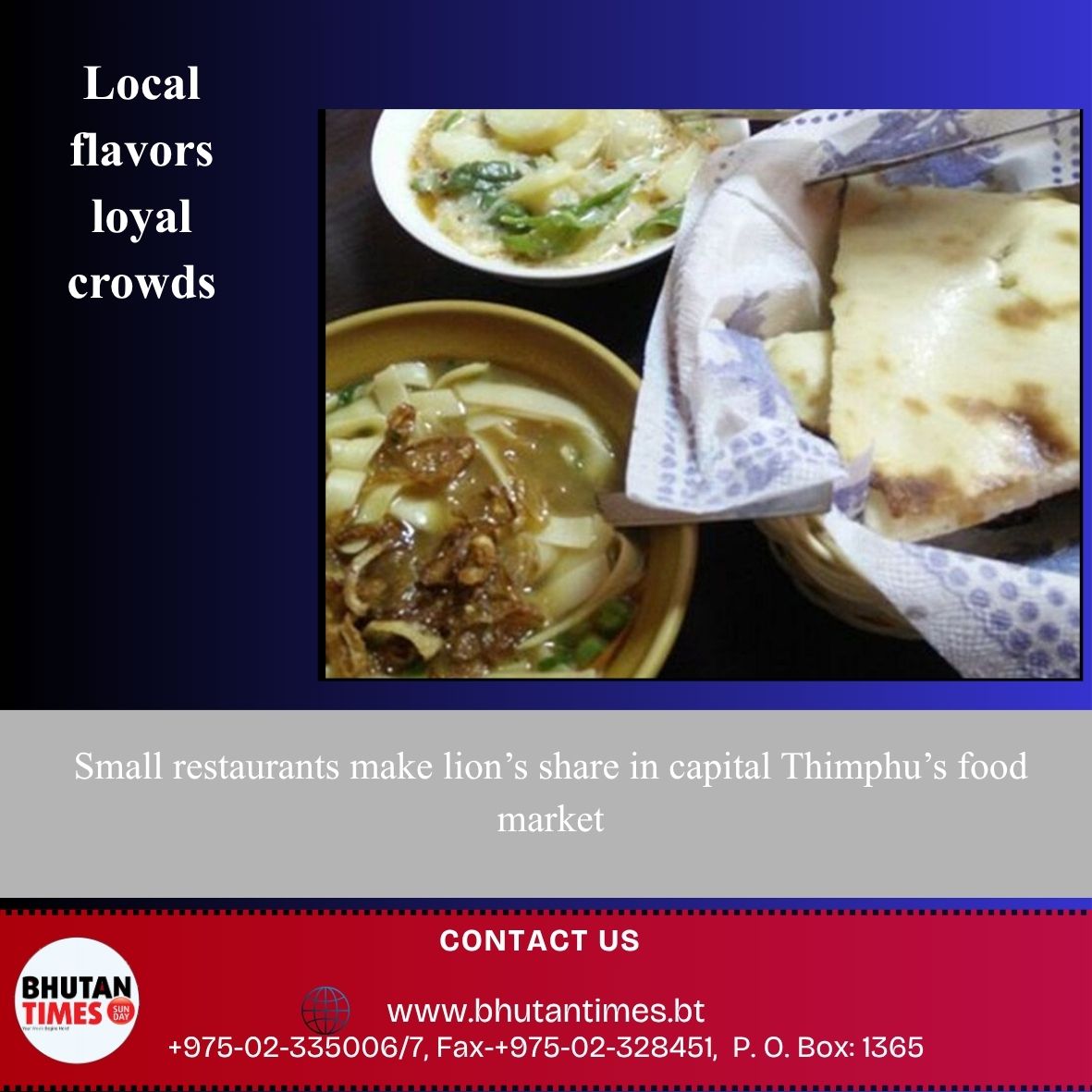
Small restaurants make lion’s share in capital Thimphu’s food market
KARMA CHOGYAL YOEZER | Thimphu
Small, modest restaurants across Thimphu continue to play a vital role in the city’s daily life, offering affordable, familiar and filling meals that many residents depend on every day. Despite lacking polished interiors or upscale presentation, these eateries remain popular for their consistency, accessibility and deep connection to Bhutanese food culture.
For many residents, these restaurants are not occasional choices but part of a daily routine. Office workers drop in during lunch breaks, students gather for quick meals, and families rely on them for something satisfying without spending too much. Their appeal lies in serving food that is hot, reliable and comforting qualities that keep customers returning.
Kinley Choden, 27, a regular customer, said the experience in small restaurants feels more personal, with reasonable prices and a sense of familiarity often missing in larger establishments.
Similarly, Sonam Dhendup, 37, said he prefers small eateries because the food is inexpensive, homely and fresh, adding that even without a luxury setting, the meals feel authentic and portions are generous.
At the centre of this everyday food culture is Bhutanese cuisine in its simplest and most honest form.
Ema datshi, the country’s iconic dish made of chilli and cheese, remains one of the most popular choices. Served with red rice, it offers warmth and comfort while reflecting the strong flavours that define local taste.
Other common dishes include kewa datshi, shamu datshi, pork with chillies, beef curry, dried meat and seasonal vegetables, all prepared with a focus on satisfying hunger rather than presentation.
Momos are another essential part of Thimphu’s small restaurant culture. Whether steamed or fried, they are widely enjoyed for being quick, affordable and filling. A good plate of momos is judged by simple standards: soft wrappers, flavourful filling and well-balanced chilli paste. In many eateries, momos are a key reason customers return.
Other staples such as thukpa, fried rice and chowmein are also popular choices. During colder months, a bowl of hot noodle soup becomes especially comforting.
These dishes are typically served without decoration, but their generous portions and strong flavours meet the practical needs of customers who prioritize nourishment over presentation.
Beyond the food itself, the atmosphere of small restaurants adds to their appeal. Most operate with a limited number of tables and short menus focused on frequently ordered dishes. The kitchen is often close to the dining area, allowing customers to hear orders being called out and smell food as it is prepared. The experience feels immediate and connected to everyday life, rather than staged or commercial.
This sense of closeness is reflected in the service as well. Owners and staff may not follow formal dining practices, but they often recognise regular customers and remember their preferences.
They know who prefers extra chilli, who orders momos regularly, and who arrives just before the lunch rush. This familiarity builds trust and encourages loyalty.
Tshering Yangki, 30, a restaurant owner, said most customers look for meals that are fresh, locally sourced and comforting, with a balance of spice and traditional flavour.
This understanding of customer preference helps small restaurants maintain their relevance in a changing urban environment.
While taste and affordability remain key factors, food safety and hygiene are also important considerations. The Bhutan Food and Drug Authority play a significant role in ensuring that food served across the country meets safety standards.
Through regular inspections, testing and certification processes, the authority works to maintain quality and protect public health.
In addition, food-handler training programmes are provided for those working in restaurants, cafés, canteens and catering services.
These programmes focus on hygiene practices, including personal cleanliness, safe storage, temperature control and prevention of contamination.
Such measures are increasingly important as customers pay attention not only to taste but also to the cleanliness and safety of the places they dine in.
Small restaurants continue to remain important, particularly at a time when the cost of living affects many households. By offering meals that are affordable, filling and consistent, they meet the daily needs of a wide section of the population.
For many residents, this practical value outweighs the appeal of stylish interiors or premium dining experiences.
In many ways, these eateries reflect the daily routine of Thimphu a city where tradition and modern life intersect. They show how food, routine and community come together in simple spaces, creating a shared experience that goes beyond eating.
The strength of Thimphu’s small restaurants lies in their honesty. They rely on familiar dishes, fair prices and genuine service rather than trends or presentation. In busy lunch hours and quiet corners alike, they continue to sustain the everyday food culture of the capital one simple, satisfying meal at a time.