KINLEY KHANDU CHODEN | Thimphu
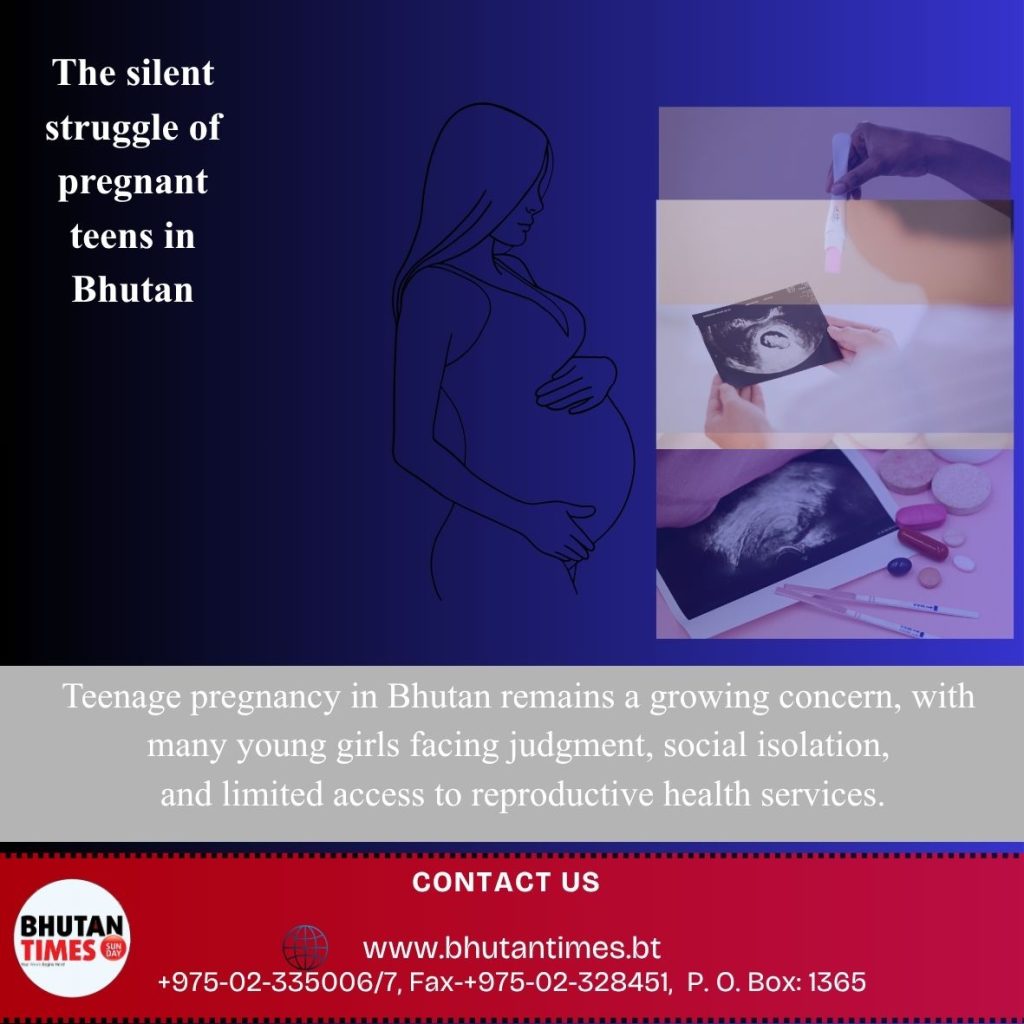
Teenage pregnancy in Bhutan remains a growing concern, with many young girls facing judgment, social isolation, and limited access to reproductive health services.
Despite awareness campaigns and outreach programs, adolescents continue to navigate misinformation and cultural stigma, highlighting a gap between policy efforts and the realities on the ground.
For organizations working on the ground, the issue is far more complex than a lack of awareness alone.
Officials from Respect Educate Nurture and Empower Women (RENEW) said that teenage pregnancy is driven by overlapping social, economic, and behavioural factors, many of which leave young girls vulnerable.
According to the RENEW, “Many adolescents have heard about sexual and reproductive health, but their understanding is often incomplete. Without clear knowledge about contraception and consequences, they are more likely to make uninformed decisions.”
These gaps are especially visible in rural areas, where access to reliable information and services remains uneven. While schools and the internet provide some exposure, young people say the information they receive is often unclear or inconsistent.
Nima, a 22-year-old from Wangdue, described access to information as “moderate,” noting that not all sources are trustworthy. “Sometimes the information is not detailed or accurate, which creates confusion,” he said.
Beyond access to information, a deeper challenge lies in Bhutan’s culture of silence around sexual health. Many young people feel uncomfortable discussing these topics with adults, leaving them to rely on peers or online sources.
“Many of us feel shy or embarrassed to talk about these issues with parents or teachers,” said Tashi Choizom, 23, from Nganglam. “There is always a fear of being judged or misunderstood.”
That fear is not unfounded. For many teenage girls who become pregnant, the social consequences can be immediate and severe.
“In Bhutan, many people first react with judgment,” said Namgay Zangmo, 29, from Punakha. “There is a strong habit of blaming and talking about the girl before trying to understand her situation.”
She explained that gossip and criticism often make it difficult for young mothers to face their communities. “Because of the way people talk, it becomes very hard for them to live normally,” she said. “It can lead to anxiety, low confidence, and even depression.”
The impact extends beyond emotional distress. Teenage mothers often face disruptions in education, strained family relationships, and uncertain futures.
“They may have to leave school, lose friends, and deal with disappointment at home,” Namgay Zangmo said. “Financial difficulties and fear about the future also become part of their reality.”
These experiences reflect broader structural challenges. According to RENEW, gender inequality and power imbalances in relationships continue to limit young girls’ ability to make informed and safe choices.
“Some girls are not in a position to negotiate safe sex or make decisions about their own bodies,” the officials said. “This increases their vulnerability to early and unintended pregnancies.”
Changing social dynamics are also playing a role. Increased exposure to social media, shifting relationship norms, and peer pressure are influencing how young people navigate relationships.
“Teenagers face a lot of pressure from friends, relationships, and social media,” Tashi Choizom said. “Some feel the need to fit in or prove love in a relationship.”
Despite the availability of health services, many adolescents hesitate to seek help. Concerns about confidentiality and fear of judgment remain major barriers.
“We often see young people avoiding health facilities because they worry their privacy will not be respected,” the RENEW official said. “If they feel judged or exposed, they simply will not come forward.”
Geographic challenges further complicate access. In remote areas, reaching health facilities can be difficult, leaving some adolescents without timely support. While outreach programs and community centres aim to bridge the gap, not all young people are reached.
“The most vulnerable groups, especially those out of school or living in remote areas, are still the hardest to reach,” the RENEW official added.
For many, the consequences of teenage pregnancy are long-lasting. Social stigma continues to shape how young mothers are treated, often leading to isolation rather than support.
“Society often judges her instead of helping her,” said Tashi Jamtsho, 22, from Samdrup Jongkhar. “That makes an already difficult situation even harder.”
Yet, there is growing awareness that the response must go beyond judgment and awareness campaigns alone. Both officials and young people emphasize the need for more open conversations and practical support systems.
“Young people need honest and clear information without shame or fear,” Namgay Zangmo said. “They need proper education about relationships, consent, and protection.”
She also stressed the importance of safe and supportive environments. “Teenagers should have access to health services where they can ask questions privately,” she said. “They also need parents who can talk openly without anger or judgment.”
RENEW echoes these concerns, emphasizing the need for youth-friendly services that prioritize confidentiality and accessibility.
“Services must be designed in a way that young people feel safe and respected,” the officials mentioned. “Only then will they be willing to seek help.”
Strengthening Comprehensive Sexuality Education (CSE) is another key priority. Officials say that consistent, age-appropriate education, both in and out of school, can play a critical role in prevention.
At the same time, addressing harmful gender norms and reducing gender-based violence remain essential. Empowering young women and promoting healthier relationship dynamics are seen as critical steps toward reducing early pregnancies.
Creating safe spaces for discussion is equally important. Young people say they need environments where they can ask questions, share concerns, and learn without fear of embarrassment.
“Teenagers do not need punishment,” Namgay Zangmo said. “They need guidance, understanding, and support to make better decisions.”
Encouragingly, some see hope in strengthening communication between young people and adults. Nima believes that open dialogue can make a meaningful difference.
“If we can talk openly with parents or teachers, it can help prevent teenage pregnancy,” he said. “They can guide us with the right advice and information.”
As Bhutan continues to address teenage pregnancy, the challenge lies not only in expanding services but in reshaping the social environment that surrounds young people.
For now, the message from both officials and young people is clear: awareness alone is not enough. Without compassion, open dialogue, and accessible support systems, many adolescents will continue to face these challenges in silence.