Proposed DSA hike to Nu 400 a day under government review
TIL BDR GHALLEY | Thimphu
Bhutan’s expenditure on overseas medical referrals has increased by more than 300 percent over the past decade, prompting the government to move toward a structured cost-sharing framework before considering any revision to the Daily Subsistence Allowance (DSA) provided to patients and attendants receiving treatment abroad.
The Ministry of Health has stated that it fully recognizes the financial and emotional burden faced by patients referred outside the country for critical medical care, including complex procedures such as kidney transplants, and reiterated that supporting such patients remains an important national priority.
In recent years, overseas medical treatment has remained a significant part of Bhutan’s public health referral system, with patients and their attendants often required to travel to neighboring countries for specialized services not fully available within the country.
These referrals frequently involve long treatment durations, repeated consultations, and additional living expenses, adding sustained financial pressure on families despite government support mechanisms.
The Ministry of Finance (MoF), however, clarified that it has not rejected the proposal to enhance the Daily Subsistence Allowance.
It stated that the proposal was reviewed within the broader framework of revised ex-country patient referral guidelines currently under consideration.
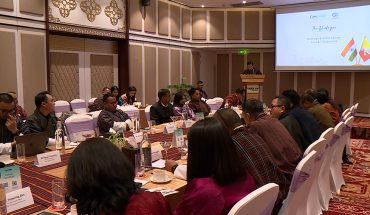
“The Ministry of Finance has not rejected the proposal to enhance the Daily Subsistence Allowance (DSA),” said Lekey Dorji, Finance Minister said during the meet the press session on 3 April 2026.
Instead, Lyonpo said the MoF has advised the JDWNRH/National Medical Services (NMS) to first develop a clear and comprehensive cost-sharing framework with well-defined operational modalities before any increase in DSA can be considered.
According to the ministry, this approach is necessary given the rising financial burden associated with overseas referrals.
“This approach is informed by the rapid and sustained escalation in the cost of ex-country medical referrals, which has placed increasing pressure on public finances,” Lyonpo added.
Total expenditure on patient referrals abroad has increased by over 300% from Nu. 175 million in FY 2013–14 to Nu. 712 million in FY 2024–25.
Over the same period, the average cost per patient has also risen by over four times, from Nu. 0.141 million to Nu. 0.573 million.
The ministry said this trend reflects both an increase in the number of patients being referred abroad and the growing complexity, duration, and cost of treatments required, particularly for long-term and high-cost interventions such as organ transplants and specialized surgeries.
It added that the sustained rise in expenditure has created increasing pressure on public finances, necessitating a more structured and policy-driven approach to financial assistance mechanisms for overseas treatment.
According to existing referral guidelines and proposals under review, the current Daily Subsistence Allowance for patients and attendants is set at Nu 150 per person per day for the first month of treatment abroad and Nu 125 per person per day thereafter.
However, a proposed revision under discussion within the health sector framework suggests increasing the allowance to Nu 400 per person per day.
The proposed increase, which would represent more than a two-and-a-half-fold rise from current rates, has been introduced as part of efforts to ease the financial burden on patients and align support with inflationary pressures and wage considerations.
The proposal to revise the DSA was earlier announced by Health Minister Lyonpo Tandin Wangchuk during discussions on ex-country referral guideline reforms and kidney transplant policy updates.
The Ministry of Finance has emphasized that while the intent of supporting patients remains unchanged, any revision to the DSA must be evaluated within a broader policy framework to ensure equity, consistency, and long-term fiscal sustainability.
“In this context, any revision to the DSA, while addressing genuine need, must be carefully considered within a broader policy framework to ensure that support measures remain equitable, fiscally sustainable, and consistent across all categories of patients requiring referral care,” the minister stated.
The ministry further recommended that any enhancement of the allowance be linked to a structured cost-sharing mechanism, designed to ensure a fair distribution of financial responsibility between the government and beneficiaries.
“Accordingly, the MoF has recommended that any enhancement of the DSA be linked to a structured cost-sharing mechanism to ensure a fair and balanced distribution of financial responsibility,” he said.
Alongside financial reforms, the government has also pointed to improvements in domestic healthcare services.
In this regard, the MoF has advised JDWNRH/NMS to review and update referral exclusion criteria to better reflect medical services that are now available within Bhutan.
The objective, according to the ministry, is to reduce avoidable overseas referrals, optimize the use of domestic healthcare infrastructure, and improve the overall efficiency of the national health system.
JDWNRH/NMS is currently developing a comprehensive proposal incorporating the cost-sharing framework and related operational modalities. The proposal will be submitted for government review and approval upon completion.
However, no specific timeline has been confirmed, as the process depends on finalization and endorsement of the revised framework.
As the discussion on overseas medical referrals continues, the government maintains that any future adjustments to patient support mechanisms will need to balance social protection with fiscal sustainability, particularly in light of steadily rising healthcare costs abroad.