
DAWA ZANGMO | Thimphu
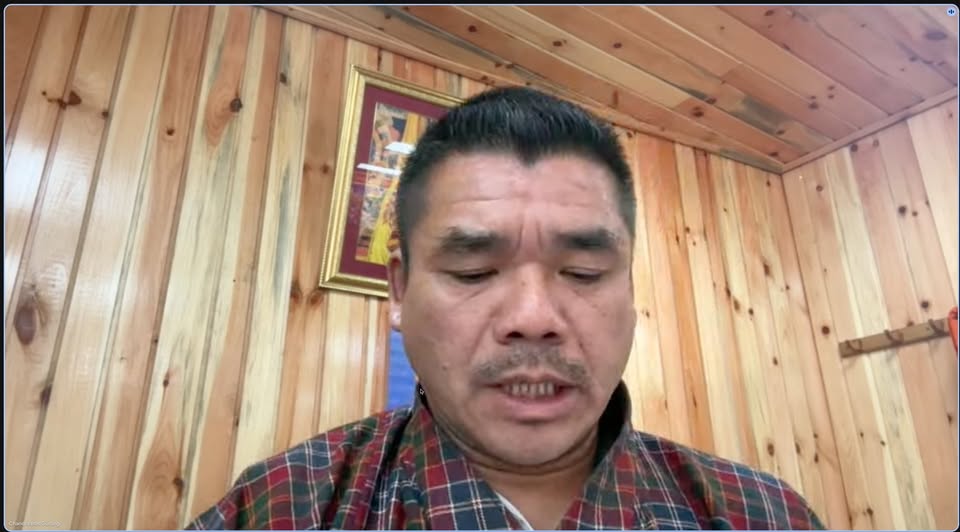
The government has reallocated Nu. 1.5 billion, initially set aside under the Economic Stimulus Plan (ESP) for affordable housing to urgent infrastructure priorities, particularly the improvement of chiwog roads, according to Lyonpo Chandra Bahadur Gurung, Minister of Infrastructure and Transport.
During the 26th Meet-the-Press session, Lyonpo said the decision was made after careful consideration at the highest level, guided by principles of equity, impact, and fiscal prudence.
The fund had originally been earmarked to support initiatives under the Ministry of Infrastructure and Transport (MoIT) to promote affordable housing and homeownership.
However, an assessment found that the allocated amount would have had limited impact in addressing housing needs at scale.
Lyonpo stated that the demand for housing remains significantly higher, while the unit cost of construction especially in rural areas continues to be relatively high. As a result, the benefits of the allocation would likely have reached only a small segment of the population.
“This raised concerns about inclusiveness and equitable distribution,” Lyonpo said, adding that the government had to reassess the effectiveness of the allocation in achieving broader socio-economic objectives.
In contrast, the improvement of chiwog roads was identified as an intervention capable of delivering more immediate and widespread benefits.
Lyonpo said enhanced road connectivity directly supports rural livelihoods by improving access to markets, health services, and education, while also contributing to overall socio-economic development.
He added that improved road infrastructure would also create a more enabling environment for future housing development. Better access is expected to reduce construction costs and increase the viability of rural settlements, thereby supporting long-term housing goals.
“Accordingly, the reallocation was considered a strategic decision to maximize the broader public benefit of the ESP funds in the short term,” Lyonpo said.
He added that the move would also allow the government to further refine and strengthen the homeownership programme to ensure it is implemented in a more inclusive, sustainable, and impactful manner.
Meanwhile, the Department of Human Settlement under the ministry is in the final stages of completing the National Housing Strategy (NHS), which aims to operationalize the National Housing Policy 2020.
Lyonpo said the strategy aligns policy objectives with financing mechanisms, delivery systems, and institutional arrangements.
The NHS translates policy intent into eight coordinated strategic objectives. These include public rental housing, improved access to land, reforms in the private rental market, pathways to homeownership, institutional and data systems, private-sector enablement, housing finance, and urban planning.
“The goal is to address affordability gaps for low- and middle-income households while building a housing system that is financially sustainable and socially inclusive,” Lyonpo said.
He added that initial fiscal support has already been earmarked, and preparatory work for pilot housing projects is currently underway. The rollout is expected to follow a phased approach, beginning with targeted pilot interventions, particularly for low- to middle-income households and civil servants.
The implementation is likely to begin in the near term, following the finalization of the strategy and approval of implementation modalities.
Lyonpo said the phased approach would allow the government to scale up interventions based on performance and available fiscal space.
In terms of delivery, the ministry is pursuing a balanced strategy that combines both demand-side and supply-side measures.
Demand-side support includes concessional financing and savings-based schemes, while supply-side interventions focus on the development of affordable housing through public agencies and incentives for private sector participation.
Lyonpo said the approach would be supported by a coordinated multi-agency framework, with clearly defined institutional roles and strengthened project management systems to ensure effective implementation.
“While the pledge has not yet been rolled out at scale, the foundations are firmly established,” he said, adding that the ministry is well positioned to initiate implementation in a structured and sustainable manner.
The housing initiative is also being supported through technical assistance from the Asian Development Bank (ADB) under the Green and Resilient Affordable Housing Sector Project.
Lyonpo said the support includes assistance in developing the National Housing Strategy, establishing a Housing Management Information System, strengthening institutional capacity, and formulating key regulatory frameworks.
These frameworks include green building guidelines and fire-resilient building codes aimed at improving the safety and sustainability of housing developments.
According to Lyonpo, the National Housing Development Corporation Limited (NHDCL) plans to develop around 2,500 housing units in phases, with 1,000 units targeted in the first phase.
The first phase of the project is estimated at USD 37 million. It is being financed through ADB support, comprising a USD 24 million loan and a USD 6 million grant, which were approved on December 7, 2021.
The financing agreements were signed on December 23, 2021, and became effective on February 23, 2022. The funding is expected to close on June 30, 2028.
In addition, the government is supporting the project through a USD 7 million loan from the National Pension and Provident Fund, along with a USD 1 million technical assistance grant from ADB.
Lyonpo said these efforts reflect a comprehensive approach to addressing housing challenges while ensuring that public resources are utilized in a manner that delivers maximum benefit to the population.