TIL BDR GHALLEY | Thimphu
The government will seek to attract Nu. 3.5 billion in foreign direct investment (FDI), expand its digital economy, strengthen agricultural productivity, and create employment opportunities for 5,500 young people as part of the government’s priorities for the 2026–27 fiscal year.
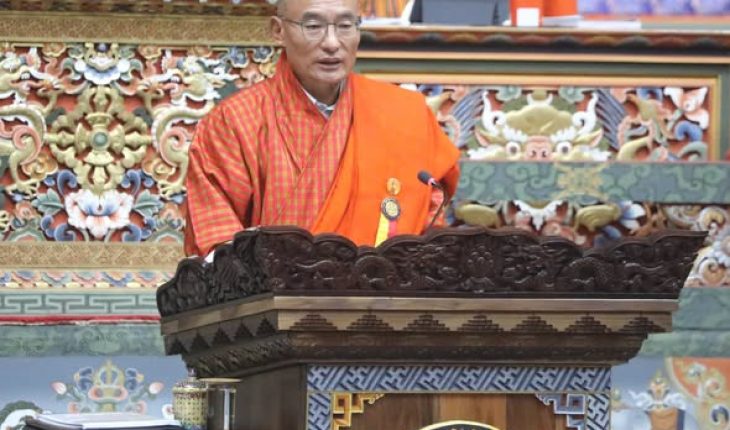
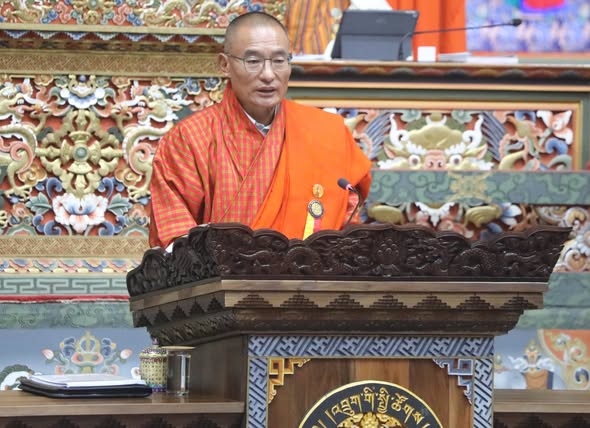
Presenting the State of the Nation Report to Parliament, Prime Minister Tshering Tobgay outlined an ambitious development agenda under eight National Priority Programmes aimed at accelerating economic growth, digital transformation, workforce development, healthcare, education, climate resilience and governance reforms.
A key focus of the government’s economic transformation strategy is attracting investment into high-potential sectors such as clean technologies, creative industries, information technology and IT-enabled services, renewable energy, wellness and agro-processing.
“The Government will mobilise FDI of Nu. 3.5 billion by targeting high-potential sectors including clean technologies, creative industries, information technology and IT-enabled services, renewable energy, wellness, and agro-processing,” PM Tshering Tobgay said.
The programme also aims to establish 25 new startups, accelerate the growth of 85 early-stage startup businesses and create 100 new industries outside Thimphu and Chhukha to encourage balanced regional development.
To support economic recovery and business growth, the government will continue implementing the Economic Stimulus Programme during the 2026–27 financial year with an approved budget of Nu. 3.39 billion.
The largest share of the funding, amounting to Nu. 1.09 billion, has been earmarked for the Business Reinvigoration Fund and hotel sector interest subsidy support through the Royal Monetary Authority. Additional allocations include Nu. 300 million for education loans, Nu. 235.11 million for agriculture and livestock development, Nu. 795.53 million for crop and livestock insurance, Nu. 471.42 million for tourism development and Nu. 169.65 million for youth employment, education and training initiatives.
Bhutan is also seeking to strengthen its digital economy by increasing its contribution to Gross Domestic Product from USD 44.08 million in 2025 to USD 60 million by 2026–27.
“Looking ahead to 2026–27, the government plans to accelerate Bhutan’s digital transformation by increasing the digital economy’s contribution to GDP from USD 44.081 million to USD 60 million,” the PM said.
The target includes creating 1,000 quality jobs in the digital sector, attracting five technology-related FDI projects and expanding GovStack services and digital identity systems. The government plans to develop at least 10 GovStack components and enhance 10 features of the National Digital Identity system to improve digital services across sectors.
Tourism remains a major pillar of economic growth, with the government planning to introduce five new tourism packages centred on nature-based tourism, pilgrimage, wildlife and winter experiences.
The Red Panda Tourism Flagship Programme at Tergola in Haa will be launched alongside the establishment of a Red Panda Rehabilitation Centre. More than 70 tourism marketing programmes across 14 countries will continue as Bhutan works towards its target of attracting 300,000 visitors.
The government is also targeting a 10 percent increase in exports of gypsum, dolomite and construction materials through value addition and improved market access.
Agriculture remains central to the government’s efforts to strengthen food security and raise rural incomes. Plans include expanding agricultural insurance coverage, developing farmland, improving irrigation systems and creating new export opportunities.
The government will develop 800 acres of agricultural land and construct 782 kilometres of chain-link fencing to protect farmlands from wildlife damage.
“Chain link fencing has lots of benefits to the farmers. Henceforth, we will continue the programme and improve it. If possible, we are hoping to provide it to all farmers,” Prime Minister said.
The PM also highlighted irrigation as one of the most pressing challenges facing Bhutanese farmers.
“One of the main problems facing farmers is irrigation. To solve this problem, we have completed 137 irrigation projects in the last two years,” he said.
Around 500 farmers will benefit from the National Crop and Livestock Insurance Scheme, while commercial Chirup farms will be developed at Samrang and Pemathang in Samdrup Jongkhar with an investment of Nu. 45.15 million. A large-scale commercial broiler farm will also be established at Langchenphu.
To improve agricultural marketing, Bhutan plans to expand exports to Thailand, Singapore and countries in the Middle East. Twenty-nine farm shops will be operationalised, while a Floriculture Centre of Excellence will be established in Tsirang. The government will also continue implementing the Million Fruit Tree Programme with an allocation of Nu. 20 million.
Significant investments have also been earmarked for healthcare infrastructure and services.
The government has approved Nu. 829 million for the construction of the Multi-Disciplinary Super-Speciality Hospital in Thimphu, Nu. 54.16 million for the Mother and Child Hospital in Mongar and Nu. 902.81 million for medical equipment procurement. Another Nu. 105 million has been allocated for the purchase of seven ambulances.
The Electronic Patient Information System will be enhanced through an investment of Nu. 110.2 million. Expansion works will continue at hospitals in Phuentsholing and Trashigang, while Samtse Hospital will be upgraded as a Regional Referral Hospital.
In education, the government will continue the redevelopment of central school infrastructure, with 20 Phase I and 20 Phase II clusters undergoing redevelopment and procurement processes to begin for 23 Phase III clusters.
The Cambridge-aligned curriculum for Classes IX and XI will be introduced, while an International School in Thimphu established in partnership with Singapore’s Eton House International Group will begin operations in August 2026 with an investment of Nu. 150 million.
A STEM School for students in Classes VII to XII will also be established at Drukgyel Central School in collaboration with Singapore’s NUS High School of Mathematics and Science and Principals’ Academy Inc.
The government will construct 35 Early Childhood Care and Development centres and establish 42 mobile or home-based ECCD centres. Twenty schools will be upgraded to Green Kitchens, while 467 schools will implement enhanced school feeding and nutrition programmes.
Workforce development remains another priority, with the government aiming to facilitate employment opportunities for 5,500 young people through targeted interventions under the 21st Century Workforce Skilling Programme.
The initiative will support 2,500 youth through the Youth Engagement and Livelihood Programme, 1,250 through the Overseas Employment Programme and 1,750 through Employment Service Centres.
Technical and vocational education will be expanded through four new TVET programmes, including diploma and applied degree courses aligned with emerging economic needs. A vocational institution will also introduce a Diploma in FinTech and Blockchain as a flagship programme, while 15 new National Competency Standards will be developed to improve skills quality and relevance.
Climate resilience and environmental sustainability feature prominently in the government’s agenda. Bhutan aims to generate USD 20 million through the sale of High Forest Low Deforestation credits and Results-Based Payments while introducing Natural Capital Accounting to measure the economic value of natural resources and support climate finance initiatives.
Forest fire-affected areas are expected to be reduced by 25 percent through expanded drone surveillance, monitoring systems and enhanced fire suppression measures.
Under governance reforms, Nu. 622.06 million has been allocated for the design and construction of a Government Office Complex, while Nu. 9.9 million will support the development of a new electronic Government Procurement System.
“The Annual Performance Agreement will be reintroduced as a tool to make the civil service more efficient, transparent, and results-oriented,” Prime Minister said.
The government will also conduct the Gross National Happiness Index survey to assess national wellbeing and help guide policy implementation during the remaining years of the 13th Five-Year Plan.