RENUKA RAI| Thimphu
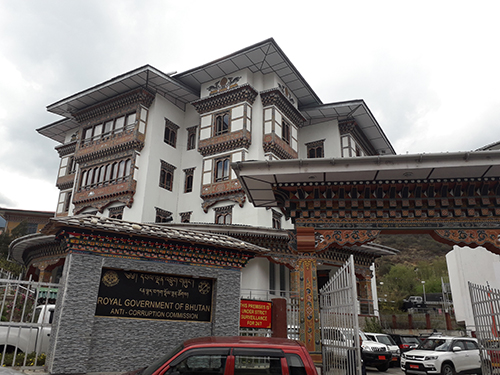
The Anti-Corruption Commission (ACC) has concluded its investigation into allegations surrounding the Economic Stimulus Program (ESP), finding that while criminal corruption could not be established, serious administrative failures and governance lapses occurred in the implementation of several medium-scale projects funded under the program. The Commission said these shortcomings, though not amounting to prosecutable offenses fences, undermined the integrity of the ESP and highlighted the need for stronger oversight and accountability mechanisms.
The investigation was launched following allegations that certain ESP loans had been approved through corrupt means. The ESP was introduced as a national intervention to stimulate economic recovery and growth by providing concessional financing to new and expanding businesses. Given the scale of public resources involved and the importance of the program, the ACC said it was necessary to assess whether the objectives of the ESP were being compromised by malpractice or misuse.
According to the ACC, the scope of the investigation focused on four medium-scale projects with approved loan amounts ranging from Nu. 10 million to Nu. 100 million. These projects were selected based on the nature of the allegations and the level of public concern they had generated. The Commission conducted an extensive review of loan appraisal and approval documents, internal committee deliberations, disbursement and utilization records, and post-disbursement monitoring practices. Field inspections were carried out, interviews conducted, and financial and remittance records were verified with relevant authorities, including the Royal Monetary Authority (RMA).
Following this review, the ACC concluded that the loan approval and disbursement processes in the four cases did not meet the legal threshold for criminal prosecution. The Commission stated that the appraisal processes were largely in line with ESP guidelines and that there was insufficient evidence to prove corruption beyond reasonable doubt. However, it stressed that the absence of criminal culpability should not be misconstrued as an endorsement of how the loans were administered.
In its findings, the ACC noted that one of the projects reviewed, Norwang Polyfab Private Limited, did not warrant further action, as no significant irregularities were identified. In the remaining three cases, however, the investigation revealed serious deviations from ESP guidelines and internal governance standards, particularly in post-approval stages.
In the case of Bhutan Biscuit and Gourmet in Wangdue Phodrang, the ACC established that the ESP loan sanctioned by T-Bank was used to liquidate an existing commercial loan. This practice was found to be in direct contradiction to the core intent of the ESP, which restricts financing to new ventures or the expansion of existing businesses. Clarification obtained from the RMA confirmed that loan conversion is not permissible under ESP guidelines. The ACC concluded that extending a concessional ESP facility to service an existing exposure undermined the policy objective of the program. As a result, the Commission referred the matter to the ESP Steering Committee for recovery of the full ESP loan amount of Nu. 90 million and recommended that the RMA impose administrative sanctions on T-Bank for failing to exercise due diligence.
The investigation into T & K Concrete Products in Chhukha revealed multiple governance failures. The ACC found that the ESP loan had been sanctioned and disbursed without approval from the credit committee of Bhutan Insurance Limited, in violation of internal governance requirements. The Commission also observed that parts of the project financed under the loan, including ready-mix concrete services, were not eligible under ESP guidelines and had previously been rejected by the ESP Unit. Further irregularities included excess disbursements, financing of assets that had already been procured prior to loan approval, and discrepancies between sanctioned items and actual purchases. Based on these findings, the ACC referred the case for recovery of inadmissible disbursements amounting to Nu. 32.98 million, cancellation of the remaining undisbursed loan balance of Nu. 15.97 million, and administrative action against the concerned financial institution and credit committee members.
More serious concerns emerged in the case of Wangchuk Blocks in Punakha, where the ACC substantiated diversion of ESP loan funds. The investigation found that claims of large advance remittances for machinery imports were unsupported by verified records from the RMA and the Bank of Bhutan. Instead, disbursed funds were used for personal expenditures unrelated to the approved project. The ACC also identified indications of a broader pattern of deception, including the use of misleading documentation, undisclosed partners, and recycled project proposals. The Commission recommended recovery of the first tranche of Nu. 34.32 million, cancellation of the remaining loan balance of Nu. 45.96 million, and administrative action against concerned officials of the Bhutan Development Bank Limited for failure to exercise due diligence.
Beyond the individual cases, the ACC highlighted systemic weaknesses in the interpretation and enforcement of ESP guidelines by some participating financial institutions. These included shortcomings in eligibility assessment, governance of credit committees, and post-disbursement monitoring. The Commission said such lapses created regulatory vulnerabilities and contributed to public concern, even in the absence of criminal wrongdoing.
In accordance with Section 138 of the Anti-Corruption Act of Bhutan 2011, the ACC has directed the ESP Steering Committee and the RMA to submit Action Taken Reports within specified timelines. The RMA has also been asked to conduct a comprehensive review of all medium-scale ESP loans to ensure compliance with program guidelines.
In concluding its findings, the ACC reaffirmed that while the ESP was designed with sound policy intent, its success depends on rigorous implementation, vigilant oversight, and responsible exercise of fiduciary duties. The Commission underscored that administrative accountability must be enforced decisively to restore public confidence and ensure that future national economic initiatives achieve their intended objectives.