Hope for world’s rarest bird as Bhutan’s White – Bellied Heron count increases to 31
RENUKA RAI | Thimphu
Small increase in numbers, yet a significant milestone in conservation, has brought renewed hope for one of the world’s rarest bird species the White-bellied Heron.
Bhutan has recorded 31 individuals of the critically endangered species in 2026, an increase of two from last year’s count of 29.
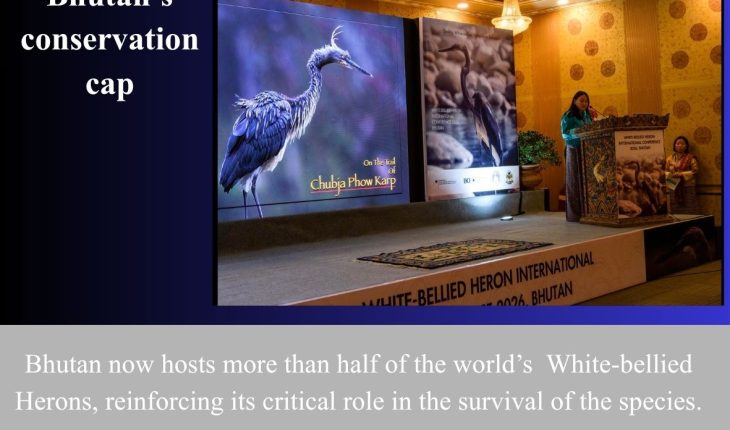
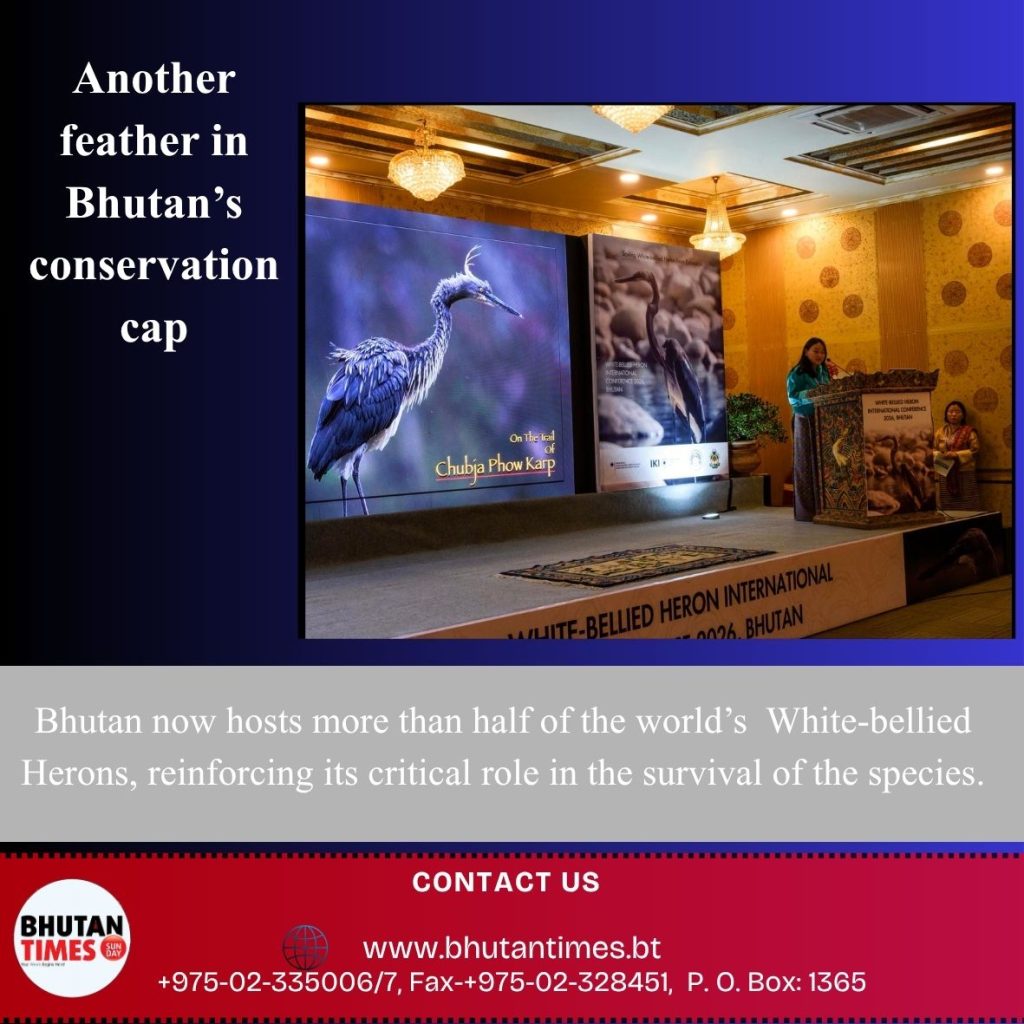
At first glance, the rise may seem minimal. However, in a global context where the total population is estimated to be only around 60 the increase becomes far more meaningful. Bhutan now hosts more than half of the world’s White-bellied Herons, reinforcing its critical role in the survival of the species.
The latest figures were shared during the second international White-bellied Heron Conference held in Thimphu.
The two-day event, organised by the Royal Society for the Protection of Nature (RSPN), has brought together international experts, researchers, policymakers, and conservation practitioners to discuss strategies to protect and recover the species.
The conference also marked the official launch of the White-bellied Heron Annual Population Survey 2026 report, which highlights both encouraging progress and persistent challenges.
Speaking at the conference, Tshering Tobgay, a research officer with RSPN, said that the increase in numbers is the result of continued conservation efforts and strong collaboration among stakeholders.
“We have five individuals that we have raised currently in the conservation breeding centre, and 26 that are in the wild. So, it’s mainly because of the threat mitigation that we have done, and also the support that we have received,” he said.
Despite this progress, the White-bellied Heron remains one of the rarest bird species in the world and continues to face serious threats. It’s extremely small population makes it highly vulnerable to extinction.
Factors such as habitat loss, climate change, and human disturbances have reduced breeding success and survival rates.
In Bhutan, the species is primarily found along the Punatsangchhu and Mangdechhu river basins, where it depends on undisturbed riverine ecosystems and dense forest cover.
These habitats provide essential feeding and nesting grounds. However, increasing developmental activities and environmental changes are placing pressure on these fragile ecosystems.
Conservationists caution that while the increase in population offers hope, it should not lead to complacency. The species remains at a critical stage, and even small losses could have significant impacts on its survival.
To address these challenges, RSPN and its partners have implemented a range of conservation measures.
These include habitat protection, regular monitoring of wild populations, and a conservation breeding programme aimed at increasing the number of individuals and strengthening genetic diversity.
Efforts are also underway to minimise human-induced threats. One key intervention involves installing bird flight diverters on power transmission lines to prevent collisions, which are a known cause of mortality for large birds like the White-bellied Heron.
The conference in Thimphu serves as an important platform for international collaboration. Experts from different countries are sharing knowledge, research findings, and best practices to strengthen conservation efforts.
The exchange of ideas is expected to contribute to more effective and coordinated strategies for protecting the species.
Gracing the event, Lyonpo Gem Tshering, Minister for Energy and Natural Resources, emphasised the importance of balancing development with environmental conservation.
“All development must align with Gross National Happiness, ensuring the protection of nature and wildlife while promoting harmonious coexistence with the environment,” Lyonpo Gem Tshering said.
He further urged participants to take an active role in addressing conservation challenges, stating, “You have identified the challenges, and you should also find the solutions.”
The concept of Gross National Happiness (GNH) has been instrumental in guiding policies that protect the country’s natural resources and biodiversity.
However, experts note that the conservation of the White-bellied Heron requires sustained commitment and long-term planning.
Protecting river habitats, regulating development activities, and strengthening community involvement are essential components of a comprehensive conservation strategy.
Local communities, in particular, play a crucial role in the protection of the species. Their cooperation and awareness can help reduce disturbances in critical habitats and support conservation initiatives on the ground.
The conference aims to build stronger partnerships among governments, conservation organisations, researchers, and communities.
Over the course of the two-day event, participants are expected to engage in discussions on habitat management, policy interventions, research advancements, and community-based conservation approaches.
For Bhutan, the conservation of the White-bellied Heron is not only about saving a single species but also about preserving the health of entire ecosystems.
River systems that support the heron are also vital for other wildlife and provide essential resources for human communities.
The slight increase in the population demonstrates that conservation efforts can yield positive results. However, experts emphasise that continued vigilance and action are necessary to ensure long-term success.