DAWA ZANGMO | Thimphu
Ministry of Education and Skills Development (MoESD) has announced plans to introduce a part-time bachelor’s degree programme for Early Childhood Care and Development (ECCD) facilitators as part of efforts to strengthen professional capacity and create clearer career pathways within the sector.
The programme will enroll 90 ECCD diploma holders into a part-time Bachelor of ECCD course over a period of three years, with the first intake scheduled to begin in January next year. The initiative targets in-service facilitators currently working in ECCD centres across the country.
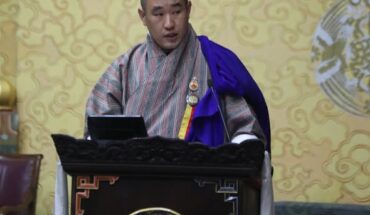
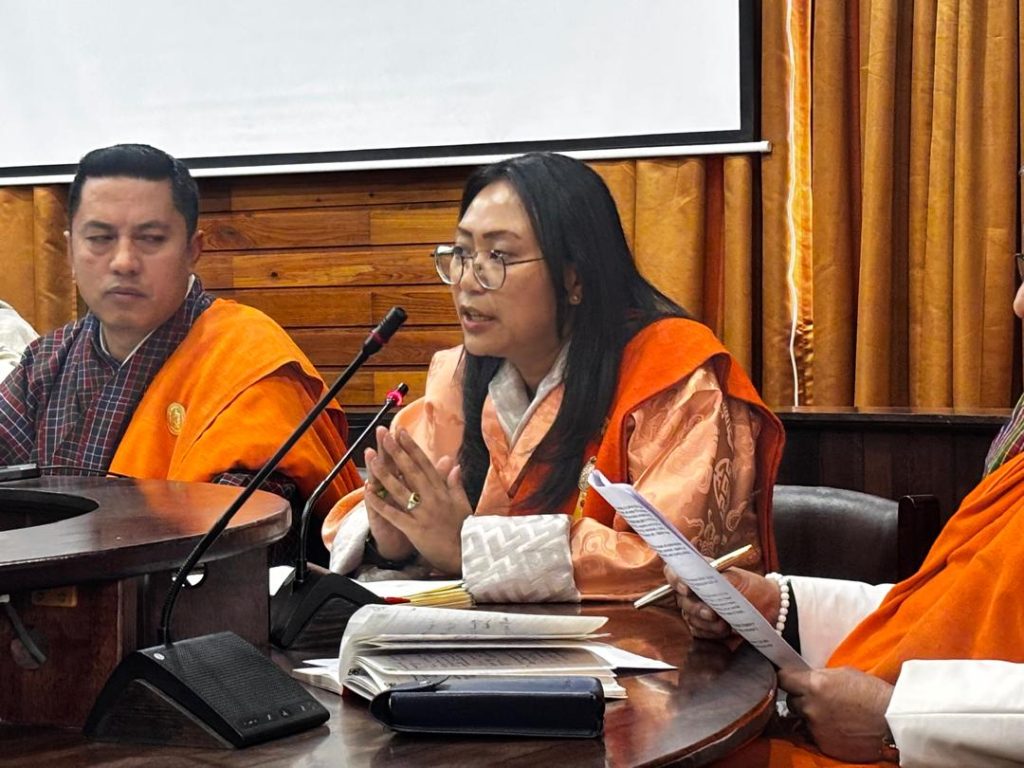
During the 24th meet the press session held on 6 February, Education and Skills Development Minister Yeezang De Thapa shared updates, highlighting that the qualification upgrade is aimed at enhancing skills, and preparing facilitators for future leadership roles within the ECCD system.
According to the minister, ECCD qualification requirements are guided by international standards, where a diploma is considered the baseline credential for facilitators, while a bachelor’s degree is generally required for higher or advanced professional roles.
“Globally, a diploma in ECCD is regarded as the minimum qualification for facilitators, whereas a bachelor’s degree is necessary for advanced responsibilities,” the minister said.
“In keeping with these standards, the ministry will establish a diploma as the minimum entry requirement and gradually introduce a bachelor’s degree programme in ECCD over the next three years.”
At present, government-run ECCD centres recruit facilitators who have completed a diploma programme at the Paro College of Education. Private ECCD centres, on the other hand, have been employing facilitators who have undergone basic ECCD training through private institutions.
To strengthen professional standards across both public and private centres, the ministry has issued a notification this year directing ECCD centres to recruit only trained facilitators who have successfully cleared the National Certificate Level-3 (NC3) examination.
In addition to the new degree programme, the ministry plans to upgrade the professional standing of existing facilitators.
A total of 220 in-service ECCD facilitators who have already completed their diploma qualifications will be upgraded to the S2 position level.
The minister explained that the ECCD facilitator role has evolved significantly over the years. In 2018, the Royal Civil Service Commission (RCSC) approved the ECCD facilitator position at the S5 level on a contractual basis.
At that time, facilitators largely lacked formal professional qualifications in ECCD.
“When the ECCD facilitator position was first approved at the S5 level, professional qualifications were limited,” the minister said.
“However, as the sector has developed and more trained and qualified facilitators have become available, the RCSC has now endorsed a higher S2 level position.”
The move reflects the growing recognition of ECCD as a specialized and professional field that requires trained personnel to support early childhood learning and development effectively.
The minister further noted that recruitment and regularization of ECCD facilitators will not take place all at once, but will instead be implemented in stages.
This phased approach will be guided by the actual demand for facilitators and the expansion of ECCD services nationwide.
“Recruitment and regularization will be carried out in phases, depending on the demand for ECCD facilitators,” she said, adding that the ministry aims to ensure a balanced and sustainable workforce without compromising service quality.
The introduction of the part-time degree programme is expected to benefit facilitators who are already employed, allowing them to upgrade their qualifications without leaving their current positions.
By offering the course on a part-time basis, the ministry aims to ensure continuity of services in ECCD centres while supporting professional development.
The ECCD sector has seen steady growth in recent years, with increasing awareness of the importance of early childhood education and care.
As a result, the demand for qualified facilitators has also risen, prompting the ministry to review qualification requirements, career progression structures, and employment conditions.
The minister said that aligning national ECCD standards with international practices is essential to maintaining quality and ensuring that Bhutan’s early childhood programmes meet developmental needs.
With the planned introduction of the bachelor’s degree programme, the ministry aims to create a structured professional pathway for ECCD facilitators from entry level diploma qualifications to advanced academic and leadership roles while maintaining consistency in standards across government and private ECCD centres.
The initiative forms part of broader efforts by the education ministry to professionalize the ECCD workforce and strengthen the foundation of early learning in the country.