KINZANG DORJI TSHERING | Thimphu
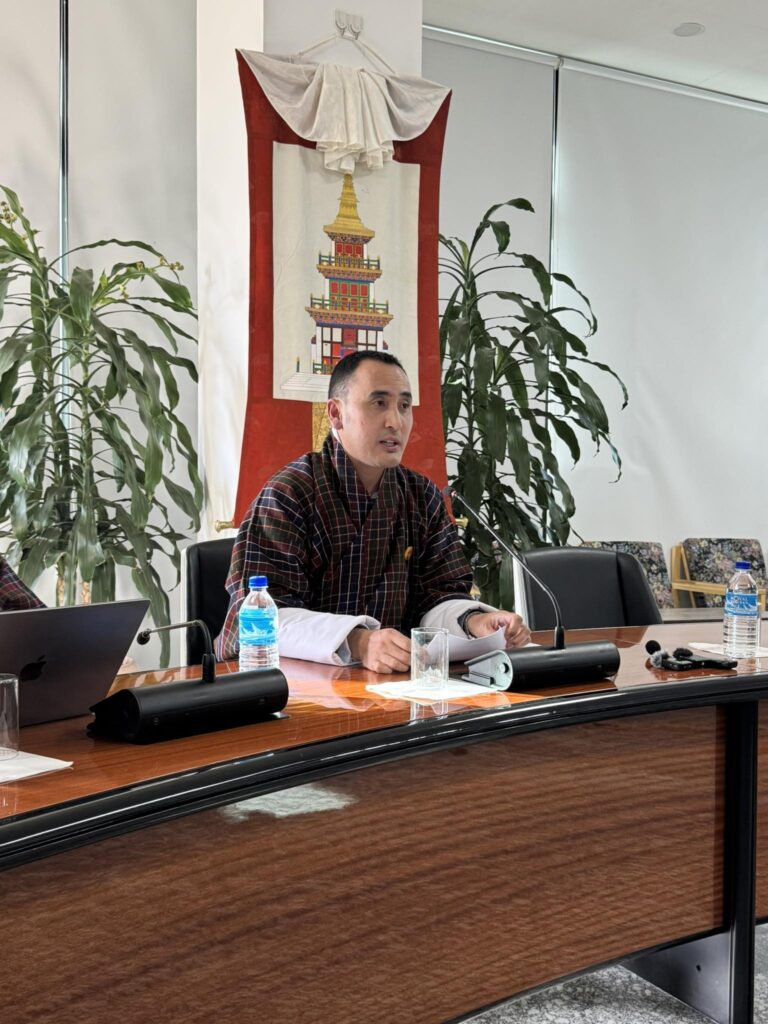
The Royal Government of Bhutan (RGoB) has revised the scope of the previously announced USD 100 million Global Bhutan Entrepreneurship Corridor fund, scaling it down to USD 50 million to match the current investment readiness of local start-ups and community-supported initiatives (CSIs). The announcement was made by Lyonpo Namgyal Dorji, Minister of Industry, Commerce and Employment (MoICE), during the 23rd meet the press session on 31 December.
Under the revised arrangement, the govt will contribute USD 25 million, while an identified global venture capital firm is expected to raise the remaining USD 25 million. The fund is designed to support the scale-up of local start-ups and CSIs and strengthen Bhutan’s entrepreneurial ecosystem.
Lyonpo Namgyal Dorji explained that the BEF will operate through a structured process to ensure start-ups are fully prepared for investment. Central to this process is a capacity development program, which will be implemented by the global venture capital firm under a consulting service agreement. “The overall objective of the consulting service is to build the capacity of local start-ups and CSIs to make them investment-ready, enabling them to access the USD 50 million fund for business scale-up,” Lyonpo Namgyal Dorji said.
A separate allocation of USD 5.285 million has been earmarked specifically for training and capacity development programs. Start-ups that demonstrate readiness after completing the training programs will be eligible for equity investment under the terms outlined in the terms of fund investment agreement, which sets forth the principal terms and conditions of proposed investments by both the RGoB and the global venture capital partner.
The MoICE, in collaboration with the Ministry of Finance and the Office of the Chief Administrative Secretary, has finalized two key agreements with the venture capital firm: the consulting service agreement and the terms of fund investment. “The contents of the two agreements have been finalized and are currently under review by the Cabinet before proceeding with signing,” Lyonpo Namgyal Dorji stated. Once approved, these agreements will officially launch both the capacity-building and investment phases of the BEF.
Several aspiring and current entrepreneurs across Bhutan shared their views on the fund. Rigsel Wangyal, a resident of Thimphu planning to start his own business, said: “Government support is important because many Bhutanese entrepreneurs cannot get bank loans easily. Funding, training, and mentorship help start-ups grow and create jobs. Starting with USD 50 million might mean fewer investments at first, but it still gives an opportunity to test the system and learn. If demand is high, the full USD 100 million can be raised in a second round. Training and capacity building are very important. Start-ups need business skills, market knowledge, and mentoring so that investment money is used well and businesses survive long-term. Yes, I would consider starting a business because having funding and mentorship reduces risk and helps ideas become real. But I would also want strong training first. A global venture capital partner can help bring international expertise, networks, and markets, which local resources may not yet provide. But local institutions should also be strengthened to understand Bhutan’s unique needs and help grassroots businesses.”
Sangay Choden, a business owner from Mongar, shared similar optimism: “I am aware of the BEF and that it is planned at around USD 50 million. Government support for local start-ups is very positive because it helps young entrepreneur’s access finance, confidence, and opportunities that are otherwise difficult to find in Bhutan. Reducing the fund from USD 100 million to USD 50 million may limit the number of start-ups supported, but it can still create meaningful opportunities if the fund is managed well and focused on high-impact and sustainable businesses. Training and capacity-building are very important before providing investment. Many start-ups need skills in business planning, financial management, and marketing to use funds effectively and avoid failure. Yes, I would consider starting a business if such funding and support were available, because access to capital, mentoring, and guidance reduces risk and makes entrepreneurship more achievable. A partnership with a global venture capital firm can be helpful for bringing expertise, networks, and standards, but it should be balanced with strong local involvement so that Bhutanese context, values, and long-term development goals are respected.”
The BEF represents a strategic effort by the MoICE to nurture entrepreneurship and enable Bhutanese start-ups to attract global investment while ensuring that local enterprises are equipped with the skills and capabilities to succeed. By pairing capacity development with a carefully structured investment process, the fund aims to create a sustainable pipeline of successful start-ups in Bhutan, contributing to job creation and the broader economic development goals of the country.