RENUKA RAI | Thimphu
As Bhutan prepares to translate its 2040 National Highways Master Plan from blueprint to bulldozer, the central question is no longer whether roads are needed.
It is how those roads will be built and whether they can coexist with the forests, rivers and wildlife that define the country’s identify.
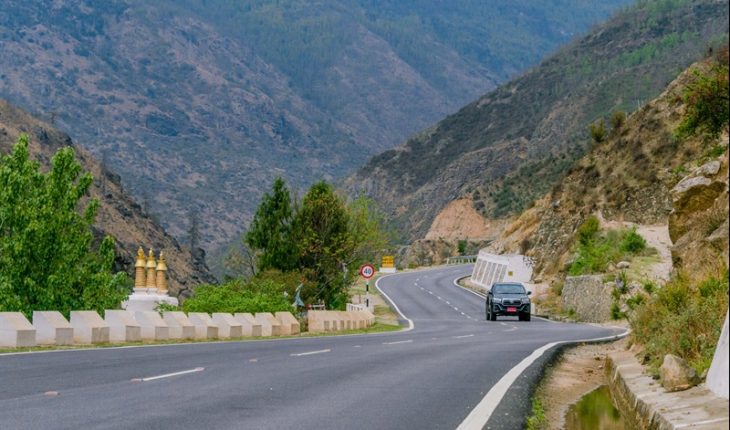
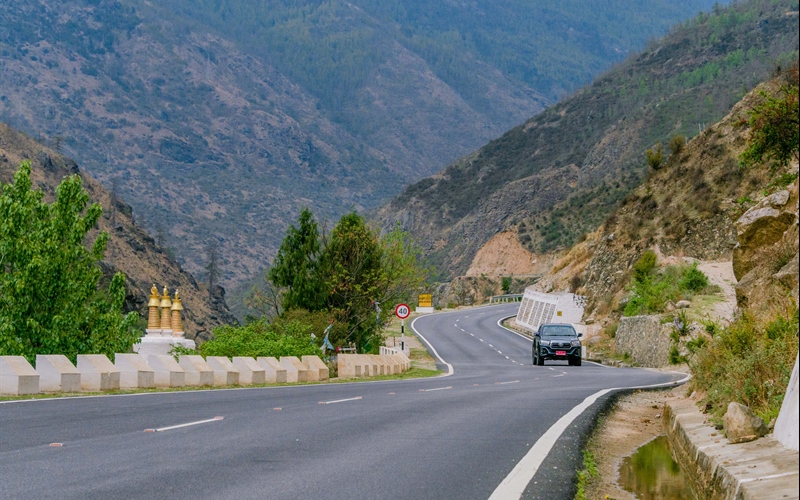
The master plan, prepared with support from the Asian Development Bank, outlines sweeping upgrades to the national highway network: widening narrow stretches, constructing bypasses and tunnels, replacing aging bridges and completing missing links in the Southern East–West Highway.
But threaded through these ambitions is a detailed Strategic Environmental Assessment (SEA) that warns of the ecological costs if expansion proceeds without restraint.
Bhutan’s geography leaves little room for easy choices. More than half of the country falls under protected areas and biological corridors, forming one of the most intact conservation networks in Asia. Yet many proposed highway alignments inevitably pass through or near these zones.
According to the SEA, around 172 kilometres of proposed road alignments would traverse protected areas, while another 82 kilometres would cut across biological corridors.
Smaller segments intersect key biodiversity areas and Ramsar wetlands. Though these lengths represent a fraction of the overall network, their ecological sensitivity amplifies their significance.
Biological corridors are functional pathways that allow species such as tigers, elephants and other wide-ranging mammals to move between habitats. Fragmenting these routes with high-speed highways could disrupt migration patterns and increase human-wildlife conflict.
The SEA therefore recommends that wildlife crossings, underpasses and fencing be incorporated into design where corridors cannot be avoided.
Bhutan’s steep terrain already makes its highways vulnerable to landslides, slope failures and flash floods. The master plan identifies 44 high-risk slope locations that could close parts of the network for extended periods if major failures occur.
Heavier and less predictable monsoon rainfall could intensify these threats. Roads built without adequate drainage and slope stabilization may become channels for erosion rather than conduits for mobility.
The master plan calls for climate-resilient engineering standards improved drainage systems, reinforced embankments, bioengineering techniques and continuous monitoring of unstable slopes.
Bridge construction and road alignments along river valleys introduce another layer of complexity. Bhutan’s rivers sustain hydropower generation, agriculture and aquatic biodiversity.
The SEA cautions that cumulative impacts could arise where bridge works overlap spatially and temporally with hydropower development and riverbed mining.
Further, the SEA emphasizes the need for careful site management, strict spoil disposal controls and rehabilitation of disturbed areas using native vegetation.
Every major project under the 2040 plan is expected to undergo a project-level Environmental Impact Assessment (EIA). These EIAs must move beyond procedural compliance to address site-specific ecological realities, especially in sensitive watersheds.
The total cost of the 2040 development and maintenance program is estimated at nearly Nu. 163 billion. Embedded within that figure are preliminary allowances for mitigation measures and biodiversity offsets. Yet the report acknowledges that more detailed feasibility studies may raise those costs.
From an economic standpoint, improved highways promise reduced travel times, lower vehicle operating costs and stronger domestic integration. The economic evaluation conducted under the master plan prioritizes projects with positive rates of return based on these direct benefits.
However, environmental costs are harder to quantify. The loss of ecosystem services, increased human-wildlife conflict or degradation of scenic landscapes cannot be measured solely in monetary terms.
Completing the Southern East–West Highway is one of the plan’s flagship goals. Currently, gaps in this corridor require internal traffic to transit through India or take longer circuitous routes within Bhutan.
The SEA state that alignments must be chosen carefully to minimize intrusion into intact habitats. In some cases, upgrading existing routes may present fewer ecological trade-offs than constructing entirely new corridors.
Beyond engineering solutions, the success of the master plan hinges on institutional capacity. Under the technical assistance program, training has been provided in road asset management, climate adaptation and performance-based maintenance.
Strengthened capacity within the Department of Surface Transport and related agencies is essential to ensure that environmental safeguards are implemented consistently.
Monitoring systems must track not only road condition and traffic growth but also environmental performance indicators.
Furthermore, it states that transparent consultation with affected communities and collaboration with environmental authorities will be critical.
Bhutan’s 2040 vision recognizes that roads are vital for socio-economic development, but the country’s comparative advantage also lies in its natural heritage.
Whether this integration succeeds will depend on how rigorously mitigation commitments are honored during implementation.