
RENUKA RAI | Thimphu
Bhutan’s economy, still emerging from the severe shocks of the COVID-19 pandemic, is showing signs of recovery, but structural challenges continue to limit growth and employment opportunities, according to a recent review by the Special Committee for Business Plus. Established by the National Council in June 2025, the committee undertook a comprehensive examination of key sectors of the economy with high potential to drive growth, create jobs, and strengthen Bhutan’s private sector-led ambitions. The committee focused on three main sectors export, production and manufacturing, and wholesale and retail trade while also assessing the functioning of Integrated Check Posts, which are critical for border management and trade facilitation.
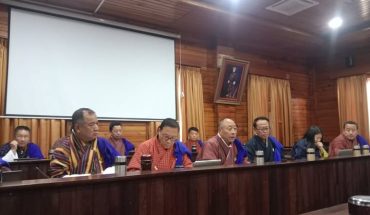
Phuntsho Rapten, Chairperson of the Special Committee for Business Plus, introduced the report and briefed the National Council on its background, objectives, key observations, and recommendations on 5 December.
The committee’s findings, detailed in a report released this month, highlight both the progress Bhutan has made in recent years and the challenges that continue to restrict the country from fully realizing its economic potential. Bhutan’s economy, like many others globally, faced a steep contraction during the pandemic. In 2020, GDP growth fell sharply from 5.8 percent in 2019 to negative 10.2 percent, reflecting the disruption in industrial production, services, and exports. Employment, particularly among the youth, was heavily impacted. Overall unemployment rose from 2.7 percent in 2019 to 5 percent in 2020, while youth unemployment nearly doubled from 11.9 percent to 22.6 percent. Since then, the economy has been on a steady path to recovery, with GDP growth averaging 4.8 percent between 2021 and 2023 and projected growth of 6.1 percent in 2024 and 8.3 percent in 2025.
Recognizing the need for a long-term strategy to address Bhutan’s economic vulnerabilities, His Majesty the King announced the establishment of the Gelephu Mindfulness City as a Special Administrative Region in 2024. This initiative is envisioned as a catalyst for sustainable economic growth and youth employment. Complementing this, the Royal Government of Bhutan launched the 21st Century Economic Roadmap, which outlines a vision to increase GDP tenfold, from Nu. 185 billion to Nu. 1,850 billion, while ensuring that 60 percent of economic output comes from private enterprises. Within this vision, the Committee was tasked with identifying sectors that could play a pivotal role in achieving these ambitious goals.
The committee adopted a multi-pronged approach for its study, combining desk research, review of policy documents, stakeholder consultations, and field visits. It examined key reports and strategies, including the 21st Century Economic Roadmap, trade policy frameworks, national export strategy, and industry census. Consultations were held with major stakeholders such as the Bhutan Chamber of Commerce and Industry, Bhutan Exporters Association, Association of Bhutanese Industry, Traders Association of Bhutan, and the Ministry of Industry, Commerce and Employment, along with their regional offices. Field visits spanned industrial estates, dry ports, and Integrated Check Posts (ICP) in Samtse, Phuentsholing, Lhamoizingkha, Nanglam, Samdrup Jongkhar, Jomostangkha, and Tsirang. Cross-border trade points in India and Bangladesh, including Golakganj, Changrabandha, Fulbari, Haldibari, and railway hubs in Guwahati, were also studied to understand logistical and operational constraints.
In examining the export sector, the committee noted that Bhutan remains heavily import-dependent and faces a persistent trade deficit, largely with India. Electricity dominates the export landscape, contributing approximately 30 percent of total exports in 2024. Excluding electricity, Bhutanese exports are concentrated in a few commodities, including ferro silicon, boulders, dolomite, gypsum, and cement, with ferro silicon alone accounting for nearly 35 percent of non-hydro exports. While export volumes have steadily increased from Nu. 23,104 million in 2015 to Nu. 43,362 million in 2024, the proportion of exports relative to GDP has declined from nearly 18 percent in 2015 to 15.5 percent in 2024, indicating that the economic contribution of exports has not kept pace with growth. Mineral-based exports such as boulders and aggregates are largely raw and heavily reliant on regional markets, with Bangladesh being the main destination for boulders and India for dolomite and gypsum. Agricultural exports, particularly vegetables like potatoes, carrots, and cabbage, are facilitated through FCBL auctions in Samtse, Phuntsholing, Gelephu, and Samdrup Jongkhar. While these auctions provide vital market access to farmers, dependence on a few Indian buyers and fluctuating prices continues to limit profitability.
Logistical constraints exacerbate these challenges. Bhutan’s existing trade corridors, which include inland waterways, sea ports, and land ports, are increasingly inadequate to meet growing export demand. Regions with high export potential, such as Samrang and Lhamoizingkha, remain underutilized due to poor connectivity. Transit routes through Assam and Meghalaya present additional difficulties, including political disruptions, strikes, and restrictions on heavy vehicles. Bhutanese transporters face load limits of only 10 tons per truck, while Indian trucks carry over 40 tons, adding significant operational costs for Bhutanese exporters. Additional charges, such as Suvidha fees at border crossings and inconsistent currency payment systems for cross-border transactions, have further complicated trade and reduced participation in auctions.
The production and manufacturing sector, which includes forest-based, agro-based, mineral-based, and other industries, is largely dominated by small and cottage enterprises. As of June 2024, cottage industries accounted for 64 percent of active licenses in this sector, followed by small-scale industries at 27 percent, with medium and large industries making up only a small fraction. While the sector has grown in terms of GDP contribution, reaching 7.85 percent in 2023, it faces several structural and operational hurdles. Timber supply is limited and monopolized by a single state enterprise, resulting in erratic availability for private wood-based industries. Outdated technology, low automation, labor-intensive production methods, and restrictive foreign worker quotas constrain productivity. At the same time, liberal import regulations allow the influx of higher-quality wood products, making it difficult for domestic manufacturers to compete. Energy costs, including uniform tariff rates and retrospective truing-up charges, have placed additional financial burdens on high-voltage consumers in the industry. Inadequate industrial infrastructure, high land lease rates, and poor maintenance of internal roads further increase operational costs, particularly for new businesses. Agriculture, which contributes 15 percent of GDP and employs 43 percent of the workforce, faces similar challenges, including high production costs, low productivity, poor connectivity, labor shortages, and limited access to finance and technology, which hinder the sector’s potential to scale up organic and high-value production.
Wholesale and retail trade, which significantly impacts employment and GDP, accounted for 11.43 percent of GDP and nine percent of overall employment in 2024. The number of trade licenses increased in the post-pandemic period but has since stabilized, with micro-traders dominating the market. Border towns such as Phuntsholing, Samtse, Nanglam, and Samdrup Jongkhar are still recovering from disruptions during the pandemic, while new commercial activities have emerged along the Bhutan-Assam-Arunachal Pradesh tri-junction, attracting regional tourists and local Bhutanese buyers. Despite some positive developments, traders face delays in customs clearance due to multiple verification points, manual processes, and lack of real-time data sharing between border agencies. Limited market infrastructure, such as cold storage and proper vegetable markets, restricts the potential for entrepreneurs dealing in perishable goods, while the absence of product certification inhibits domestic manufacturers from competing effectively against imports.
ICP play a critical role in managing the movement of people, goods, and vehicles. Bhutan has six regional ICP management units overseeing 23 posts, which are manned by 404 police personnel. While these posts provide a vital interface for trade and border management, they are constrained by inadequate infrastructure, limited space, poor internet connectivity, and the need to operate multiple uncoordinated systems. Manual inspections, congestion, and limited technical resources hinder efficiency and increase the risk of delays and revenue loss. Though ICPs operate 24 hours a day, counterpart agencies in neighboring countries often maintain fixed operating hours, further complicating trade flows.
The committee’s report offers several recommendations to overcome these challenges. It emphasizes the need to open new trade routes, improve railway connectivity, resolve fees and toll disparities, and establish mutual recognition agreements for product standards. It also highlights the importance of scaling up domestic timber supply, enhancing charcoal production, and optimizing energy cost allocation to reduce burdens on high-voltage industrial consumers. Upgrading infrastructure at ICPs, Mini Dry Ports, and border posts, implementing single-window systems for clearance processes, and addressing traffic congestion and hazard risks are key priorities. Support for small and cottage industries, including access to finance, product certification, and skill development, is also highlighted as critical to boosting production and competitiveness. Diversifying markets for agricultural products beyond traditional auction systems will help farmers secure better prices and reduce dependence on a limited number of buyers.
Bhutan’s economy, while resilient, continues to face structural and operational constraints that affect trade, industrial growth, and overall business efficiency. The Committee’s findings indicate that coordinated efforts by the government, private sector, and stakeholders are essential to unlock the country’s growth potential. Streamlining logistics, optimizing resource utilization, improving infrastructure, and supporting small-scale enterprises are central to realizing the objectives of the 21st Century Economic Roadmap. By addressing these issues, Bhutan has the opportunity to create a more diversified, resilient, and competitive economy capable of generating sustainable employment and enhancing regional trade prospects.
The Special Committee for Business Plus report not only provides a snapshot of Bhutan’s current economic landscape but also lays out a roadmap for future development. Its recommendations, if implemented effectively, could strengthen the private sector, enhance export competitiveness, optimize resource use, and improve the overall ease of doing business in the country. For a small, landlocked nation like Bhutan, where economic resilience is closely tied to effective trade management and resource utilization, these measures could be pivotal in driving long-term growth, creating opportunities for youth, and ensuring sustainable development in the years to come.
The National Council will deliberate on the recommendations proposed by the Special Committee for Business Plus tomorrow.