
RENUKA RAI | Thimphu
Bhutan’s water sources long trusted for their purity and reliability are now showing worrying signs of stress. Springs that once flowed year-round are shrinking. Rainfall patterns are shifting. Flash floods are becoming more unpredictable. And glaciers in the high north are melting faster than ever before. These concerns were highlighted during the National Council’s review of the Climate Resilient Watershed Management Report, presented by the Natural Resources and Environment Committee (NREC).
The review made one thing clear: Bhutan’s watersheds, which support almost every part of daily life from drinking water to farming and hydropower are becoming increasingly fragile. The changes are happening quietly but steadily, and communities across the country are beginning to feel the impact.
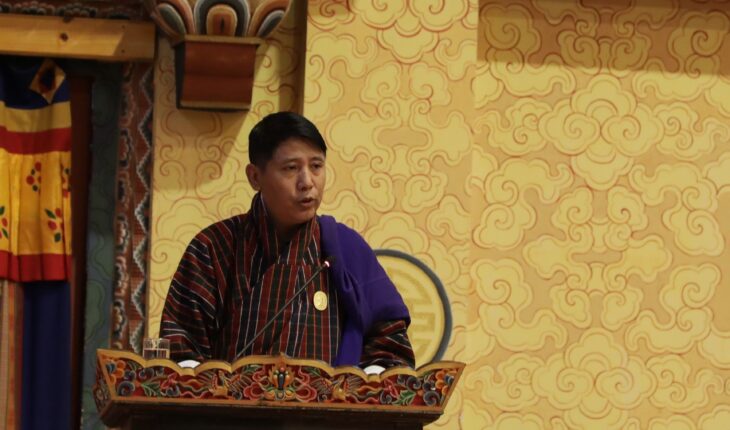
Presenting the review to the Council, Leki Tshering, the Committee Chairperson and representative of Thimphu Dzongkhag, said Bhutan’s water systems are facing “unprecedented pressure from climate variability, rapid development, and institutional gaps.” He added that more than 80 percent of Bhutan’s water sources come from forested areas, many of which are now under visible strain.
According to the Department of Forests and Park Services, Bhutan has 186 mapped watersheds. These are natural areas where water collects and flows into streams, rivers, and springs. A nationwide assessment found 7,399 water sources across the country. Out of these, 1,856 are drying, 69 have already dried completely, and only 5,457 remain unchanged.
This mapping exercise one of the most comprehensive to date has raised concerns because Bhutan has always depended on its clean, abundant water. Rural communities, hydropower plants, farmers, and even wildlife depend heavily on these watersheds functioning well.
During the deliberations, Birendra Chimoria, Deputy Chairperson of the Committee and National Council member from Dagana, referred to data from the National Centre for Hydrology and Meteorology (NCHM). He said Bhutan recorded 1,802 millimeters of average rainfall in 2024, but the pattern of rainfall has become more erratic. Heavy storms come without warning, sometimes followed by dry spells. These sudden changes upset the natural balance that watersheds depend on.
NCHM reported that 2024 was the warmest year on record, with temperatures rising by an additional 0.12°C compared to 2023. Though the increase may appear small, it has major consequences in a mountain country like Bhutan. Even slight warming can accelerate glacial melt, reduce snow cover, and weaken spring flows.
Some of the most at-risk glacial lakes are located in the Pho Chhu basin. These include Lugye Tsho, Thorthomi, and Drukchung lakes, which have been flagged as potentially dangerous. If these lakes overflow or break their natural dams, they could trigger Glacial Lake Outburst Floods (GLOFs) that could devastate communities downstream.
MP Ugyen Tshering from Paro Dzongkhag, who joined field visits in Gasa, Dagana, Zhemgang, and Sarpang, said the situation is not only reflected in climate data it is being felt in villages. “Village after village tells the same story springs do not flow the way they used to,” he told the Council. “Communities are deeply concerned, and the science confirms what they have been observing for years.”
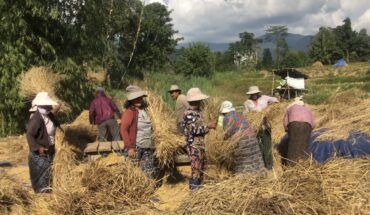
Field consultations conducted by the committee show that rural communities in particular are facing increasing difficulties in securing drinking water and irrigation water. Springs that used to supply entire villages are now unreliable, forcing people to walk farther to collect water or to compete with wildlife for the same shrinking sources.
In some villages, farmers have had to reduce the size of their paddy fields because they cannot maintain the necessary level of irrigation. Others say their maize or vegetable fields dry up halfway through the season, reducing yields and affecting household incomes.
Despite these growing pressures, many local governments lack the technical knowledge or long-term plans required to protect and restore water sources. They often rely on short-term projects, such as laying new pipes or building new intake structures, rather than addressing the root causes of drying springs.
Another major issue identified in the review is the lack of reliable, long-term water and climate data. Bhutan’s mountainous terrain makes it difficult to install and maintain hydrological stations, especially in high-altitude areas. Some existing monitoring equipment is damaged by wildlife, harsh weather, or landslides. Others suffer from irregular maintenance due to limited funding.
As a result, Bhutan does not have enough consistent data to predict water shortages, rainfall changes, or future hazards accurately. This weakens planning at both national and local levels.
Institutional changes have also affected coordination. The separation of the Department of Water and the Department of Hydro-Met Services under the Ministry of Energy and Natural Resources, along with the transfer of engineering responsibilities to the Ministry of Infrastructure and Transport, means agencies must now work harder to communicate and align their work.
MP Leki Tshering said, “Local governments are trying hard, but projects often remain isolated, lacking long-term conservation plans.” He added that the country needs stronger coordination if it wants to manage water sustainably.
Despite the challenges, the Committee noted that Bhutan has made significant efforts in ecosystem restoration. Under the ACREWAS-UNDP project, Bhutan plans to restore 38,518 hectares of degraded watershed areas between 2023 and 2028. About 600 hectares have been restored so far, and the remaining work is ongoing. Another 12,919 hectares are being conserved through the Adaptation Fund’s watershed programme.
De-suung, the national guardianship programme, has also emerged as one of the main contributors to water projects. Since launching its water flagship initiative, De-suung has completed 44 water projects, benefiting nearly 9,830 households. These projects have improved water access for schools, monasteries, health facilities, and more than 3,200 acres of farmland.
However, De-suung representatives told the committee that they need better systems to reuse materials, train youth, and ensure long-term project maintenance. Otherwise, some projects could weaken over time, especially in areas facing extreme weather events.
The committee also warned that the economic cost of ignoring watershed degradation could be significant. A 2024 World Bank report estimated that unmanaged climate risks could reduce Bhutan’s GDP growth by 2 to 3 percent per year by 2050. This reduction could come from lower hydropower production, agricultural losses, increased disaster recovery expenses, and rising rural-urban migration caused by water scarcity.
Bhutan’s hydropower sector its largest source of revenue depends on steady river flow. If rivers shrink during the dry season because of reduced snowmelt and drying springs, energy production could drop. This would directly affect government revenue and national development plans. Agriculture, which employs a large portion of the population, is similarly vulnerable. Even small reductions in water availability can affect crop yields, livestock productivity, and household food security.
MP Leki Tshering cautioned that “the cost of doing nothing will far outweigh the cost of prevention,” urging the government to prioritise watershed restoration and scientific investment. The committee also observed that gender and youth participation in water management remains low. Women in rural areas bear the largest burden when water sources dry because they are responsible for managing household water. Yet they are rarely involved in planning meetings or water governance. Youth, especially those trained under De-suung, have shown strong commitment and capacity to support water projects. But their skills are not fully integrated into national policies or long-term planning.
MP Birendra Chimoria said, “We cannot build water security without including the people who depend on it the most.” The Committee called for more opportunities for women and youth to participate in water decision-making. To address the growing challenges, the Committee proposed several key actions. They called for the Department of Water to be empowered as the central authority to manage water governance across all sectors. They also recommended speeding up the restoration of degraded watersheds, cloud forests, and spring-sheds.
Another major recommendation was the creation of a National Water Information System where data from various agencies can be stored and accessed in real time. This would help researchers, planners, and local governments make better decisions. The Committee also urged the government to adopt climate-resilient engineering standards in all future water infrastructure, strengthen Water User Associations, and introduce small, sustainable water tariffs to fund long-term maintenance. They emphasised the importance of hiring more professionals in hydrology, GIS, water quality, and engineering.
As the National Council concluded its deliberations, members recognised that Bhutan is entering a critical period. Water scarcity, climate change, rapid development, and institutional gaps are converging in ways that the country has never experienced before. “Bhutan’s water future depends on decisions we make today,” Leki Tshering reminded the Council.
“Watershed protection is not only an environmental responsibility; it is a foundation for national resilience, food security, and Gross National Happiness.”
The committee’s review has opened an urgent national conversation. Whether Bhutan can act quickly to rebuild its watersheds and adapt to climate impacts will determine the strength of its economy, the stability of its rural communities, and the well-being of future generations.