RENUKA RAI| Bumthang
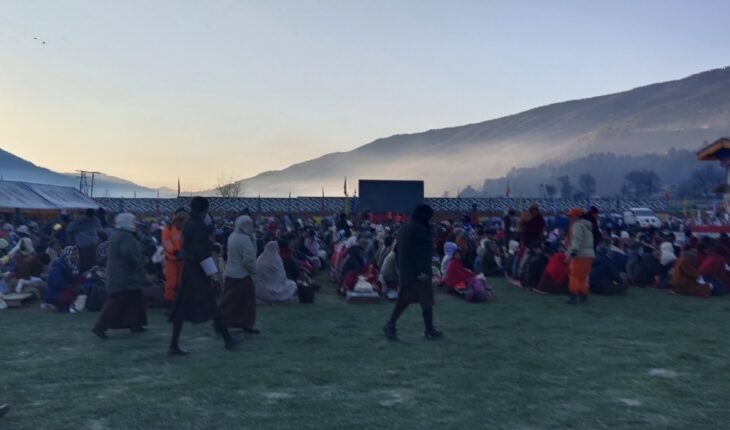
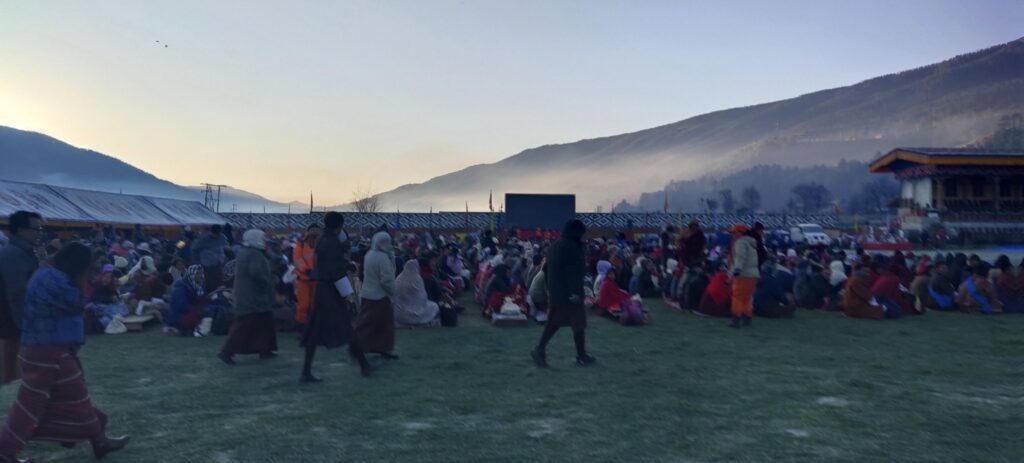
On 17 December, people began gathering at the Wangduechhoeling Palace grounds as early as 1 AM, braving temperatures between –1 and –2 degrees Celsius. Wrapped in ghos, kiras, blankets, and scarves, families, elders, and youth stood quietly in the freezing darkness—united by determination to witness a historic National Day in one of Bhutan’s most sacred valleys. For many, the cold and long wait were small sacrifices compared to the pride of being present before His Majesty the King and the Royal Family.
As dawn broke over Bumthang, the scale of the gathering became clear. Visitors had travelled from across the country, with a noticeable influx from eastern Bhutan. Large groups came from Mongar, Lhuentse, Trashigang, and Trashiyangtse, where journeys to Thimphu are often long and costly. Holding the celebrations in Bumthang made the event more accessible, and many said the location felt closer both geographically and spiritually.
Sixty‑five‑year‑old Yeshi from Chali, Mongar, was among those who arrived before sunrise after a six‑hour road journey. “Usually, National Day is celebrated in Thimphu, which feels very far for us from the east,” he said. “Bumthang is closer, so I felt it was my chance to come. I am very proud to see His Majesty and the Royal Family in person.” For him, the discomfort of travel and the cold morning were insignificant compared to the joy of being present on such an important day.
The early‑morning gathering reflected not only devotion but also the sheer scale of the event. Roads leading into Bumthang were congested well before daybreak, parking areas filled quickly, and buses, private vehicles, and taxis arrived one after another. Volunteers and security personnel worked through the night to manage the flow of people, while DeSuups guided visitors to designated areas.
For 23‑year‑old Yeshi Lhamo from Shaba, Paro, the journey was both exciting and challenging. It was her first National Day in Bumthang and her first visit to the valley. “I felt very proud and privileged to be part of this moment and to be a citizen of Bhutan,” she said. Yet she admitted she had not anticipated the scale of the crowd. “I didn’t expect that all the hotels would be booked one month before,” she said. Unable to find accommodation in Bumthang, she stayed in Ura. “Even finding a taxi was very hard because there were so many people,” she added. Despite the inconvenience, she said, “Being here today makes everything feel small. I feel very lucky to be part of this National Day.”
Accommodation shortages were a common concern. Bumthang’s limited hotel capacity was stretched to its limits as thousands arrived. Sangay, a 38‑year‑old taxi driver from Thimphu, brought passengers to Bumthang but was unable to find a room. “I went to many hotels to ask for a room, but they told me everything was already booked,” he said. With no alternatives, he spent the night sleeping inside his taxi. “It was very cold,” he said simply. His experience highlighted the hidden struggles of service providers who ensure others can attend national events, often at personal discomfort.
While visitors struggled with accommodation, local businesses thrived. Suk Maya, a 34‑year‑old shopkeeper in Chamkhar, said the celebrations brought life and opportunity to the town. “My small shop made a profit, and the whole area felt more active,” she said. “It was crowded, but it felt good. I want to thank His Majesty for bringing such a big national event to Bumthang.”
The effects extended beyond the town centre. In Ura, homestays and small lodges that usually receive few guests were suddenly in high demand. Chimi, a 35‑year‑old homestay owner in Nagar, said she was surprised by the number of visitors. “Normally, we host only a few guests at a time. During National Day, however, all our rooms were filled,” she said. She pointed to improved roads, increased movement of people, and new opportunities for rural businesses. “I hope such big events can be held in Bumthang once a year,” she added.
For many from eastern Bhutan, the celebrations carried a sense of inclusion and recognition. Groups from Mongar, Lhuentse, Trashigang, and Trashiyangtse were visible in the crowd, some travelling overnight to reach Bumthang by early morning. Many said the location made them feel more connected to the national celebration.
As the sun rose and temperatures slowly increased, the palace grounds filled completely. Despite the cold, people remained patient and orderly, sharing tea, food, and conversation as they waited. Elderly citizens were helped by younger family members, while children clutched flags and waved excitedly as the programme began.
Throughout the day, the presence of Their Majesties and the Royal Family drew emotional responses. Many attendees said seeing the Royal Family in Bumthang, a place so deeply tied to Bhutan’s history and spirituality, made the celebration especially meaningful.
Although crowding, cold weather, and logistical challenges tested many, the mood remained one of pride and gratitude. For most, the difficulties were part of a shared national experience rather than a reason for complaint. People spoke openly about the hardships but framed them as sacrifices willingly made to be part of history.
As the celebrations concluded and visitors began leaving, the scale of the event became evident in the quiet that followed. Roads that had been congested since before dawn slowly cleared, and shops returned to their usual pace. Yet the impact of the 118th National Day lingered—in memories, in conversations, and in the renewed sense of connection felt by those who attended.
For Bumthang, the celebrations marked more than a single day of festivity. They demonstrated how hosting National Day outside the capital can bring tangible economic benefits, strengthen national unity, and allow people from across Bhutan—especially from the east—to feel seen and included. As many expressed, the cold nights, long journeys, and full hotels were temporary, but the pride of standing together in Bumthang on National Day will endure far longer.