Dawa Zangmo | Thimphu
Bhutan Chamber of Commerce & Industry (BCCI) has acknowledged concerns raised by various business associations, particularly from the trading community, over the treatment of goods procured before the implementation of the Goods and Services Tax (GST) scheduled for January 2026.
Business representatives have expressed apprehension that existing inventories purchased and taxed under the current system could face complications once the new tax regime comes into force.
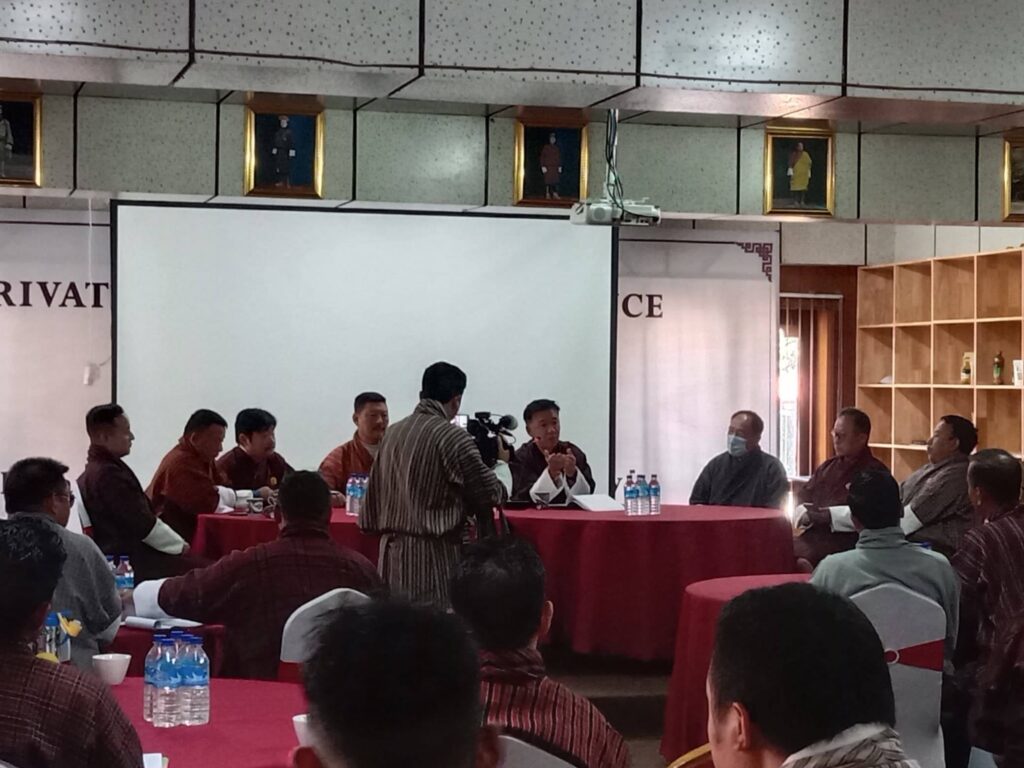
In response, BCCI convened a sectoral consultation session to examine these challenges in detail. The meeting aimed to collect inputs from affected sectors, assess the financial and operational implications for businesses, and explore possible measures to address the concerns. BCCI also discussed the possibility of engaging relevant government agencies based on the outcomes of the consultation.
The BCCI took discussion which contribute to the development of a coordinated approach to ease the transition. Inputs gathered during the session are to inform future dialogue with authorities to support a smooth shift to GST for the business community.
During the consultation on tax and the impact on pre-GST stock, representatives from sectors including automobile, information and communication technology (ICT), and hardware raised concerns regarding the government’s decision to introduce a 5 percent GST from January 2026.
Businesses across these sectors stated that the transition to the new tax regime could result in significant financial losses, particularly for goods that have already been taxed under the existing system.
Representatives from the automobile sector reported an increase in order cancellations following the announcement of GST implementation. One automobile company shared that it currently has 75 vehicles in stock, for which it will have to pay close to Nu 10 million in excise tax. The company also said that around 300 customers have already placed orders for vehicles to be delivered next year, and at the point of entry, the firm expects to pay approximately Nu 40 million in taxes for those vehicles.
The company further explained that the vehicles currently in stock have already been subjected to the Green Tax (GT), which has been paid. With the GST regime set to begin next year, the company expressed concern that these vehicles could effectively be taxed twice.
As a possible mitigation measure, the company suggested the use of bonded warehouses. A bonded warehouse is a customs-controlled facility where imported goods can be stored without immediate payment of duties until they are cleared for sale.
Similar concerns were raised by workshops and business owners dealing in vehicle spare parts. They stated that they maintain inventories purchased several years ago, on which applicable taxes have already been paid. Once GST is implemented, they fear that these parts may have to be sold at a loss, as newly imported spare parts brought in under the GST system would be cheaper, resulting in intense market competition.
Participants from the ICT sector also voiced comparable issues. They noted that existing stock taxed under the current framework could become less competitive compared to new imports under the GST regime, potentially affecting their business viability.
Concerns were also highlighted by businesses in the hardware sector. Representatives reported that they have already paid the 10 percent Bhutan Sales Tax (BST) on their current inventories. From January 2026, they said, they would be required to comply with the 5 percent GST, which they believe would place them at a disadvantage compared to new stock imported under the revised tax system.
Thinley Dorji, President of the Bhutan Hardware Association, said that the sector has already submitted an appeal to the Ministry of Finance regarding the issue. He noted that while the association received a response, it did not provide any concrete solutions or alternatives to address the impact on pre-GST stock. He added that hardware businesses are expecting the government to consider extending the submission or adjustment timeline until March 2026.Throughout the consultation, sector representatives emphasized the need for clarity and transitional measures to prevent losses arising from tax differentials. Participants reiterated that without appropriate mechanisms, businesses could face financial strain during the shift to GST.
BCCI President Tandy Wangchuk stated that BCCI will compile the concerns and recommendations raised during the consultation and assess possible next steps. They indicated that the feedback would be used to guide further engagement with relevant authorities to seek practical solutions that ensure a fair and orderly transition to the GST regime for all affected sectors.