RENUKA RAI | Thimphu
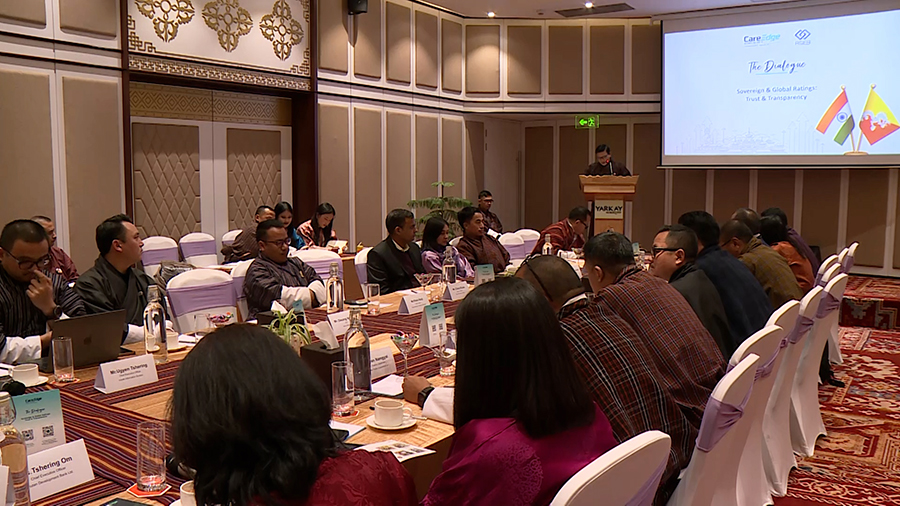
The entry of Care Edge Global into Bhutan’s sovereign and non-sovereign rating space marks a significant development, one that could influence how the country is perceived by investors, lenders, and financial institutions beyond its borders.
Bhutan has long been known internationally for its development philosophy centred on Gross National Happiness, which prioritises social well-being, environmental conservation, and good governance alongside economic progress.
While this model has earned admiration, it has also meant that Bhutan’s economy operates differently from many conventional market-driven systems.
As the country now seeks to diversify its economy, mobilise investment, and strengthen domestic capital markets, the need for credible, context-sensitive financial assessments has become increasingly important.
The presence of an international credit rating agency offers Bhutan an external lens through which its economic fundamentals, institutional strengths, and long-term prospects can be accessed and communicated.
Sovereign ratings, in particular, play a crucial role in shaping investor perceptions, influencing borrowing costs, and determining access to international capital.
For a small and emerging economy like Bhutan, accurate and balanced ratings can help ensure that risks are neither overstated nor misunderstood.
Bhutan’s macroeconomic indicators present a mixed but largely stable picture. Over the years, the country has recorded steady economic growth, supported primarily by hydropower exports, public investment, and a growing services sector.
At the same time, structural challenges remain, including a narrow economic base, dependence on external financing for large infrastructure projects, and vulnerability to global shocks.
Recent reforms, such as the implementation of the Goods and Services Tax, efforts to strengthen fiscal discipline, and initiatives to broaden the private sector, are aimed at addressing these long-standing constraints.
Care Edge Global approach to credit assessment places emphasis on understanding such reforms within a broader development framework.
Rather than focusing narrowly on short-term fiscal pressures or headline debt figures, the agency’s methodology considers growth potential, institutional capacity, and sustainability.
This approach is particularly relevant for Bhutan, where public investments are often tied to long-term national priorities such as energy security, climate resilience, and social development.
Another factor shaping Bhutan’s economic outlook is its strong institutional framework. The country has maintained political stability, a relatively high level of policy continuity, and well-functioning public institutions.
These features contribute to predictability in economic management, which is a key consideration for investors assessing long-term risk.
Improvements in public financial management, reporting standards, and regulatory oversight further enhance Bhutan’s readiness to engage more deeply with financial markets.
Bhutan’s close economic relationship with India also plays an important role in its financial profile. Trade, hydropower cooperation, and development partnerships with India provide a degree of stability and support that underpins economic activity.
These linkages influence foreign exchange flows, infrastructure development, and overall growth prospects, and are therefore relevant to any comprehensive assessment of Bhutan’s creditworthiness.
Beyond sovereign borrowing, the entry of a global rating agency has implications for the development of Bhutan’s domestic capital markets.
At present, the country’s bond and debt markets remain small, with limited issuance and a narrow investor base.
Independent ratings can help improve transparency, support price discovery, and build confidence among institutional investors.
Over time, this could contribute to the gradual development of a domestic yield curve, which is essential for a functioning debt market.
A more developed debt market would allow Bhutan to diversify its financing options, reducing reliance on concessional loans and external funding sources.
It could also support financing for infrastructure, renewable energy projects, and social programmes aligned with national development priorities.
Clear and credible credit assessments are a key component in this process, as they provide investors with a common reference point for evaluating risk.
Equity markets, though still nascent in Bhutan, may also benefit indirectly from the signalling effect of sovereign and institutional ratings.
Strong assessments of governance, policy effectiveness, and economic resilience can enhance overall market confidence, encouraging greater participation and long-term investment.
As reporting standards and corporate governance practices continue to improve, ratings can reinforce market discipline and transparency.
Sustainability is another area where Bhutan’s development model aligns with evolving global investment trends. International investors are increasingly factoring environmental, social, and governance considerations into their decisions.
Bhutan’s emphasis on renewable energy, conservation, and inclusive growth positions it favourably in this regard.
Incorporating sustainability indicators into financial assessments helps highlight strengths that may not be fully captured by traditional economic metrics.
The localisation of rating activities further strengthens the relevance of assessments. Engagement with domestic policymakers, regulators, and market participants allows for a deeper understanding of sector-specific dynamics and policy intentions.
This contextual awareness is particularly important in economies where development priorities and institutional arrangements differ from larger or more mature markets.
Transparency remains a central challenge for many emerging economies, and Bhutan is no exception. While progress has been made in data availability and reporting, information gaps can still affect investor confidence.
Independent ratings contribute to reducing information asymmetry by providing structured, forward-looking assessments that bring together economic data, policy analysis, and institutional evaluation.
This clarity can be instrumental in attracting foreign direct investment and supporting economic diversification.
As Bhutan continues to modernise its financial system, the discipline associated with external ratings may also have domestic benefits. Regular assessments can encourage stronger policy coordination, improved data quality, and greater accountability.
For policymakers, ratings provide feedback on how reforms are perceived externally, while for market participants, they offer guidance on risk and opportunity.
The timing of Care Edge Global entry coincides with a period of transition for Bhutan’s economy. With reforms underway, expanding trade links, and growing emphasis on private sector participation, the country is seeking to move toward a more diversified and resilient growth model.
Access to credible financial assessments can support this transition by aligning investor perceptions with on-the-ground realities.
For Bhutan, the broader significance of this development lies not only in improved access to capital, but also in the recognition of its unique development path.
By adopting a context-aware approach to ratings, Care Edge Global presence helps ensure that Bhutan’s economic story is understood in its entirety, balancing risks with strengths and short-term challenges with long-term vision.
Care Edge Global engagement reflects growing recognition of Bhutan’s potential and provides an additional tool to support its journey toward a more confident and resilient economic future