KINZANG DORJI TSHERING | Samtse
Residents of Norbugang Gewog in Samtse Dzongkhag say that changing weather patterns, frequent floods, and damaged roads and bridges are making life increasingly difficult for farmers, business owners, and ordinary citizens.
Norbugang Gewog, located about 11 kilometres from Samtse town, lies in the subtropical monsoon zone and depends largely on agriculture and small businesses.
In recent years, people say rainfall has become unpredictable, temperatures have risen, and extreme weather events have become more frequent, threatening both livelihoods and daily life.
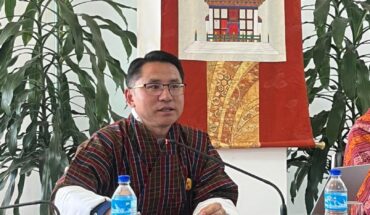
According to Kinley Dorji, the Gewog Administrative Officer of Norbugang Gewog, farming has been significantly affected by climate change.
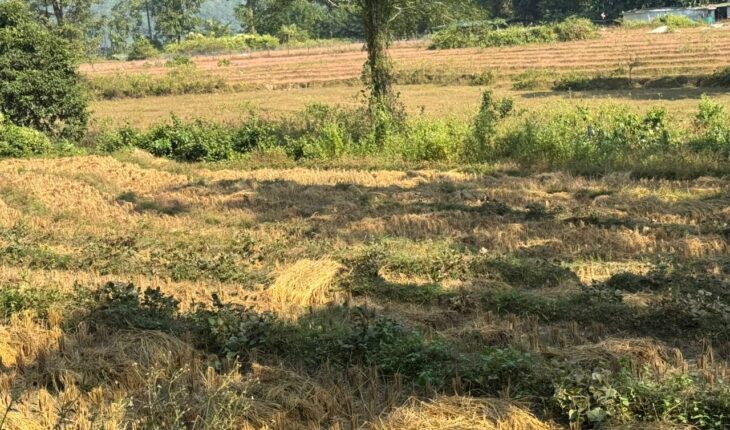
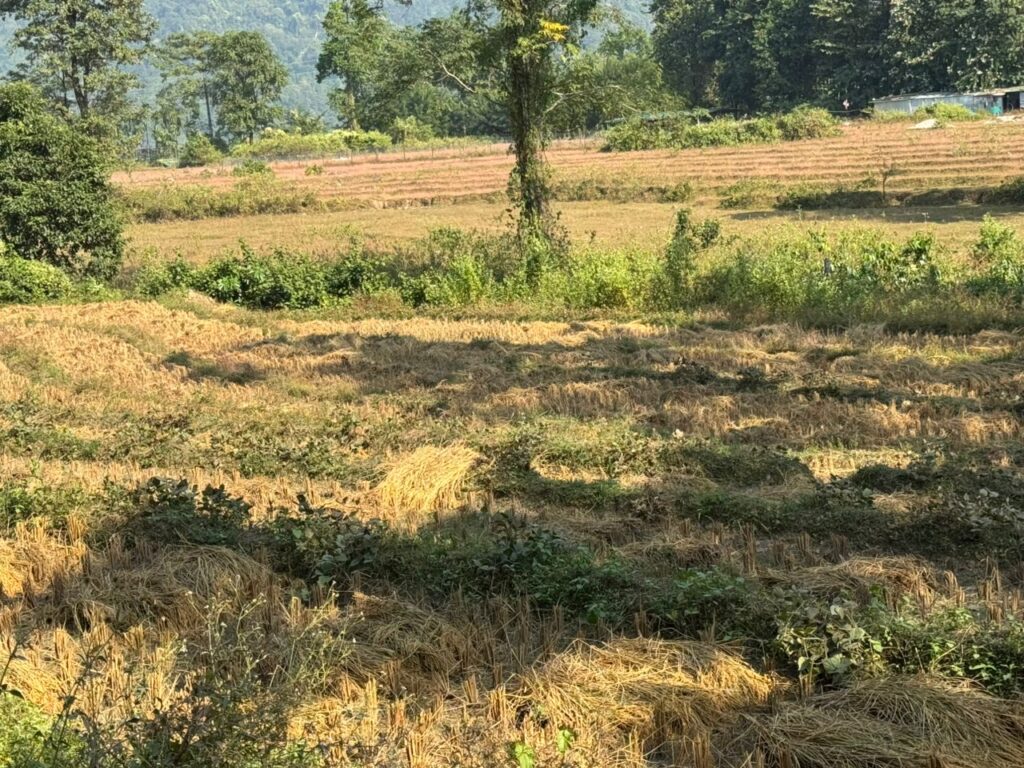
“Farmers are facing irregular rainfall, longer dry spell, and very heavy rainfall during the monsoon,” he said. “Paddy fields get flooded, and sand and gravel are deposited on farmlands, which reduces crop production. Vegetables and maize are also affected, both by drought conditions and by increased pest attacks linked to changing weather.”
Local business owners also say that unpredictable weather has directly affected their income. Shahina Rehman, a mobile store owner in Norbugang town, explained that heavy floods often delay the arrival of goods from Thimphu.
“When there is high demand, we cannot supply goods on time because deliveries get delayed due to floods,” she said. “This affects our business badly. When the bridge is damaged, it impacts us financially and emotionally.”
She added that the weather is becoming hotter than before, particularly during the summer, and that prolonged rainfall now lasts for several days, affecting water sources used for drinking and cleaning.
She also credited local leadership for timely action. “Our local leader helped ensure that the Diana Bridge was completed quickly, which restored connectivity faster,” she said.
Farmers and traders face similar challenges due to poor road conditions and damaged bridges. Ram Singh Lepcha, a farmer and animal feed store owner, said that heavy rainfall makes transportation extremely difficult.
“We struggle a lot during the monsoon. The Buduni Bridge has not been completed, and during heavy rain we cannot cross it. We have to take a longer and rough route. My Bolero cannot carry much load on damaged roads,” he said.
Ram Singh Lepcha also highlighted the complications caused by ongoing road construction between Samtse and Diana. “The road is open only for certain hours and closed for others.
It has been like this for more than a year and a half, and it delays both getting supplies and delivering goods,” he said.
For those dealing with perishable items, the risk is even higher. “I also transport meat. When the road is blocked due to floods or landslides, I have to bear the loss if the meat goes bad.”
The October flood caused serious damage and left people worried about the future. “The rain does not come when crops need it. It comes when we do not expect it, and when crops are already grown, heavy rainfall destroys them,” he said. “Now rain even comes during winter. We work the whole year, only to see our crops destroyed.”
The October rainfall also severely affected Budhi Man Rai, a farmer and resident of Norbugang town.
“My crops were spoiled due to heavy rain,” he said. “My house was also flooded, though it was not destroyed.” He said that support from the Gewog administration helped people cope during the difficult time.
“The gewog officials came and saw our situation. They supported us and helped us feel less devastated,” he said. October is usually harvest season, but this year farmers had to remove dead crops instead.
“Not only me, many farmers suffered. Some of my friends with poultry farms lost chicks and chickens due to heavy rainfall, and there was nothing we could do,” he added.
Older residents also say farming has become more difficult due to unpredictable weather. Pedon, a grandmother and former farmer fromNorbugangGewog, said that changing seasons forced her to stop farming.
“The seasons change too often now. Sometimes it does not rain at all, and sometimes it rains so much that farmland gets destroyed,” she said. Because of this, she has given her land to others to cultivate. “At my age, it is very difficult to farm with such unpredictable weather,” Pedon said.
Road safety and connectivity remain major concerns for residents, especially after the October flood. Karma Choden, a farmer and resident of Norbugang originally from Tashicholing , said that heavy rainfall has worsened road and bridge conditions.
“When there is heavy rain, we are scared to cross the bridge connecting Norbugangto Samtse. After the October flood, the fear has increased,” she said. She also noted that some people cross the river when water levels are low, which is risky.
“The rainfall pattern keeps changing. Sometimes there is heavy rain and storms during odd seasons, and sometimes there is no rain when crops need it most,” Karma Choden added.
According to Kinley Dorji, the Gewog Administration, in coordination with the Dzongkhag administration, has taken several measures to reduce damage from floods and heavy rain.
These include building protection walls, improving drainage systems, carrying out river training works, and allocating funds every year for monsoon restoration.
Early weather warnings from the National Centre for Hydrology and Meteorology are also shared with communities to help them prepare.
Despite these measures, residents say the increasing intensity and unpredictability of weather continue to disrupt their lives. From delayed supplies and damaged crops to risks to livestock, bridges, and homes, the people of Norbugang Gewog are forced to adapt to an increasingly unpredictable environment.
AsNorbugang Gewog faces growing climate challenges, the voices of farmers, business owners, and residents show that climate change is no longer a distant issue but a daily reality affecting food, income, safety, and wellbeing across southern Bhutan.
Residents say stronger infrastructure, better road connectivity, and consistent government support are needed to help communities withstand the increasing threats from extreme weather events.
“This story was covered as a part of the media reporting grant funded by Australian Government through ABC International Development and JAB”.