
NGAWANG JAMPHEL| Samdrup Jongkhar
As coal mining operations expand across Samdrup Choling Drungkhag, communities living near the Tshopangma, Majuwa, and Habrang coal mines are feeling the impact of development on their daily lives.
Residents of Martsalla, Phuntshothang, Pemathang, and Tashithang (Samrang) gewogs describe a landscape transformed: once-quiet villages now endure constant heavy machinery, frequent truck movements, and persistent layers of coal dust.
While villagers recognise the critical role of coal in Bhutan’s cement industry and its contribution to national economic growth, they are increasingly vocal about the need for stronger safeguards to ensure cleaner air, safer water, and healthier living conditions.
“We know the mines help the country, but the dust sometimes feels too much for us,” said Cheki Dorji, a resident of Phuntshothang. “On windy days, even our vegetables turn black. We cannot wash everything all the time.”
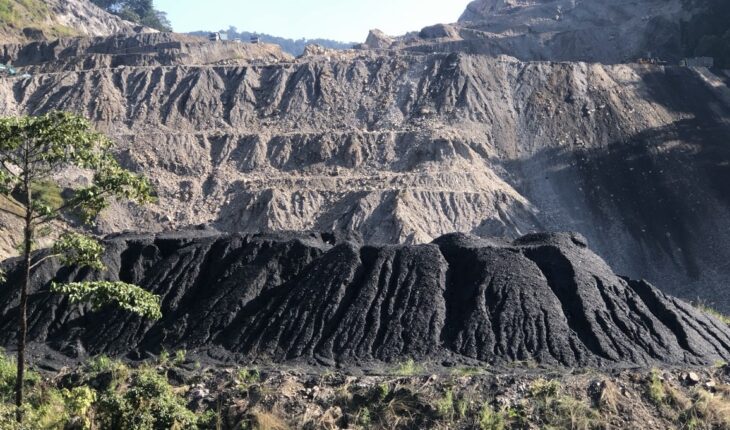
Dust pollution remains the most common concern for residents. Fine black particles coat rooftops, water containers, crops, and even prayer flags. Families reliant on vegetable farming fear prolonged exposure could reduce both yield and quality, directly affecting household income.
Noise and vibration from heavy trucks transporting coal along narrow rural roads add to the frustration. Buildings shake as vehicles pass, and nighttime transport disrupts sleep.
“It is not that we don’t want development,” said a shopkeeper from Phuntshothang. “We just want a quieter night and cleaner surroundings. Our gewog is contributing to the country, but people here also need comfort.”
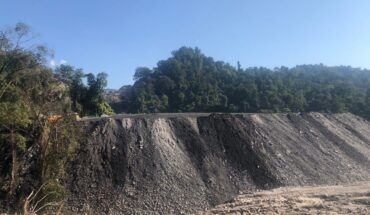
Water quality has emerged as another pressing concern. Streams used for drinking and irrigation often turn muddy after rainfall, a change residents associate with overburden dumping and disturbed land from open-pit mining. Farmers worry sedimentation could affect paddy fields and vegetable gardens downstream, potentially reducing productivity and threatening household food security.
“These streams are used for drinking water and irrigation,” said a parent from Phuntshothang. “Children ask why the water gets muddy. It is difficult when the same water is used for drinking and irrigation. We worry about what it could mean for the future.”
Despite these challenges, villagers emphasise that they are not opposed to mining itself. Many recognise that the Tshopangma, Majuwa, and Habrang coal mines, operated by the State Mining Corporation Limited (SMCL), supply domestic coal crucial for Bhutan’s cement factories, reducing dependence on imports. Their demand is not for closure but for responsible mining that safeguards health, land, and water.
Residents are calling for closer collaboration between SMCL, local governments, and national authorities. They urge regular consultations, transparent environmental monitoring, and faster responses to complaints raised by communities living closest to mining operations.
Coal mining in Bhutan is governed by a multi-layered regulatory framework designed to balance economic development with environmental protection and social welfare. The Department of Geology and Mines (DGM), which oversees mining, emphasises that sustainability and responsible operation are central to the approval process.
“Mining activities are not allowed to proceed if there are unacceptable risks to ecology, water sources, or communities,” DGM said.
The allocation of mining leases follows a strict, step-by-step procedure, beginning with mineral exploration to confirm coal reserves, followed by prefeasibility studies to assess technical, economic, and environmental suitability. Companies must then secure clearances from multiple agencies, including the Department of Environment and Climate Change (DECC), Department of Forests and Park Services (DoFPS), dzongkhag administrations, and authorities responsible for land and cultural heritage. Public consultations with affected communities are mandatory.
“If significant negative implications for ecology or local streams are identified, the project does not proceed,” DGM added. Only after all clearances are obtained can companies submit a Final Mine Feasibility Study (FMFS) and an Environmental Impact Assessment (EIA), which cover technical, financial, environmental, and social aspects. A Mining lease agreement is signed only after every requirement is reviewed and deemed acceptable.
DGM acknowledged that coal mining carries inherent environmental risks. These include land degradation, air pollution, deforestation, and water contamination. Land degradation occurs when fertile topsoil is removed, increasing erosion and reducing land-use capacity. Large volumes of overburden must be managed carefully to prevent environmental damage. Fugitive dust emissions, particularly during dry periods, can affect air quality and agricultural productivity. Deforestation is unavoidable in open-pit mining, and untreated mine water can contaminate streams used by communities.
“These risks are well recognised, which is why strict monitoring and compliance mechanisms are in place,” DGM said.
The department stressed that sustainability is assessed at every stage of mine approval, and mining is not permitted if water availability, ecology, or stream quality is expected to be unacceptably affected. Community feedback is also incorporated into mitigation measures and monitoring plans.
SMCL confirmed that it complies fully with national regulations. “All mining activities under SMCL are regulated through the Mines and Minerals Management Act 1995 and the Mines and Minerals Management Regulations 2022. Environmental Impact Assessments cover air, water, noise, biological environments, waste management, infrastructure, and socio-economic aspects,” the company said.
On-site measures include regular water sprinkling with dedicated tankers, speed controls on haul trucks, covered vehicles, limited vegetation clearance, and proper equipment maintenance to reduce dust.
Land degradation is minimised through scientific benching, phased clearing, controlled overburden dumping, slope stabilisation, and reclamation of mined-out areas through soil improvement and revegetation aligned with final land-use plans. Where water bodies are protected through drainage systems and reinforced overburden dumps.
“Mine restoration is a critical part of our operations,” SMCL added. “It involves backfilling exhausted pits, replacing topsoil, regrading slopes, and planting native species to restore ecological balance. Restoration areas are monitored to ensure slope stability and vegetation success.”
As part of restoration efforts, SMCL signed a Memorandum of Understanding with Green Bhutan Corporation Limited in August 2023. The Habrang Coal Mine, covering 144.51 acres, has been outsourced for rehabilitation at a cost of Nu 10.99 million, with an additional Nu 13.72 million deposited as an Environmental Restoration Bond.
The most recent EIA, conducted in September 2025 by SMCL and DECC, highlighted both positive and negative impacts. Positive outcomes included improved drinking water access in Samrang, reduced human-wildlife conflict due to resettlement, local employment generation, support for river protection, and local business opportunities.
Negative findings were limited to overburden spillage and minor dust from coal transport. Mitigation measures recommended stricter overburden containment, regular clearance during peak monsoon seasons, and continued deployment of water tankers for dust suppression.
While regulations and restoration plans exist, residents emphasise that enforcement and visible improvements in daily life remain critical. Villagers hope for more frequent monitoring, transparent communication, and faster responses to complaints.
“Rules are there, but we want to see improvements in our daily lives,” said a farmer from Pemathang. “If dust and water issues are addressed properly, people will feel more positive about the mines.”
Communities living near Samdrup Choling’s coal mines support mining that contributes to Bhutan’s economy but insist development must be carried out responsibly, without compromising public health, livelihoods, or the environment. They call for a balance between national economic priorities and the sustainability of their daily lives, advocating for a mining model that is both productive and socially responsible.
The situation highlights a broader challenge in Bhutan’s development trajectory about how to harness natural resources for national growth while safeguarding the environment and community well-being.
For residents of Martsalla, Phuntshothang, Pemathang, and Tashithang, the question is not whether mining should exist, but how it can coexist with their health, safety, and agricultural livelihoods.
” This story was produced as part of a media reporting grant funded by the Australian Government through ABC International Development and JAB“.