TENZIN LHAKI | Chhukha
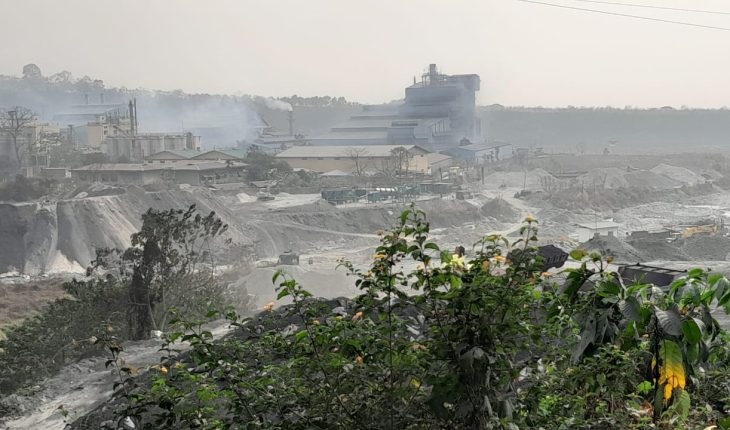
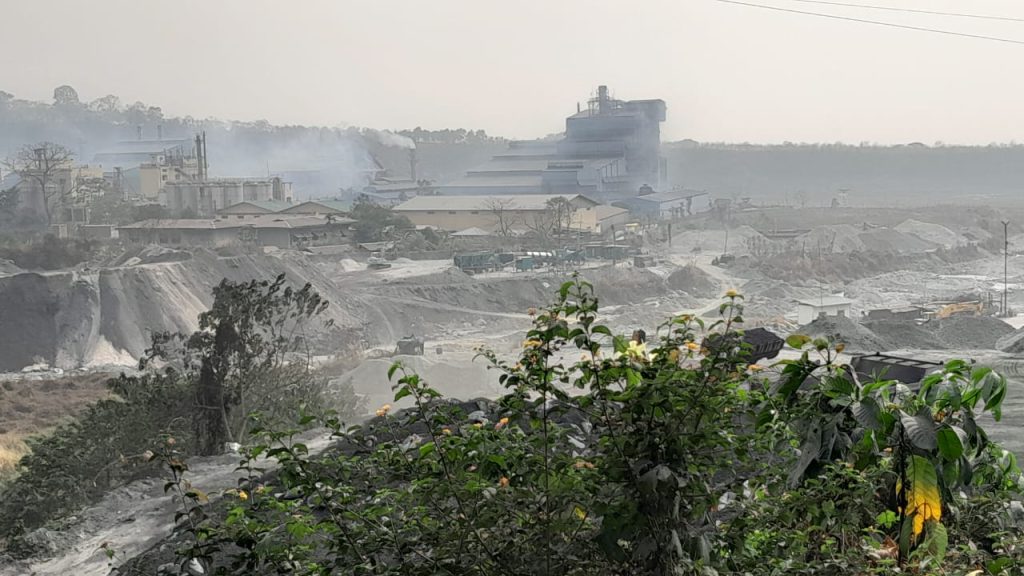
Tucked along the southern India–Bhutan border, Pasakha Industrial Estate under Chhukha Dzongkhag was established in 1988. Today, it stands as the country’s largest industrial estate, covering about 146 acres and hosting 26 factories. Its proximity to raw materials and the Indian border has provided easy access to manufacturing and export markets, making it a strategic economic hub.
However, while Pasakha plays a vital role in boosting the country’s economy and generating employment, concerns over air pollution, dust, and waste management have become daily realities for people living in nearby communities.
Industrial officials maintain that most waste generated in Pasakha is either recycled or sold. At Bhutan Carbide and Chemicals Limited (BCCL), Safety and Environmental Focal Person, Sonam Jamtsho said the factory generates various types of waste annually. These include 4.12 metric tonnes (MT) of High-Density Polyethylene (HDPE) bags, 1,572.7 MT of metal scrap, 4.12 MT of gunny bags, 5 MT of damaged electrodes, 4,500 MT of quartz chips, 0.3 MT of office waste, and 2 MT of food waste.
“Recyclable waste such as metal scrap and damaged electrodes is sold, mostly to buyers in India. Quartz chips and some non-hazardous wastes are disposed of at designated landfill sites, while plastics are sold to scrap dealers,” said Sonam Jamtsho. Similarly, in 2024, Ugyen Ferro Alloys Limited (UFAL) generated significant volumes of raw material waste. The factory recorded 8,880 MT of quartz and quartzite fines, of which about 15–16 percent was considered waste. Out of 17,680 MT of Indian quartzite used, 1,122 MT was disposed of as non-hazardous waste. The factory also produces around 150 MT of cyclone dust annually, 6 MT of damaged filter bags, and nearly 20 MT of packing bag waste. Charcoal fines and slag are sold to external parties.
However, S.R. Gurung, Safety and Environment Focal Person of UFAL, noted that landfill space is limited. Disposal costs range between Nu. 1,100 and 1,200 per MT, sometimes leading to delays and temporary accumulation of waste within factory premises.
Hazardous waste is managed carefully. The cyclone dust and quartz chips are dumped at landfills, office waste is disposed of at landfill sites, while HDPE bags, damaged electrodes, charcoal fines, gunny bags, and plastics are sold to buyers or scrap dealers.
Most waste is reused or recycled, though limitations such as landfill space and disposal costs restrict broader circular practices. Industry officials said that drinking water and air quality are monitored quarterly with the support of Ecolab Analytics & Technical Centre, based in Pasakha, and the reports are subsequently submitted to the Department of Environment and Climate Change (DECC) for verification.
While factories maintain that they do not discharge wastewater, air pollution remains a significant concern. Representatives added that pollution control devices operate continuously during production, with emission levels monitored quarterly by external laboratories, and corrective measures, including temporary shutdowns and are implemented if emissions exceed permissible limits.
Abhilash Ojha, Mechanical Manager of UFAL acknowledged that air pollution is increasing with the growing number of factories. “We are trying our best to control harmful emissions such as carbon monoxide. If emissions go beyond the limit, we immediately inform authorities,” he said, adding that the factory has upgraded machinery to reduce emissions.
Despite these assurances, many residents say dust and pollution have worsened over the years.
Dawa Lham, 41, who has lived in Pasakha, said the heavy vehicle movement has increased visible dust. “We suffer from cough and cold because of the dust, although drinking water has no problem,” she said.
Similarly, Sonam Deki, a 40-year-old factory worker, said dust from passing vehicles enters homes, making furniture and clothes dirty. “Even while sleeping, breathing becomes difficult,” she said.
Tendrel Zangmo, a businesswoman and asthma patient, said she has to wear a mask daily. “In the morning, we wake up with sore throats and dust in our noses. We depend on factories for income, but health risks are real,” she said, highlighting the absence of a nearby hospital that forces residents to travel to Phuentsholing for treatment.
Workers inside factories said safety equipment such as masks, helmets, gloves, and boots are provided, and regular health checkups are conducted by factory safety teams. Most workers described monitoring systems as adequate, although some admitted that community complaints are limited because many families rely on factory jobs.
“Fifty percent of the people benefit from these industries,” Tendrel Zangmo said. “But there are also health concerns.” Pasakha stands as a symbol of Bhutan’s industrial progress. Its factories provide employment, boost exports, and support small businesses. At the same time, dust, emissions, and waste disposal challenges continue to raise concerns among residents.
Industry representatives say they are complying with monitoring requirements and working to reduce emissions.
Community members, however, are calling for stronger emission controls, more frequent dust suppression measures, comprehensive health surveys, and improved medical facilities.
“This story was produced as part of the media reporting grant funded through the Australian Government ‘s Regional Media Support through JAB”