RENUKA RAI | Thimphu
Bhutan’s growing exposure to extreme weather events and climate-induced disasters has been laid bare in a comprehensive assessment that documents decades of floods, flash floods, landslides, Glacial Lake Outburst Floods (GLOFs), forest fires and windstorms across the country. The findings, compiled from historical archives and recent rapid assessments, show that climate-related hazards are no longer isolated emergencies but recurring events that are steadily imposing economic strain, environmental degradation and social disruption nationwide.
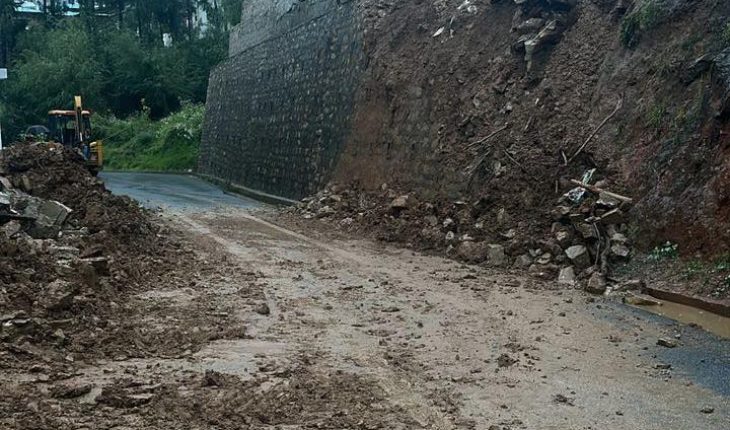
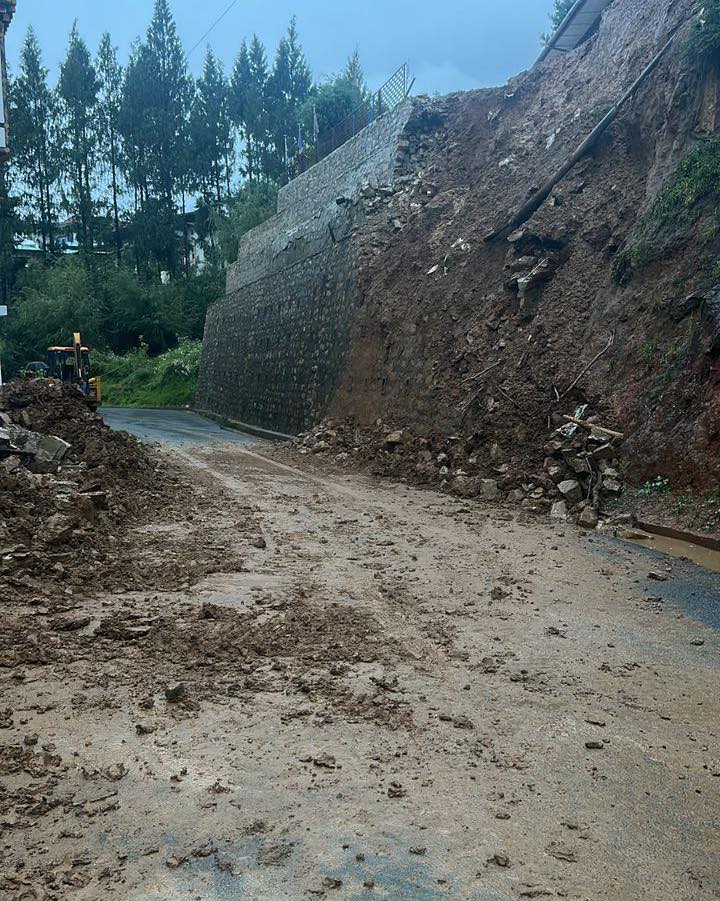
The most recent example came on October 4 and 5, 2025, when continuous and intense rainfall triggered localized floods, flash floods, swollen rivers and landslides across multiple dzongkhags. Southern and western regions, particularly Samtse, Chukha, Haa and Dagana, were among the worst affected. The heavy downpour caused rivers and streams to overflow, eroded road foundations and washed away critical infrastructure.
Although no confirmed fatalities were officially recorded during the October event, two individuals were reported missing in Sertena under Gakiling Gewog in Haa following flash floods. The incident underscored the sudden and unpredictable nature of extreme rainfall events in the country’s mountainous terrain, where even short bursts of intense precipitation can trigger destructive consequences.
Transport infrastructure suffered extensive damage. A total of 29 bridges were either damaged or completely washed away. These included 17 bailey bridges, six suspension bridges, three culvert bridges and three wooden bridges. Key highways such as the Dorokha–Phuentsholing Secondary National Highway (SNH), Lhamoizingkha–Dagapela SNH, Haa–Samtse SNH and sections of the Thimphu–Phuentsholing highway were temporarily closed due to landslides, collapsed culverts and washed-out road bases. The closures disrupted trade routes, delayed the movement of essential goods and affected daily commuting for thousands of residents.
Electricity and telecommunications networks were also severely impacted. Power outages were reported in 28 locations nationwide. While the Bhutan Power Corporation restored electricity fully in 18 areas and partially in six, four locations — including parts of Haa and Samtse — remained without power for an extended period. Telecommunications disruptions were even more widespread, affecting 236 sites across the country. Remote communities in Lingzhi, Laya, Gasa, Haa and Samtse experienced prolonged communication blackouts, complicating coordination efforts and emergency response measures.
The October rainfall event adds to a long history of climate-related disasters recorded in Bhutan since 1968. Archival records show repeated flooding incidents in Punakha, Thimphu, Paro, Sarpang, Trashigang and other dzongkhags over the decades. The 1994 Glacial Lake Outburst Flood in Punakha remains one of the most devastating climate-induced disasters in Bhutan’s history. Triggered by the sudden breach of a glacial lake, the flood left 17 people missing, destroyed homes, damaged centuries-old religious structures and caused widespread agricultural and livestock losses along the Phochhu river basin. Large stretches of fertile farmland were buried under sand and debris, affecting food security and livelihoods for years.
Flash floods in southern districts such as Sarpang, Chukha and Samdrup Jongkhar have also caused repeated damage to irrigation systems, roads, bridges and industrial establishments. Factories in Pasakha and Gomtu have reported significant financial losses during past flood events, while workshops and small businesses located near riverbanks have frequently been inundated. Agricultural fields, especially paddy and cardamom plantations, have been washed away or buried in silt, affecting rural incomes.
Forest fires present another growing concern. Between 2023 and 2025, Bhutan recorded 274 forest fire incidents nationwide. During this three-year period, a total area of 27,169.91 hectares was affected. Chir pine forests accounted for the majority of the burned area, with more than 22,500 hectares damaged. Blue pine forests followed with over 3,800 hectares affected. Fire suppression operations mobilized 21,605 personnel, including forestry officials, armed forces, DeSuung volunteers, civil servants and local residents. The combined financial cost of suppression efforts exceeded USD 800,000, excluding long-term ecological losses such as biodiversity decline and soil degradation.
At the local level, recent data from Punakha illustrates the cumulative financial burden of extreme weather. Continuous rainfall in October 2021 affected 664 households and damaged 383 acres of cultivated land. The total loss of 412 metric tonnes of paddy was valued at approximately Nu 16.91 million. More recently, flash floods in June and July 2025 damaged irrigation channels, farm roads and protective structures in Toepisa and nearby gewogs, with estimated losses reaching Nu 45.58 million.
These figures represent only documented damages. Officials acknowledge that many localized incidents — particularly in remote areas — go unreported or are insufficiently quantified. Small-scale landslides that block farm roads, minor irrigation damage and localized crop losses often escape national statistics, yet collectively they impose substantial economic pressure on communities.
The assessment distinguishes between economic loss and damage (ELD) and non-economic loss and damage (NELD). Economic losses include destroyed infrastructure, damaged hydropower systems, eroded farmland, disrupted industrial production and the financial cost of recovery and reconstruction. Non-economic losses, though harder to measure, include the loss of human lives, psychological trauma, displacement of families, degradation of ecosystems and damage to cultural heritage sites.
Bhutan’s hydropower-dependent economy is particularly sensitive to climate variability. Changes in glacial melt patterns and erratic precipitation can affect river flows, posing risks to energy production. Infrastructure damage caused by landslides and floods can interrupt transmission lines and power generation facilities, affecting both domestic supply and export revenues.
The cascading effects of extreme events amplify their overall impact. When bridges are washed away, communities lose access to markets, schools and health facilities. When irrigation channels are damaged, agricultural productivity declines. Communication blackouts hinder relief coordination. Recurrent forest fires degrade watersheds, increasing the risk of landslides during heavy rainfall. Each hazard interacts with others, creating a cycle of vulnerability.
Bhutan’s geographical characteristics — steep mountains, glacial lakes and monsoon-dependent river systems — make it inherently susceptible to both sudden extreme events and slow-onset climate changes. Rising temperatures accelerate glacier melt, increasing the risk of GLOFs. Erratic rainfall patterns intensify flash flood risks. Prolonged dry spells heighten forest fire susceptibility. These interconnected hazards highlight the complex and multi-dimensional nature of climate-induced loss and damage in the country.
Despite its global reputation as a carbon-neutral nation and environmental leader, Bhutan contributes minimally to global greenhouse gas emissions while facing disproportionate climate risks. The assessment reinforces calls for strengthening early warning systems, improving hazard mapping and integrating climate resilience into infrastructure design and land-use planning.
Experts emphasize the need for more systematic data collection and centralized reporting mechanisms to capture both large-scale disasters and cumulative localized impacts. Without comprehensive documentation, the true scale of climate-induced losses may remain underestimated in national planning processes.
As extreme weather events grow more frequent and intense, the financial and social costs are expected to rise. The mounting evidence suggests that climate change is not a distant threat but an ongoing reality affecting multiple sectors simultaneously. Protecting communities, safeguarding infrastructure and preserving ecosystems will require sustained investment in adaptation, disaster risk reduction and resilience-building measures.
The assessment serves as a reminder that while Bhutan continues to champion environmental conservation on the global stage, it must simultaneously confront escalating climate-induced challenges at home. The path forward will demand coordinated action across agencies, improved data systems and strengthened community preparedness to reduce vulnerability and safeguard development gains in an increasingly uncertain climate future