Dawa Zangmo| Thimphu
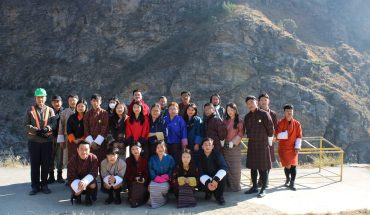
The Agriculture Machinery & Technology Centre (AMTC) under the Department of Agriculture, Ministry of Agriculture and Livestock (MoAL), in partnership with the ESCAP Centre for Sustainable Agricultural Mechanization (CSAM), host the 12th Annual Meeting of the Asian and Pacific Network for Testing of Agricultural Machinery (ANTAM) in Thimphu from December 9 to 11, 2025.
The three-day regional meeting, being held, brings together technical experts and representatives from ANTAM member countries to deliberate on agricultural machinery standards, testing systems, and certification practices. The forum aims to strengthen regional cooperation to ensure the safety, quality, and performance of farm machinery used across Asia and the Pacific.
The meeting also seeks to promote harmonized testing codes that support sustainable and climate-friendly agricultural mechanization. By hosting the ANTAM meeting, Bhutan underscores its commitment to advancing modern, efficient, and safe agricultural technologies, while enhancing knowledge exchange and capacity building within the sector.
Discussions during the meeting focus on improving testing methodologies, aligning national standards with regional frameworks, and addressing emerging challenges in farm mechanization, particularly in the context of climate resilience and sustainable agricultural practices.
According to AMTC officials, the centre currently has a limited but specialized workforce engaged in machinery testing. The testing team comprises five staff members, including two engineers, two junior engineers, and one technician, all with academic backgrounds in agricultural engineering or mechanical engineering.
Despite the technical expertise available, Bhutan does not yet have formally approved national testing protocols for farm machinery, as testing and certification are not mandatory in the country. However, AMTC conducts testing and certification services upon request from clients. In such cases, machinery is assessed using a standard appraisal form that outlines specific terms and conditions applicable to both the client and the testing station.
Safety remains a key component of machinery assessment. Under approved standards, safety is treated as a mandatory test item during machine testing and certification. Tests are conducted under uniform field conditions to ensure consistency and compliance with established requirements. In addition to standard procedures, AMTC has undertaken supplementary stability assessments as part of research initiatives.
These additional studies have resulted in specific safety recommendations, particularly for power tillers and mini tillers operated on sloping terrain. Based on research findings, AMTC advises the use of extension devices when operating such machinery on slopes exceeding nine degrees, in order to improve stability and reduce the risk of overturning.
While machinery testing is not compulsory in Bhutan, AMTC has observed growing awareness among importers and suppliers regarding the importance of safety and quality assurance. Several leading firms now voluntarily seek testing and certification before importing agricultural machinery into the country. As a result, AMTC conducts tests whenever a new machine model is introduced and issues a Certificate of Compliance when the machinery meets the required standards.
Machines are evaluated against a defined set of test items covering safety, efficiency, and quality before certification is granted. However, AMTC officials note that certification does not entirely eliminate the possibility of accidents. Mechanical failures can occur in any machine, and testing is typically conducted on randomly selected units from a batch. This means that, in rare cases, individual units may have defects despite the model meeting overall compliance requirements.
Addressing questions on national testing capacity, the MoAL has acknowledged existing limitations in Bhutan’s agricultural machinery testing system. These constraints include an insufficient number of trained test engineers, limited testing facilities, and the absence of dedicated certified test engineers.
Speaking on the issue, Dy, Executive Agriculture Engineer at AMTC Pema Wangmo said that these gaps directly affect the country’s ability to conduct comprehensive, timely, and specialized machinery testing.
“Our current testing capacity is constrained by a shortage of trained personnel, inadequate facilities, and the lack of certified test engineers dedicated solely to machinery testing,” she said. “These challenges have a direct impact on the scope and efficiency of our testing services.”
She added that addressing these shortcomings has been identified as a priority by the Ministry. Plans are underway to strengthen human resources, upgrade testing infrastructure, and establish a dedicated team of certified test engineers to enhance the credibility and reliability of machinery testing services in the country.
“Strengthening our testing capacity will allow us to deliver more reliable and credible services,” she said, adding that machine safety must continue to be recognized as a fundamental requirement throughout the testing and certification process.
The hosting of the ANTAM meeting is expected to provide Bhutan with valuable opportunities to learn from regional best practices, explore collaborative initiatives, and align its machinery testing systems with international standards. Participants are also expected to exchange experiences on regulatory frameworks, testing innovations, and strategies to promote safer and more efficient agricultural mechanization across diverse farming landscapes.
Bhutan emphasized three priorities for the way forward of deepening regional cooperation to harmonize standards, promoting innovation and digitalization including AI-assisted and precision technologies, and ensuring that mechanization remains sustainable and inclusive, especially for smallholders, youth and women farmers.