TENZIN LHAKI | Thimphu
The Hindu Kush Himalaya serves as a water tower for Asia, and its stability is crucial for the livelihoods of billions. Analysing its financial needs frames climate spending not only as a regional issue but also as a matter of continental and global security.
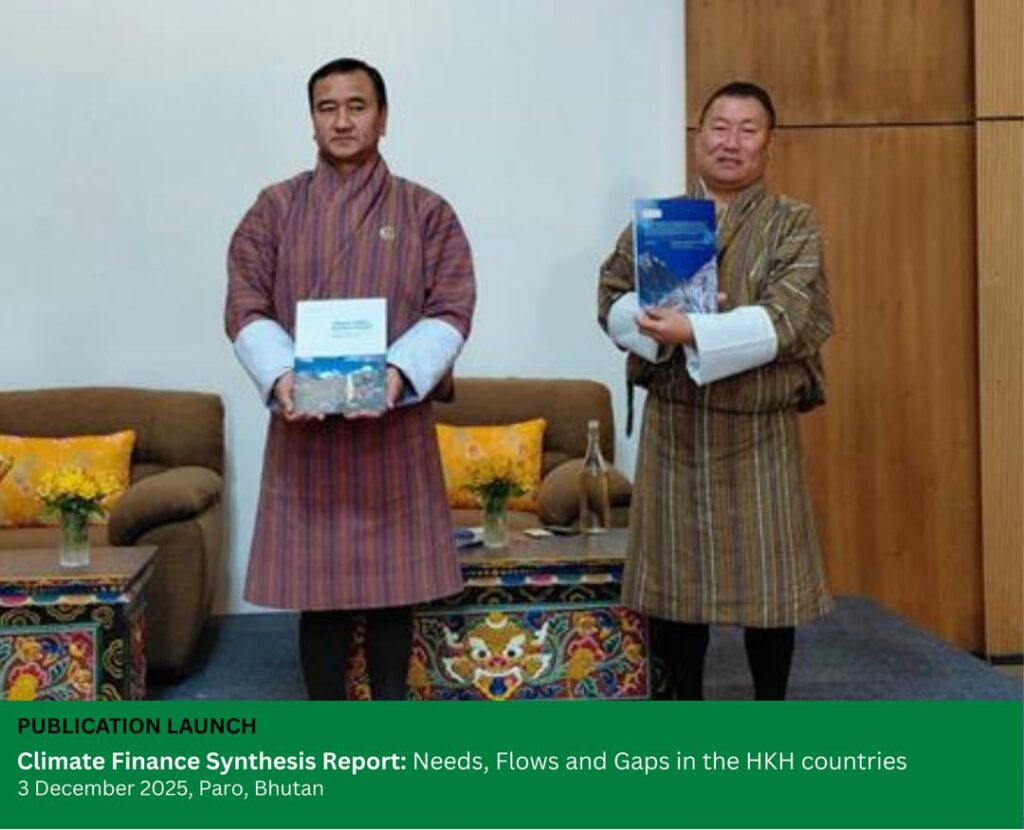
Recognising the need to understand and provide evidence among policy makers, the International Centre for Integrated Mountain Development (ICIMOD) conducted analysis of regional data in its new report, Climate Finance Synthesis Report: Needs, Flows, and Gaps in the Hindu Kush Himalaya Countries, launched in Bhutan. It provides data driven foundation to shift the conversation from general appeals for funding to specific, evidence-based arguments. This empowers HKH countries and advocates to demand more precise and scaled-up financial support from international communities and donors.
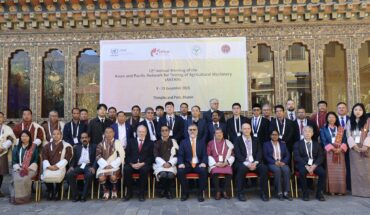
The report was launched during the Workshop on “Enhancing Climate Actions in the Hindu Kush Himalaya: Readiness and Access to Climate Finance” which brought together participation from RMCs, policy makers, climate finance experts, and global funds with a shared purpose of identifying gaps, needs, opportunities, and measures for enabling a reliable access to climate finance in the HKH and attracting tangible climate finance into the region.
Pema Gyamtsho, Director General, ICIMOD, said, “The HKH mountains face the twin challenges of extreme vulnerability and limited resources. Only concrete, transformative strategies and stronger access to global and diverse forms of public and private finance can guarantee to build the resilience needed to secure the region’s future.”
The report concludes that current financial commitments are insufficient to address the climate adaptation and mitigation needs of the HKH region. The gap is significant and growing, with a staggering need of USD 12.05 trillion projected by 2050 to cover both adaptation (until 2050) and mitigation (until 2035). India and China account for 92.4% of this need. The annual requirement for all HKH countries stands at approximately USD 768.68 billion. This situation reflects a tale of two crises: major economies focus on mitigation while vulnerable countries struggle with adaptation.
Karma Tshering, Secretary, Ministry of Energy and Natural Resources, said, “As the global climate finance gap widens and the HKH faces mounting risks with insufficient support, Bhutan despite its carbon-negative leadership continues to shoulder rising adaptation costs. Investing in mountains is no longer optional, it is essential for the stability of region and the planet.”
The report finds that Pakistan, Nepal, Myanmar, India, Bhutan are highly exposed to climate-related adverse effects, are also the least equipped to manage the levels of climate risks. These countries also require significant investment in adaptation and resilience, particularly in the vulnerable mountain regions.
The report flags that climate crisis is fundamentally an economic and equality issue, placing a disproportionate financial burden on poorer nations. This disparity is observed in the data: while the annual per capita climate finance need can be as low as USD 24 (6% of GDP) in some countries, it can soar to over USD 2,126 (as high as 57% of GDP) in others. This creates immense pressure on decision-makers regarding the trade-off between development and survival for the most vulnerable populations.
Ghulam Ali, Innovative investment specialist and lead author of the report stated, “Mobilising the ambitious target of 12 trillion is like climbing the Everest of trillions. The strategy to mobilize these resources has to be both creative yet comprehensive and collective to achieve such significant goal.”
Utilizing data, the report makes a case for scaling up and better targeting climate finance in the Hindu Kush Himalaya. To bridge the massive funding gap, HKH countries and their partners may pursue three parallel tracks of drastically improving access to and disbursement of existing multilateral funds, pioneering innovative financing mechanisms like debt-for-climate swaps and natural capital monetization to unlock new, scalable resources, and expand public spending and instruments in particular for mountains and environmentally sensitive areas.