NGAWANG JAMPHEL | Paro
After spending 27 years battling addiction and living through hardship and rejection, Sonam Tshering found a new purpose in life, helping others rebuild theirs.
Today, as the founder of Jurwa “The Change” After-Care Centre in Paro, he leads one of Bhutan’s few community-based recovery support spaces for individuals struggling with addiction, homelessness, and social isolation.
His personal journey now stands at the heart of Jurwa’s mission.
“There was a time when I was indirectly destroying myself and hurting the people who loved me the most,” Sonam Tshering said. “Today, I am grateful for the opportunity to help others change their lives.”
Established in 2012 near Bhutan Telecom office in Paro, Jurwa has spent more than a decade supporting individuals recovering from drug and alcohol addiction and helping them reintegrate into their families and communities as responsible citizens.
For many who arrive at the centre with uncertainty and fear, Jurwa becomes a place of stability and hope.
Before founding Jurwa, Sonam Tshering worked as an outreach worker with the Chithuen Phenday Association (CPA) for nearly ten years. During that time, he closely witnessed the struggles of individuals affected by addiction and homelessness.
“I saw many young people living without support,” he said. “I could understand their situation because I had lived through the same experience.”
His own recovery journey was shaped by the encouragement of friends and mentors, including individuals from CPA and the Youth Development Fund. He credits them with helping him regain direction and confidence at a time when he needed it most.
However, the road to recovery was not easy.
He recalled an earlier attempt to seek employment with another organisation where he was rejected before even entering the office due to his appearance at the time.
“It was a crushing moment,” he said. “But later, when I went to CPA, the Executive Director simply asked me one question—whether I was committed. That trust changed my life.”
That experience later inspired him to extend the same acceptance to others through Jurwa.
The idea for Jurwa emerged while Sonam Tshering was working at the grassroots level in Paro. He noticed that many individuals, especially youth who had nowhere to go after leaving treatment programmes.
Recognising the absence of structured after-care services, he decided to create a safe space for them.
With support from CPA and contributions from well-wishers, including assistance from the proprietor of Galingkha Resort, Jurwa began its operations.
“One generous donor contributed Nu 100,000, which helped us purchase furniture and essential items for the drop-in centre,” he said.
Although the centre started modestly, it soon became a vital support system for vulnerable individuals in the region.
“This work is not just my passion,” he said. “It is my redemption.”
Jurwa was established at a time when substance abuse was becoming an increasing concern among youth and adults in Paro and surrounding areas. While treatment services existed, structured after-care support remained limited.
The centre was therefore created to bridge this gap and help individuals maintain long-term recovery after initial treatment.
The name “Jurwa,” meaning “The Change,” reflects the belief that transformation is possible regardless of past struggles.
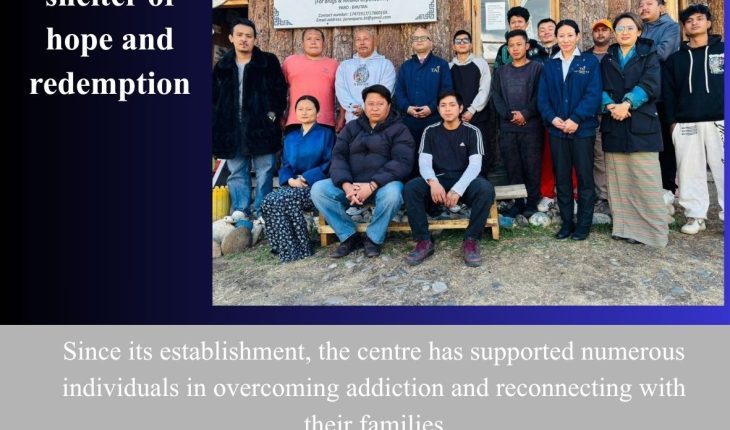
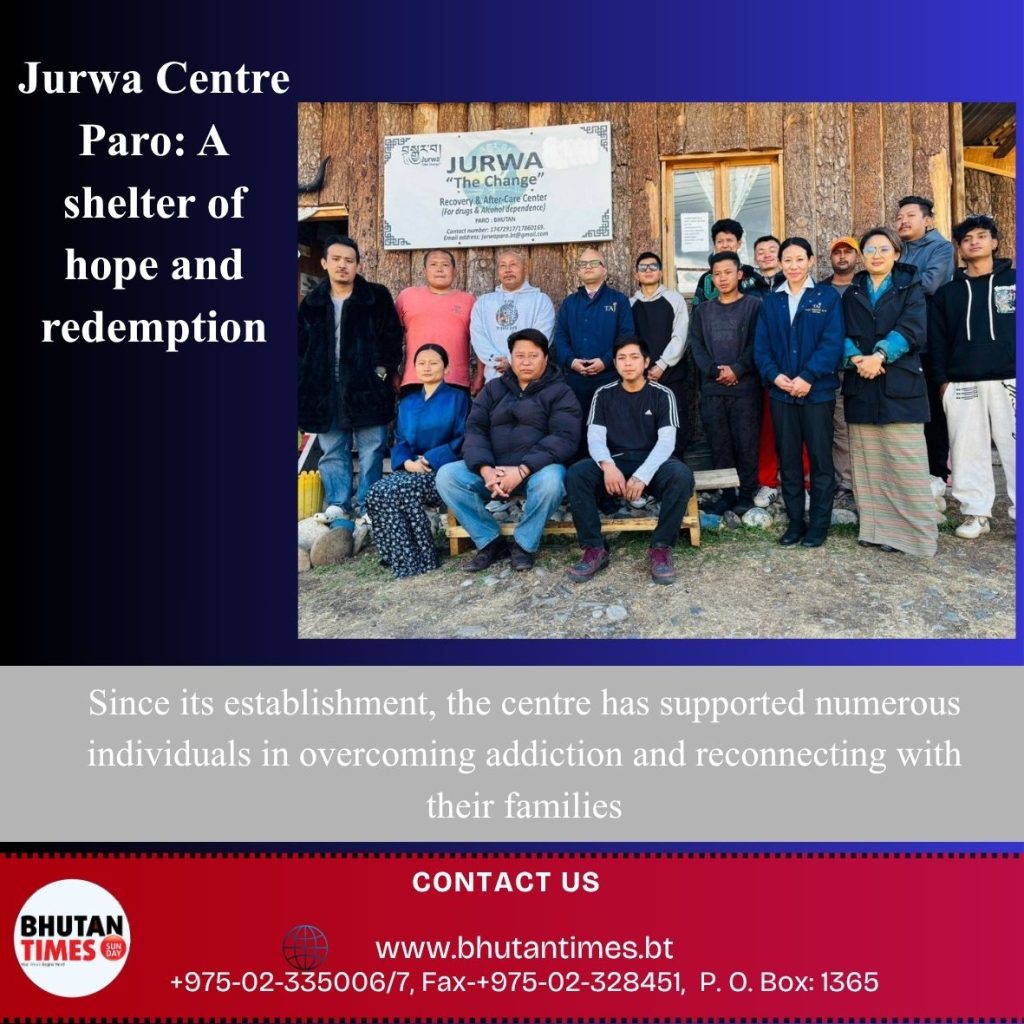
Since its establishment, the centre has supported numerous individuals in overcoming addiction and reconnecting with their families.
According to staff members at Jurwa, recovery does not end with medical treatment. Long-term guidance and emotional support are essential for rebuilding lives.
To address this need, the centre follows a holistic and community-based recovery approach that combines counselling, mentorship, structured routines, and peer support.
Recovered individuals often serve as mentors for new participants, helping them stay motivated and accountable during their recovery journey.
Family involvement is also encouraged, as strong relationships play an important role in preventing relapse and supporting reintegration.
Through these efforts, the centre helps individuals rebuild confidence and rediscover purpose in their lives.
Jurwa uses internationally recognised recovery frameworks such as the 12-Step and 12-Tradition programmes commonly followed by Narcotics Anonymous (NA) and Alcoholics Anonymous (AA).
These programmes encourage personal reflection, responsibility, and spiritual growth.
Participants also receive counselling through both individual and group sessions, many of which are led by people who have themselves experienced addiction and recovery.
In addition, the centre provides life-skills training that focuses on communication, discipline, and confidence-building and the skills that help individuals adapt to daily responsibilities after recovery.
Relapse prevention programmes are another key component of the centre’s work. Participants learn to identify triggers and develop strategies to maintain sobriety over the long term.
Where necessary, Jurwa coordinates referrals to hospitals, counsellors, and institutions for specialised treatment.
Although Jurwa mainly supports individuals recovering from substance abuse, its services extend to others facing social vulnerability.
According to Sonam Tshering, the centre also assists homeless individuals, elderly people without family support, and vulnerable mothers in need of shelter.
“Even if someone is not an addict or alcoholic, if they have nowhere to go and we learn about their situation, we bring them to our centre,” he said. “Everyone deserves a place they can call home—even if it is only half a home.”
This inclusive approach reflects the centre’s commitment to compassion and community responsibility.
Over the years, Jurwa has organised awareness programmes in schools, communities, detention centres, and institutions to educate the public about substance abuse and recovery.
These programmes aim to encourage early intervention and reduce the stigma often associated with addiction.
According to Sonam Tshering, stigma continues to prevent many individuals from seeking help.
“Many people still hesitate to come forward,” he said. “We need greater awareness about the importance of after-care services.”
Through continued outreach, the centre hopes to change public perceptions and promote understanding of addiction as a health and social issue rather than a moral failure.
Despite its achievements, Jurwa continues to face several challenges that limit its ability to expand services.
One of the biggest difficulties is the shortage of financial and material resources. The centre also faces limited availability of trained professionals in addiction recovery and counselling.
Irregular participation by some clients and limited coordination among service providers further affect recovery outcomes.
Nevertheless, the centre continues to operate through volunteer efforts, community support, and strong personal commitment from its founder.
Today, Sonam Tshering regularly shares his experiences with young people in schools and communities to encourage them to avoid substance abuse and seek help when needed.
“If I can change after wasting 27 years on the streets, anyone can change,” he said.
His message continues to resonate with many individuals who feel trapped by addiction or social hardship.
As Jurwa expands its outreach within Paro and beyond, it remains a symbol of transformation and second chances for those willing to begin again.