KINLEY KHANDU CHODEN | Thimphu
Bhutan’s labour market in 2025 remains broadly stable, but persistent disparities across age, gender, and geography continue to pose significant challenges.
The 2025 Labour Force Survey, conducted by the National Statistics Bureau, provides an in-depth view of Bhutan’s workforce, highlighting both strengths and areas requiring urgent policy attention.
The survey collected data from 11,686 households across all 20 dzongkhags, achieving a response rate of 98.3 percent.
With this comprehensive dataset, policymakers and development planners now have access to one of the most robust snapshots of Bhutan’s labour market to date.
At the centre of the findings is Bhutan’s growing working-age population, estimated at 608,121 individuals.
Of these, 394,937 are economically active – either employed or actively seeking work, while the remaining 35.1 percent are classified as economically inactive, including students, homemakers, retirees, and those unable to work due to illness or disability.
The country maintains a high overall employment rate of 96.6 percent, suggesting strong labour absorption. However, much of this employment is concentrated in low-productivity sectors. Agriculture remains dominant, employing 43.6 percent of workers, followed closely by the services sector at 42.2 percent, while industry accounts for just 14.2 percent of total employment.
“Skilled agricultural, forestry, and fishery workers” make up the largest occupational group at 43.2 percent, highlighting the continued reliance on traditional livelihoods. At the same time, educational attainment among the workforce remains low. Around 35.1 percent of employed individuals have no formal education, and only 8.7 percent hold a bachelor’s degree or higher.
This mismatch between educational qualifications and evolving labour market demands suggests a need for more targeted skills development programs.
One of the survey’s most notable findings is the persistent gender gap in labour force participation.
Nationally, the Labour Force Participation Rate (LFPR) stands at 64.9 percent, with 73.5 percent of men participating compared to 55.6 percent of women.
The gap is particularly pronounced in urban areas, where female participation drops to 45.9 percent, while rural areas report higher female engagement, largely due to agricultural work.
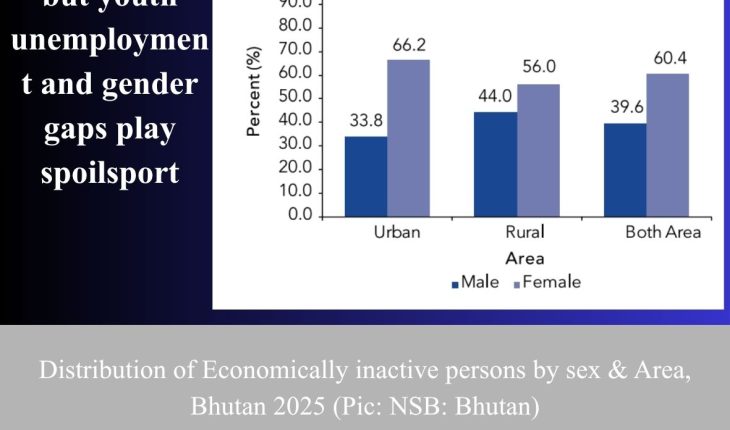
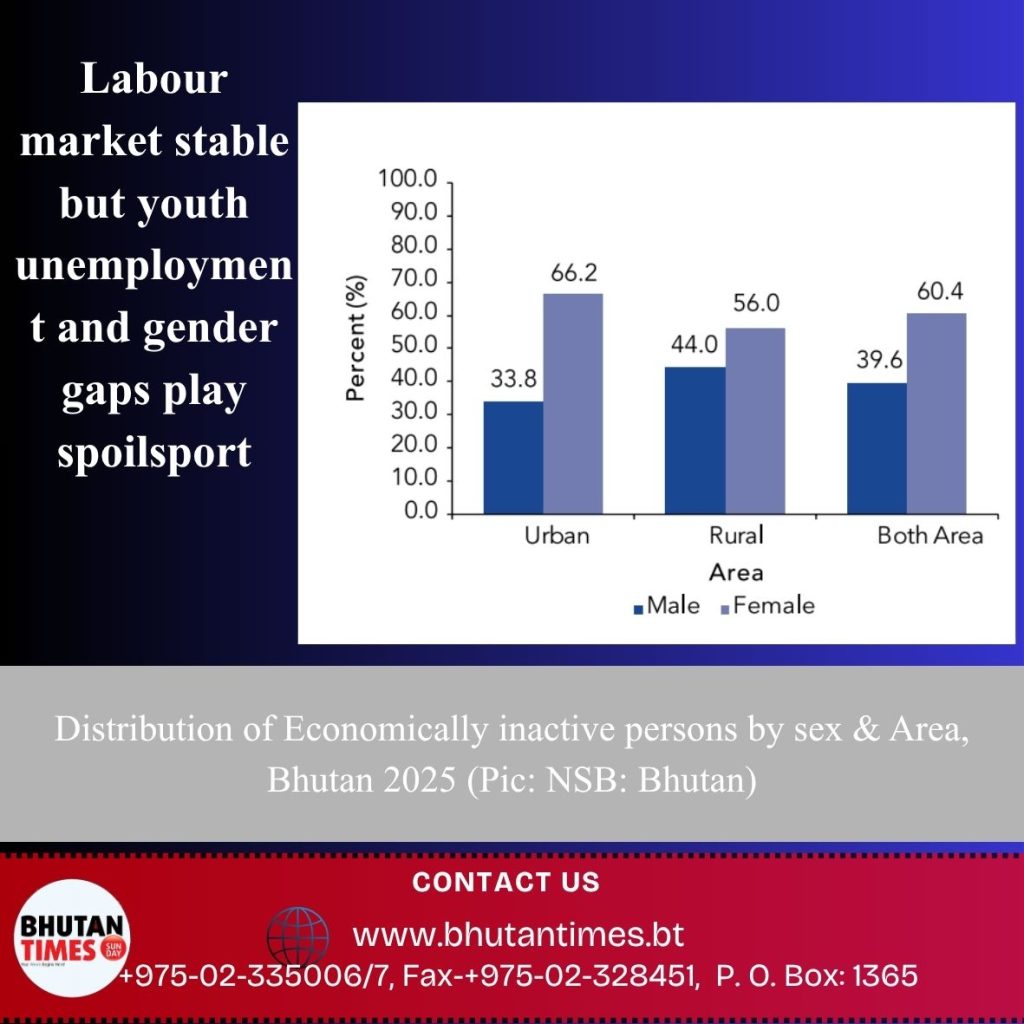
Women also constitute the majority of the economically inactive population, accounting for 60.4 percent.
Many women in this category are full-time homemakers, caregivers, or individuals unable to access formal employment due to structural barriers.
Experts argue that addressing these challenges will require policies supporting flexible work arrangements, access to childcare, and initiatives to expand employment opportunities tailored to women.
While the overall unemployment rate is relatively low at 3.4 percent, youth unemployment remains a significant concern. Among individuals aged 15–24, 18 percent are unemployed, more than five times the national average.
Young women are disproportionately affected, representing over 60 percent of unemployed youth.
Several systemic challenges contribute to these figures. Limited job opportunities for graduates, skills mismatches, and a preference among young people for white-collar or office-based jobs create a bottleneck in the labour market.
Rural youth often face migration pressures, while urban areas, particularly Thimphu, face high competition for jobs in services and the private sector.
The labour market is still heavily shaped by rural economic activity. Approximately 62.4 percent of the working-age population resides in rural dzongkhags, and 65.1 percent of the labour force is based there.
Employment opportunities in these areas are largely concentrated in agriculture and informal economic activities. While these sectors sustain high employment, they often limit income growth and productivity.
Urban areas, on the other hand, offer more diverse opportunities but face higher unemployment and lower participation rates. Labour force participation peaks in rural dzongkhags such as Trongsa, with over 70 percent of residents economically active, compared to 60.3 percent in Thimphu.
The urban-rural divide is reflected in unemployment rates. While urban unemployment averages 6 percent, rural regions report a lower rate of 2 percent. Thimphu records the highest unemployment rate at 6.2 percent, illustrating the pressure on city labour markets, whereas Gasa reports the lowest at 0.6 percent, reflecting strong labour absorption in rural economies.
Participation rates vary significantly across age groups. The LFPR is lowest among 15–19-year-olds, many of whom are still in school, and among those aged 65 and above. Participation peaks among individuals aged 30–49, reflecting Bhutan’s prime working years. These patterns highlight the importance of targeting youth with skills programs and preparing older workers for phased retirement or flexible employment opportunities.
The survey estimates that 213,184 individuals are economically inactive, representing a substantial pool of untapped labour. This group includes students, homemakers, retirees, and individuals unable to work due to illness or disability. The high proportion of women within this population suggests that many could potentially enter the workforce if barriers such as childcare, skills training, and flexible work options were addressed.
The National Statistics Bureau notes that the Labour Force Survey is designed to support evidence-based policymaking. Addressing youth unemployment will require a combination of targeted skills development programs and stronger links between education and industry. Reducing gender disparities will depend on expanding policies that facilitate women’s participation, including childcare access and flexible work arrangements.
Diversifying the economy beyond agriculture is crucial for creating higher-quality jobs, increasing productivity, and providing income growth opportunities. At the same time, strengthening urban employment opportunities while enhancing rural livelihoods will help bridge the rural-urban divide and promote inclusive growth.
Bhutan’s labour market reflects a country in transition, balancing traditional livelihoods with modern economic demands. While high employment provides a strong foundation, the quality, inclusiveness, and adaptability of jobs remain key concerns.
The 2025 Labour Force Survey highlights the stark contrasts across dzongkhags. Thimphu records the highest unemployment rate at 6.2 percent, while rural dzongkhags such as Gasa report the lowest at 0.6 percent, underscoring the urgent need for policies that tap into Bhutan’s full human potential. As the country continues its development journey, creating opportunities that absorb the labour force while empowering young people, women, and urban job seekers will be essential to ensure sustainable and inclusive economic growth.