DAWA ZANGMO | Thimphu
Around 3,000 active job seekers have already registered on the Ministry of Industry, Commerce and Employment’s (MoICE) online employment system, reflecting continued demand for employment support amid persistent youth unemployment.
After a six-year hiatus, the national job fair 2025 resumed on 25 December at a time of heightened urgency, with youth unemployment standing at 17.8 percent and thousands of young Bhutanese attempting to navigate a labour market shaped by rapid economic and technological change.
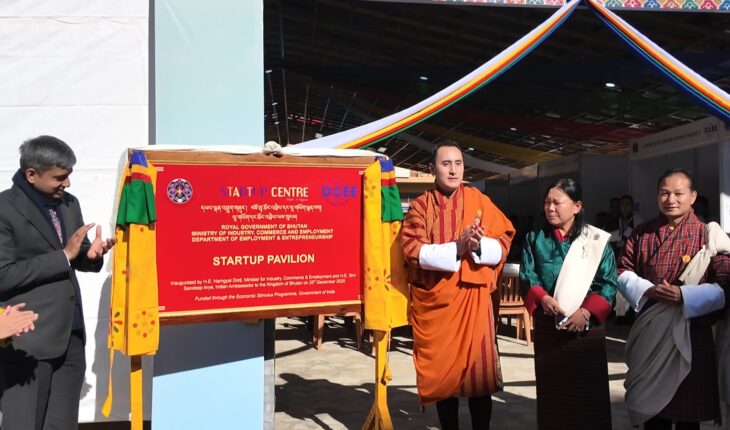
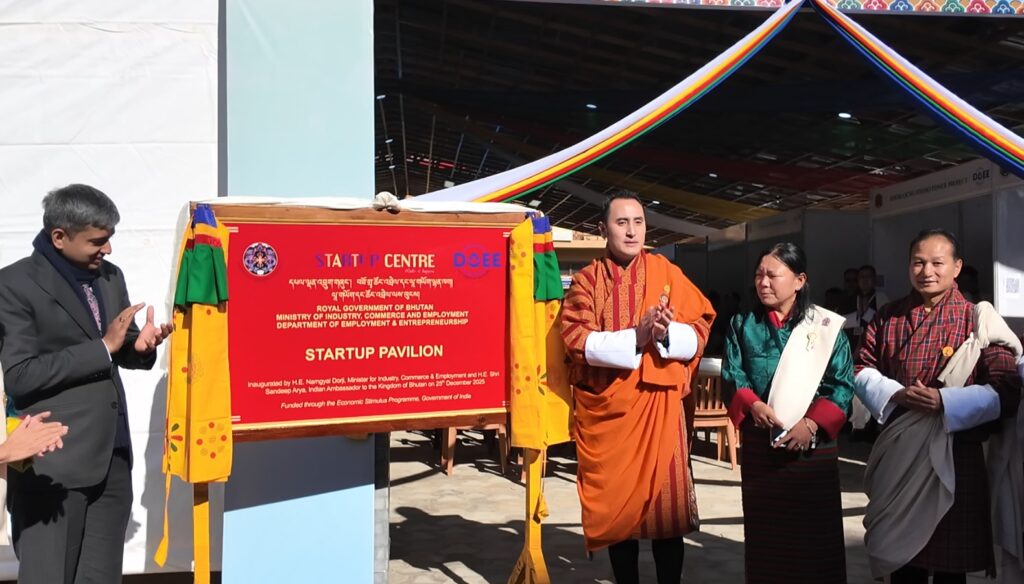
The two-day job fair brings together government agencies, private and corporate sector employers, training institutions and job seekers, with the objective of reconnecting education, skills development and employment opportunities.
Speaking at the event, the MoICE Minister, Namgay Dorji said the revival of the National Job Fair was not merely the resumption of an annual programme but a clear indication of the government’s renewed commitment to addressing unemployment.
“The return of this fair sends a strong message that the government, society and the economy are prepared to confront unemployment directly, through collective and honest engagement,” Lyonpo Namgay Dorji, said.
He said the fair comes at a crucial point for young people who are making important career decisions while grappling with uncertainty about the future of work in a rapidly evolving economy.
Highlighting the contrast between Bhutan’s overall unemployment rate of 3.2 percent and the significantly higher youth unemployment rate, Lyonpo underscored the need for coordinated and sustained action to address the issue.
“Employment challenges cannot be understood as a shortage of jobs alone. The deeper issue lies in the extended transition from education to the labour market, which is further complicated by skills mismatches and rising expectations,” Lyonpo said.
He noted that young people are increasingly raising valid concerns about the relevance of their skills, the clarity of career pathways and the availability of long-term job security. These concerns, he said, require structured and thoughtful responses rather than temporary solutions.
According to Lyonpo, the government’s approach to employment must extend beyond short-term job placements and focus on equipping young people for meaningful and sustainable careers over the long term.
He said the ministry has adopted a “three gems approach” to guide employment reforms. The approach focuses on developing a vibrant start-up and entrepreneurial ecosystem to broaden career options, accelerating productive employment through a whole-of-government and whole-of-economy strategy, and strengthening labour market intelligence to support informed decision making.
As part of this effort, Lyonpo said platforms such as the Bhutan Labour Market Information System are being strengthened to provide accurate and timely data on employment trends and opportunities.
“Our objective is not to artificially inflate employment figures,” Lyonpo said. “We are committed to creating jobs that offer dignity, productivity, learning opportunities and long-term growth.”
The government has set an employment target of 97.2 percent by 2029. This includes reducing the overall unemployment rate to around 2.5 percent and lowering youth unemployment to below 10 percent within the same period.
Lyonpo said unemployment should be recognized not only as an economic challenge but also as a social and psychological concern, particularly when it affects young people at the early stages of their careers.
He added that sustainable job creation is dependent on a strong and resilient economy guided by national frameworks such as the economic roadmap and industrial development strategies.
Entrepreneurship and small and medium enterprises, he said, play a critical role in generating employment and driving economic growth.
Sharing recent outcomes, Lyonpo said the ministry has facilitated more than 8,000 job placements from approximately 12,000 registered job seekers.
Nearly 80 percent of these placements were generated by the private sector. “These results give us confidence that our targets are achievable and not merely aspirational,” Lyonpo added.
As part of the national job fair, the ministry also launched the National Career and Occupational Framework 2025 for the tourism and hospitality sector.
The framework aims to improve skills standards, clarify career progression pathways and enhance remuneration structures, with the goal of making tourism-related jobs more attractive and dignified.
The Secretary of MoICE, Tashi Wangmo, said that since its introduction in 2003, the national job fair has played an important role in helping job seekers better understand labour market realities while enabling employers to connect with job-ready candidates.
She said the 2025 edition of the fair is being held at a critical time, with around 3,000 active job seekers currently registered on the ministry’s online employment platform.
“These numbers are not simply statistics; they represent individuals with aspirations, skills and potential,” she added.
According to the ministry, more than 2,500 job vacancies have already been submitted by over 200 employers. In addition, 44 stalls have been set up at the fair, offering employment opportunities, career guidance services and entrepreneurship mentoring for job seekers.
The national job fair 2025 is expected to serve as a key platform for strengthening linkages between employers and job seekers, while also informing policy direction on employment and skills development in Bhutan.