RENUKA RAI | Thimphu
The Women, Children and Youth Committee (WCYC) of the National Assembly has raised serious concerns over Bhutan’s escalating alcohol-related health and social crisis, warning that weak regulation, cultural normalisation, and inconsistent enforcement are undermining public safety and national well-being. The concerns are detailed in the action taken report on Bar Licensing and Bar Monitoring, submitted to the House during the ongoing National Assembly session on 11 December.
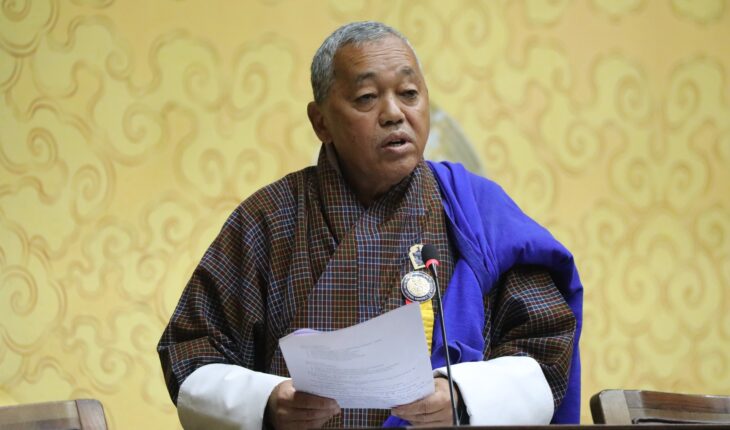
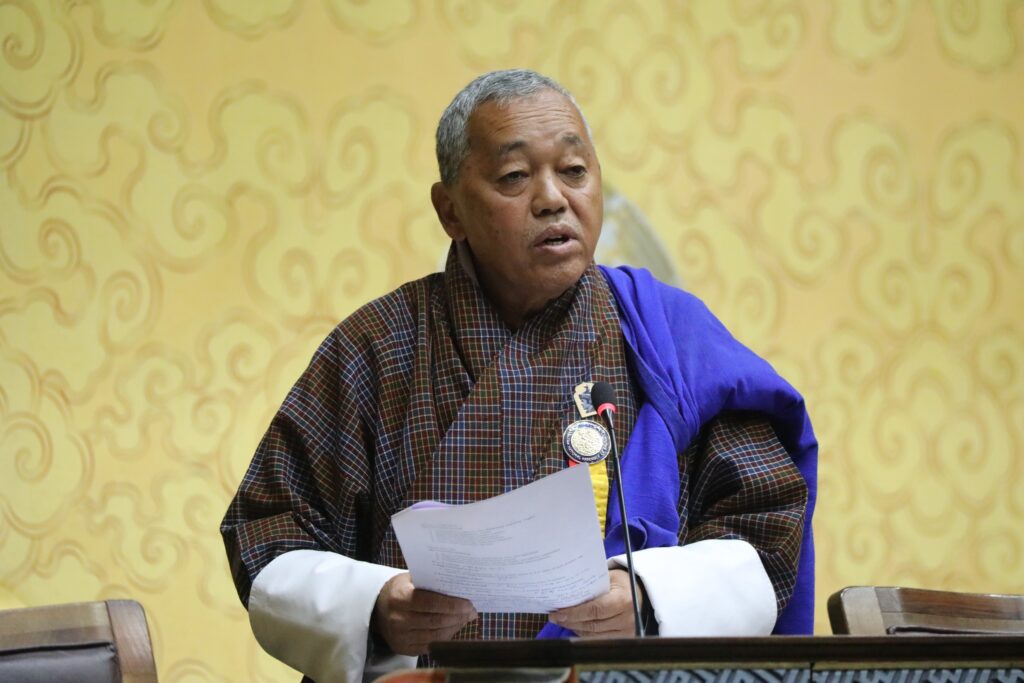
Chairing the committee, MP from Shompangkha, Dr. Tek Bahadur Rai, said the findings point to a problem that can no longer be treated as isolated or manageable through fragmented interventions. “Alcohol misuse is no longer a marginal or constituency-specific issue,” Dr. Tek Bahadur Rai said. “It has become a nationwide challenge affecting public health, social harmony, economic productivity, and even the safety of our roads and homes.”
In the report, the committee outlines the global and national context of alcohol consumption. While alcohol is widely used worldwide as a psychoactive substance for social, recreational, and cultural purposes, excessive and chronic consumption leads to severe short- and long-term health consequences, including liver disease, cardiovascular complications, neurological impairment, addiction, and fatal alcohol poisoning.
In the Bhutanese context, alcohol occupies a deeply rooted place in cultural traditions and community interactions. However, the committee observed that what was once largely confined to ceremonial use has expanded into routine and socially normalised consumption. “Cultural acceptance, combined with easy availability and weak enforcement, has created an environment where harmful drinking patterns have become common,” Dr. Tek Bahadur Rai said. “This has translated into rising health burdens, social problems, and economic losses.”
The committee linked the issue directly to Bhutan’s broader development vision. Referring to the establishment of the Gelephu Mindfulness City, Dr. Tek Bahadur Rai said that national aspirations for disciplined, mindful, and responsible living cannot be realised without addressing alcohol misuse. “If we speak of mindfulness, responsibility, and sustainable development, we must also confront behaviours that undermine these values,” he said.
The review was initiated after alcohol misuse was raised as a constituency-level concern from Shompangkha during the third session of the fourth parliament. Subsequent deliberations revealed that similar concerns were being voiced across constituencies and thromdes. In response, the speaker tasked the WCYC with undertaking a comprehensive review in consultation with relevant agencies and reporting its findings to the house.
As part of its work, the committee consulted the Ministry of Industry, Commerce and Employment (MoICE), the Ministry of Health (MoH), the Ministry of Home Affairs, the Bhutan Chamber of Commerce and Industry (BCCI), Thimphu Thromde, and representatives from entertainment establishments. Parliamentary records, legal frameworks, academic research, social media trends, and constituency-level data were also reviewed to ensure the assessment reflected national realities.
One of the most striking findings in the report is Bhutan’s high level of alcohol consumption. According to the WCYC, per capita adult consumption among those aged 15 to 75 stands at 8.47 litres of pure alcohol, the highest in the World Health Organization’s South-East Asia Region. The committee warned that this level of consumption indicates widespread harmful drinking patterns.
“This figure alone should be a wake-up call,” the Chairperson said. “It tells us that alcohol-related harm is not limited to a small group but affects a large segment of our population.”
The report also highlights the excessive number of licensed bars operating in the country. More than 10,000 bar licenses have been issued nationwide, equivalent to roughly one bar for every 75 residents. The committee noted that such density significantly increases access to alcohol and weakens efforts to promote moderation and responsible drinking.
“When alcohol is available at every corner, regulation becomes ineffective in practice, even if policies exist on paper,” the MP said. “Availability drives consumption, and consumption drives harm.”
Home brewing emerged as another major concern. The committee reported that 30.77 percent of households brew Ara, while nearly 50 percent of domestic grain production is used for brewing alcohol. This, the report noted, has implications not only for public health but also for food security and household economics.
Laboratory analysis cited in the report revealed wide variations in alcohol content in locally brewed beverages such as Ara, Bangchang, Singchang, and Tongpa, ranging from 1.31 percent to 48.04 percent. Methanol contamination was detected in 17.7 percent of samples, with concentrations reaching 1.53 percent. The committee also raised concerns about other hazardous substances, including pressure inflation, bongkrekic acid, and cyanide. “These findings are deeply worrying,” Dr. Tek Bahadur Rai said. “People are consuming products without any assurance of safety or quality, and in some cases, the risks can be fatal.”
Despite these dangers, the committee observed that the trade in Ara continues across the country, particularly in urban areas, and remains popular among low-income groups and individuals with alcohol dependence. The report noted that the continued availability of such products deepens health vulnerabilities and entrenches cycles of addiction and poverty.
The economic burden of alcohol misuse is substantial. The committee estimated that Bhutan incurs losses of approximately Nu. 6.5 billion annually, equivalent to 2.6 percent of GDP, due to alcohol-related healthcare costs, lost productivity, accidents, crime, and social welfare impacts. “This is not just a health issue; it is an economic issue,” Dr. Tek Bahadur Rai said. “Resources that could be invested in education, infrastructure, and social development are instead being absorbed by preventable harm.”
The report also documented a strong link between alcohol use and accidents, crime, and domestic violence. Between 2020 and 2024, Bhutan recorded 4,516 traffic accidents, including 791 alcohol-related cases, resulting in an average of six deaths per year. Data from the Royal Bhutan Police indicate that around 10 percent of vehicular incidents involve drunk driving, while 1,527 cases of domestic violence during the same period were linked to alcohol consumption.
“Behind these numbers are families, children, and communities whose lives have been disrupted,” Dr. Tek Bdr Rai said. “Alcohol-related violence and accidents erode social trust and safety.” Health data reviewed by the committee show a steady rise in alcohol-related illnesses. Cases of alcoholic liver disease increased from 2,393 in 2021 to 2,625 in 2023, while 620 alcohol-related deaths were recorded between 2020 and 2023. Alcohol accounts for 4.8 percent of deaths among adults aged 15 to 75 and is a significant contributor to mental health disorders and increased suicide risk.
The WCYC also identified weak enforcement mechanisms as a critical gap. Bhutan’s legal blood alcohol content limit of 0.08 percent was found to be higher than international best practices, while enforcement by entertainment licensing committees remains inconsistent. The committee cited the World Health Organization’s position that no amount of alcohol is safe for consumption.
“Laws and regulations are only as effective as their implementation,” the MP said. “Without consistent enforcement and clear accountability, even well-intended policies fail to protect the public.”
In its recommendations, the committee urged the MoICE to strengthen enforcement through the Department of Revenue and Customs and Regional Offices of Industry, Commerce and Employment, prohibit subleasing of bar and entertainment licenses, introduce mandatory education for license holders, require compliance inspections prior to license renewal, and reduce the BAC limit to 0.05 percent. The committee also recommended considering a dedicated Alcohol Control Act if existing regulations do not achieve their intended outcomes.
The Ministry of Health was urged to strengthen monitoring of methanol and other contaminants, ensure that the alcohol content of Ara does not exceed 40 percent, and intensify the Healthy Drukyul Initiative with a strong focus on alcohol control legislation, licensing reform, age verification, community participation, and improved healthcare coordination.
Similarly, the Ministry of Home Affairs was called upon to strengthen enforcement through dzongkhag administrations, ensure that Entertainment Licensing Committees fully adhere to their mandates, tighten control over the sale of Ara, and require original identification verification for alcohol purchases and entry into entertainment venues.
The MP emphasised that alcohol remains one of Bhutan’s most serious public health and social challenges. “This is not about blaming individuals,” he said. “It is about creating a system that protects our people, especially women, children, and youth, from avoidable harm.”