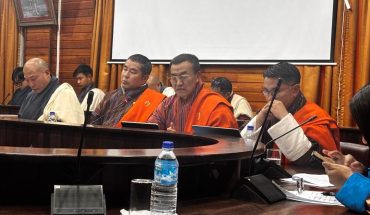

— recommends permission for private sector operation of selected non-essential services
RENUKA RAI | Thimphu
Bhutan’s long-cherished commitment to providing free and equitable healthcare to all citizens is facing mounting pressure from structural weaknesses that can no longer be resolved through incremental adjustments, the National Council has warned.
During its 36th Session, the Council adopted a set of resolutions following an extensive review of the country’s healthcare system, calling for wide-ranging reforms in policy, human resources, governance, procurement, digital health infrastructure, and service delivery.
While reaffirming that access to quality healthcare is an aspiration enshrined in Article 9 of the Constitution and a cornerstone of national wellbeing, the National Council expressed concern that the system is struggling to keep pace with evolving demands.
Persistent shortages of healthcare professionals, high attrition rates particularly among nurses outdated infrastructure, fragmented governance arrangements, and an unsustainable dependence on costly overseas medical referrals were identified as key challenges undermining service delivery.
The National Council noted that Bhutan’s healthcare system, once lauded for its emphasis on equity and accessibility, now finds itself at a critical juncture.
Without decisive and coordinated reforms, it warned, the cumulative strain on institutions and personnel could compromise both the quality and sustainability of care in the years ahead.
At the heart of the National Council’s concern is the continued reliance on the National Health Policy 2011, which it described as increasingly misaligned with contemporary healthcare realities.
According to the National Council, the policy lacks a comprehensive framework for human resource development and fails to adequately address infrastructure requirements necessary for a modern healthcare system.
As a result, health facilities across the country remain insufficiently equipped to meet the complex demographic and epidemiological challenges of the 21st century.
This policy gap, the National Council observed, has contributed to persistent human resource shortages and ageing facilities, limiting effective service delivery and equitable access, particularly in remote areas.
In response, the National Council recommended that the Ministry of Health undertake a thorough review and revision of the National Health Policy to ensure it reflects current needs and future projections.
It also suggested strengthening the policy’s implementation framework and assessing the necessity of enacting a dedicated national healthcare legislation to provide stronger legal and institutional grounding for health sector governance.
Human resource governance emerged as one of the most pressing and complex issues confronting the healthcare system.
Although staffing is broadly guided by the Civil Service Reform Act 2022 and its associated rules, the National Council found that this legislative framework does not adequately address the specific and evolving needs of the health sector.
Decision-making authority is dispersed across multiple human resource committees, resulting in weak coordination and limited integration within the broader healthcare governance structure.
This fragmented arrangement, the National Council noted, has led to delays and inefficiencies in recruitment, retention, transfers, and the equitable distribution of health professionals across the country.
The consequences are increasingly visible. Bhutan currently faces a shortage of 1,576 health professionals, with nurses alone accounting for 730 vacant positions.
Compounding the problem is a steady decline in the number of Health Assistants, which dropped from 650 in 2020 to 574 in 2024.
The National Council warned that without a shift toward strategic, long-term workforce planning, these shortages could deepen, placing additional pressure on already overstretched facilities and personnel.
It therefore urged the Ministry of Health to institutionalise strategic human resource planning that aligns staffing policies with national health goals and service delivery needs.
Procurement practices within the health sector also came under close scrutiny during the National Council’s review.
Currently governed by uniform rules and regulations of the Ministry of Finance, procurement across sectors prioritises standardisation and cost efficiency, often through the lowest-bid criterion.
While this approach may be suitable for general goods and services, the National Council cautioned that it has proven problematic in healthcare, where specialised infrastructure, equipment, and facilities are essential.
According to the report, the emphasis on lowest cost has, in many cases, resulted in the procurement of substandard or unsuitable equipment and infrastructure that fails to meet clinical requirements.
This not only compromises service quality but can also increase long-term costs due to maintenance challenges and reduced operational lifespan.
To address this, the Council recommended that the Ministry of Health, in collaboration with the Ministry of Finance, strengthen healthcare-specific procurement systems and internal quality control mechanisms that prioritise suitability, durability, and patient safety alongside cost considerations.
The promise and limitations of digital health solutions formed another important aspect of the Council’s deliberations.
The introduction of the Electronic Patient Information System in 2023 marked a significant step toward modernising healthcare delivery by improving the recording and sharing of patient information across facilities.
Healthcare professionals now have better access to patient records, supporting continuity of care and clinical decision-making.
However, the report highlighted serious concerns related to patient privacy, data protection, and cybersecurity, noting that digitalisation must be accompanied by robust safeguards.
Even more pressing is the issue of unreliable internet connectivity, which continues to limit the effective use of digital health tools.
Connectivity challenges have been widely reported across hospitals and primary healthcare centres, severely constraining services such as telemedicine, virtual consultations, digital supply chains, and remote patient monitoring.
As per the report, data indicating that only 17 percent of Primary Health Centres in the country currently have uninterrupted internet access, a figure it described as alarmingly low given the growing reliance on digital platforms.
To maximise the effectiveness of digital health investments, the report recommended that the Royal Government strengthen data protection and cybersecurity measures while ensuring reliable and uninterrupted internet connectivity across all healthcare facilities.
Despite these systemic challenges, the report acknowledged that Bhutan’s healthcare workforce remains relatively young, with 39 percent of professionals aged between 31 and 40.
While this demographic profile presents an opportunity to build long-term capacity, the report warned that current trends point to a troubling loss of young talent.
In 2025, an estimated 650 students are enrolled in nursing institutes, yet many are preparing to pursue careers abroad. Similarly, enrolment in postgraduate medical programmes at Khesar Gyalpo University of Medical Sciences of Bhutan has declined over the years.
The report attributed this trend largely to long service obligations imposed on medical graduates, which many view as limiting professional growth and international exposure.
As a result, many MBBS doctors reportedly resign after completing their mandatory service to seek better opportunities overseas.
The report described this pattern as a significant loss of national investment in human capital and a long-term risk to healthcare sustainability.
It recommended revising service obligations for MBBS doctors and other health professionals to make them more flexible and attractive, while balancing national service needs with individual career aspirations.
In addition, it called for stronger retention and incentive measures, including competitive remuneration packages and clearer career advancement pathways, particularly for critical healthcare roles.
The financial and social costs of overseas medical referrals featured prominently in the report ’s review. Over the past four years, the Royal Government has spent an average of Nu 510.16 million annually on medical referrals to Kolkata alone.
Over the last seven years, referrals have averaged around 750 cases per year, largely driven by the lack of specialised expertise and advanced diagnostic and treatment facilities within Bhutan.
Beyond the fiscal burden, the report noted that patients and families face additional hardships, including language barriers, travel costs, prolonged separation from support networks, and emotional stress.
While acknowledging that investments in retaining specialists and establishing advanced facilities would require substantial upfront expenditure, the Council argued that such investments would generate long-term savings and improve patient experience.
It therefore recommended conducting a comprehensive cost-benefit analysis comparing long-term investments in domestic capacity with the recurring costs of overseas referrals.
Based on the findings, the Royal Government was urged to develop an investment plan to strengthen specialist retention, recruitment, and the establishment of advanced diagnostic and treatment facilities within the country.
The report also examined the potential role of the private sector in complementing public healthcare delivery. While most healthcare services in Bhutan are provided free of charge, it noted that certain non-essential services such as dental care, physiotherapy, and selected outpatient services could be effectively managed through private sector participation.
Allowing private providers to operate in these areas, the report said, would reduce the burden on government hospitals while offering patients greater choice, without compromising access to essential healthcare services.
It recommended that the Royal Government permit private sector operation of selected non-essential services to complement, rather than replace, public healthcare provision.
The National Council adopted the review report of the healthcare system on 25 December 2025.