
TIL BDR GHALLEY | Thimphu
Bhutan’s economic landscape witnessed a significant boost in 2025 with the approval of 18 major Foreign Direct Investment (FDI) projects worth a remarkable Nu. 201.91 billion, marking one of the largest inflows of foreign capital in recent years.
The surge highlights growing international confidence in Bhutan as a stable and business-friendly investment destination.
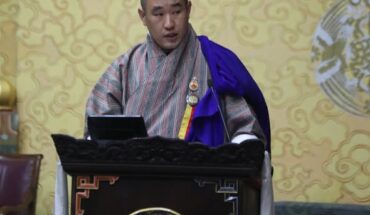
During the launch of the FDI Annual Report 2025 on January 23, Lyonpo Namgay Dorji, Minister for Industry, Commerce and Employment (MoICE), described the investments as transformative for the nation.
“Bhutan’s FDI landscape is experiencing unprecedented growth, spanning hydropower, manufacturing, services, and more. These investments are crucial for our sustainable economic development,” he said, emphasizing the strategic role of foreign capital in shaping Bhutan’s economic future.
According to the report, 14 FDI projects were formally approved in 2025, with a combined investment of Nu. 73.76 billion. Four projects were in manufacturing, while ten belonged to the services sector.
Although the number of approvals declined slightly compared to 2024, the total investment value rose significantly, largely due to Tata Power Company Limited’s Nu. 68.9 billion investments in Khorlochhu Hydropower Limited, which accounted for the majority of the approved capital.
In addition, 18 projects totaling Nu. 201.91 billion received FDI Registration Certificates (FDIRC), including major hydropower ventures such as Dorjilung Hydropower and Wangchhu Hydroelectric Power Limited.
“This momentum tells us something very important. It shows that our investors are taking Bhutan seriously because our values strengthen investments and deliver long-term sustainable projects,” the minister noted.
By the end of 2025, Bhutan had 135 approved FDI projects, up from 121 in 2024. Of these, 64 were operational while 71 remained under construction, with 47 percent of projects having commenced commercial operations.
Asia remained the dominant source of foreign investment, contributing 85 projects or 63 percent of the total. Europe accounted for 28 projects with 20.7 percent, America 15 projects amounting to 11.1 percent, Oceania five projects with 3.7 percent, and Africa and multinational corporations one project each with 0.7 percent.
Within Asia, India led with 47 projects, followed by Singapore with 13, Thailand eight, Vietnam and Bangladesh four each, Nepal and other Asian countries three each, and South Korea and Japan with two and one respectively.
The services sector dominated Bhutan’s FDI portfolio, representing 69 percent of approved projects. Hotels and resorts led with 41 projects, followed closely by IT and IT-enabled services (IT/ITES) with 36.
Other notable sectors included power-intensive manufacturing with 12 projects, dairy and agro-based industries 10, financial services seven, building materials five, and pharmaceuticals four.
In addition, technical and vocational education and training (TVET) comprise three, Hydropower and industrial gases accounted for two projects each.
The strong concentration of FDI in services, particularly in hospitality and digital economy sectors, reflects Bhutan’s strategy of attracting high-value, employment-generating projects with growth potential.
FDI projects employed a total of 6,167 individuals, including 5,213 Bhutanese nationals. Among regular Bhutanese employees, 2,875 were male and 2,338 females, complemented by an additional 284 casual workers.
Hotels and resorts employed the largest share with 1,780 workers, followed by financial services with 1,569 and IT/ITES with 675 employees.
Manufacturing and production sectors accounted for 973 jobs, while agro-based production employed 159.
Overall, the service sector provided 78 percent of regular Bhutanese employment, while manufacturing and production sectors contributed 22 percent.
Expatriates made up 7.6 percent of the workforce, maintaining a ratio of approximately one expatriate to 12 Bhutanese employees, highlighting the government’s emphasis on maximizing local employment while strategically employing foreign expertise.
FDI companies also made a significant contribution to government revenue. In 2024, these companies paid Nu. 2,373.85 million in taxes, up 14.2 percent from Nu. 2,078.47 million in 2023.
The revenue, which includes corporate taxes, customs duties, and other applicable levies, serves as a critical source of funding for development initiatives.
The MoICE minister stressed that tax contributions from FDI projects are more than just figures—they serve as a catalyst for jobs, infrastructure, and sustainable growth.
To facilitate further investment, the Department of Industry launched the FDI Rules and Regulations 2025 and conducted five advocacy workshops involving over 150 stakeholders, targeting potential investors, service providers, existing FDI companies, and government agencies.
A major FDI roadshow in India, held from January 7 to 14, 2025, covered New Delhi, Mumbai, and Bangalore, connecting Bhutanese delegations with potential Indian investors.
The roadshow was led by the MoICE Minister alongside officials from the Economic Development Board, state-owned enterprises, and the private sector.
Looking ahead, the government has planned additional initiatives to further boost investment.
The Invest Bhutan Summit 2026, scheduled for February 12–13, and the EU–Bhutan Global Gateway Business Forum, set for January 26–29 in Brussels, Frankfurt, and Prague, aim to showcase over 20 investment-ready projects.
These initiatives are designed to attract strategic investors, promote cross-border collaborations, and strengthen Bhutan’s global economic ties.
The minister emphasized that Bhutan’s FDI strategy focuses on attracting projects that complement the nation’s vision for sustainable growth while creating opportunities for citizens and entrepreneurs.
“Our strategy is clear: we aim to maintain a transparent, investor-friendly environment that encourages long-term engagement and ensures that investments benefit the local population,” he said.
Despite a global decline of 11 percent in FDI flows in 2024, Bhutan has continued to attract high-value projects, particularly in hydropower and services, demonstrating investor confidence in the country’s stable political environment, transparent regulatory framework, and commitment to sustainable development.
Hydropower remains a cornerstone of Bhutan’s FDI portfolio, while the services sector, especially hospitality and digital services, continues to generate employment, diversify the economy, and enhance Bhutan’s global competitiveness.
“With continued investor support and strategic policies, Bhutan’s economy is poised for a bright, sustainable, and globally competitive future,” Minister said.
He said Bhutan’s FDI landscape is showing unprecedented growth, with projects spanning hydropower, manufacturing, services, and more.
“These investments are vital for our sustainable economic development and for creating meaningful opportunities for our citizens,” he added.