KARMA CHOGYEL YEDZER | Thimphu
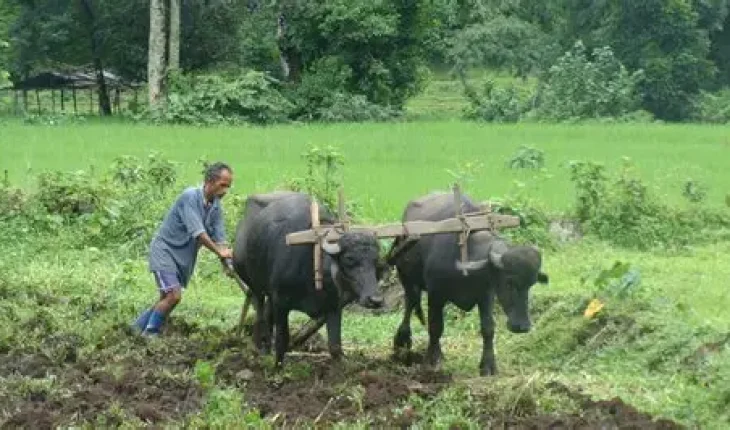
Bhutan is witnessing a steady decline in farming, a development that is raising growing concern over food security, rural livelihoods, and the future of agricultural communities.
For generations, farming formed the backbone of Bhutanese life, shaping the economy, supporting households, and sustaining village communities.
Today, however, agriculture is becoming increasingly difficult and less attractive for many families across the country.
What was once a way of life and a reliable source of survival is now seen by many as an uncertain and demanding occupation.
The decline in farming is not happening because people have lost all interest in the land. Rather, it is the result of a series of practical challenges that have made cultivation more difficult, less profitable, and more discouraging over time.
From labour shortages and water scarcity to crop damage and rising production costs, farmers across Bhutan are facing pressures that are gradually pushing many away from agriculture.
One of the biggest reasons behind the decline is the shortage of labour in rural areas.
In many villages, younger generations are moving to towns and cities in search of education, employment, and better living conditions.
This has left fewer people behind to cultivate fields, manage livestock, and carry out seasonal agricultural work. In the past, farming was often supported by entire families working together.
Today, in many communities, elderly parents are left to manage farms on their own, even as the physical demands of agriculture remain high. As a result, many plots of land are left uncultivated, and increasing areas of farmland are turning fallow.
This labour shortage has become one of the most visible signs of change in rural Bhutan. Empty fields and abandoned terraces are becoming more common in some places, reflecting a larger social shift. As rural populations decline, farming is no longer receiving the same level of family and community support it once did.
For many households, the lack of labour means that even if the land is available, cultivation is no longer manageable.
Sonam Jamtsho, 42 said the lack of labor has made farming considerably more difficult. “Due to a lack of assistance, many farmers are unable to cultivate all of their land. Additionally, hiring labor is expensive, and small farmers may not always be able to afford it. Therefore, it is not always possible to farm land properly, even if it is accessible,” he said.
Human-wildlife conflict is another major factor contributing to the decline in farming. Farmers in many parts of the country continue to struggle with crop destruction caused by wild boars, monkeys, deer, and other animals.
In some areas, families spend countless hours guarding their fields during the growing season, only to watch crops get destroyed before harvest. This repeated loss has become both emotionally exhausting and financially damaging.
37-year-old Dechen Zangmo, says damage to wildlife is a major issue. Crops are grown over months by farmers, yet they can be swiftly destroyed by wild creatures like deer, monkeys, and wild boars.
She added that people become demotivated when such occurs repeatedly and farmers begin to learn that all their hard work is wasted.
For many farmers, the problem is not simply the loss of crops, but the uncertainty that comes with every planting season. Time, labour, and money are invested into cultivation, yet the final outcome often depends on whether crops can survive wildlife attacks.
In such conditions, farming becomes a gamble rather than a dependable source of livelihood. Many rural residents say that when the rewards no longer match the effort, the motivation to continue farming weakens.
Water scarcity and unreliable irrigation systems have added yet another burden. Farming in Bhutan has always depended heavily on natural conditions, but changing weather patterns and uneven rainfall have made cultivation even more uncertain in recent years.
Paddy growers, in particular, rely on stable and timely water supply. When irrigation channels are damaged, insufficient, or poorly maintained, it becomes difficult for farmers to prepare fields and plant on time. Delays in irrigation can affect the entire agricultural cycle, reducing productivity and increasing the risk of crop failure.
Tshering Wangchuk,39, states that many areas have inadequate farm roads, little irrigation, and difficult access to machinery. The weather has also become less predictable at the same time.
“Because we rely so significantly on natural conditions, farming is made even more precarious by the frequent irregularity of rainfall and the drying up of water sources in some locations,” he said.
Tshering added that marketplaces may be far distant or pricing may be too low, making it difficult to sell produce. “Unfavorable weather reduces crop production and causes losses for farmers, making farming less lucrative and appealing.”
In some communities, water shortages have forced farmers to reduce the area under cultivation, while others have stopped farming altogether because the available water is no longer enough to support regular production.
This growing uncertainty has made farming harder to plan and sustain. For households already dealing with labour shortages and wildlife threats, poor irrigation becomes another reason to question whether agriculture remains worth the struggle.
Economic pressures are also pushing people away from farming. The rising cost of labour, seeds, fertilisers, transportation, and other farm inputs has made agriculture less profitable for many households.
At the same time, market prices for produce are not always stable, and farmers often face challenges in transporting goods to markets or finding buyers who offer fair returns. As a result, even after months of hard work, the financial gains from farming may remain limited.
For many rural families, agriculture is no longer viewed as a dependable source of income. Alternative forms of work, whether in urban businesses, construction, trade, or government service, are often seen as more stable and financially rewarding.
In comparison, farming involves long hours, physical hardship, and a high degree of uncertainty. This shift in perception is especially strong among young people, many of whom no longer see farming as an attractive future.
“Many Bhutanese are moving away from farming because agriculture has become increasingly challenging and less profitable.
“Labour shortages, irrigation difficulties, human-wildlife conflict, and uncertain returns have made farming a difficult livelihood, especially for younger generation”, said Tashi Dorji, a farmer from Khotokha, Wangdue Phodrang.
“Beyond these challenges, farmers also struggle with gaps in markets and infrastructure. restricted access to markets, limited financial capacity and weak infrastructure, as major obstacles affecting farmers and the growth of rural agribusiness.,” Tashi Dorji added.
The decline in farming is not only an agricultural issue. It is also a social, cultural, and economic concern. As fewer people remain in villages, traditional knowledge related to land preparation, seed preservation, irrigation, and seasonal cultivation is slowly being lost.
Farming in Bhutan has long been connected not only to livelihoods but also to community life, cultural identity, and local cooperation. When farming declines, these social structures are also affected.
Village life itself is changing. With fewer people engaged in agriculture, local economies weaken, and the sense of shared rural life gradually fades.
In many places, the issue is no longer only about food production, but also about the survival of communities that have historically been built around farming. The loss of agricultural activity can therefore have long-term consequences that go beyond the fields themselves.
Experts and local residents say stronger support is needed if farming is to remain viable in Bhutan. Better irrigation systems, stronger protection against wildlife, greater access to machinery, and improved market opportunities are often identified as essential measures.
Mechanisation, in particular, could help reduce the burden caused by labour shortages, while more reliable market access could improve the financial returns farmers receive for their produce.
Support at the local level is equally important. Farmers often say that practical solutions matter more than broad promises. Reliable water supply, fencing, farm roads, storage facilities, and access to extension services can make a significant difference in whether a household chooses to continue cultivation. Without such support, the pressures facing farmers are likely to intensify.
Although Bhutan has made efforts to modernise agriculture and improve rural livelihoods, the challenges on the ground remain serious.
For many farmers, the issue is no longer simply about growing crops, but about whether farming still offers enough stability, dignity, and return to justify the effort involved. The answer, for many, is becoming increasingly uncertain.
The decline in farming reflects a deeper transformation taking place in Bhutanese society. As the country develops and aspirations change, agriculture is no longer holding the same place it once did.
Yet the consequences of this shift are too important to ignore. Farming remains closely tied to food security, rural employment, and the preservation of Bhutan’s traditional way of life.
If the current trend continues, Bhutan risks losing not only productive farmland and agricultural labour, but also an important part of its social and cultural identity.
The challenge ahead is not simply to encourage people to farm again, but to make farming viable, practical, and rewarding enough for people to stay. Unless that happens, the decline in farming may continue, bringing with it lasting consequences for the country’s rural future.