DAWA ZANGMO | Thimphu
The proposal to increase the Rural Life Insurance Scheme (RLIS) was a key commitment made by both the People’s Democratic Party (PDP) and the Bhutan Tendrel Party (BTP) during their campaigns for the National Assembly (NA) elections. Since the formation of the Fourth Parliament, the issue has been consistently raised by Members of Parliament across all parliamentary sessions, underscoring its significance as a social protection measure for rural communities.
Despite this consensus in principle, differing views have emerged over the procedural approach to implementing the increase. The government recently stated that any enhancement of the RLIS would require amendments to the Financial Services Act. However, opposition lawmakers have challenged this position, arguing that the increase can be executed through an executive order, without the need for legislative changes.
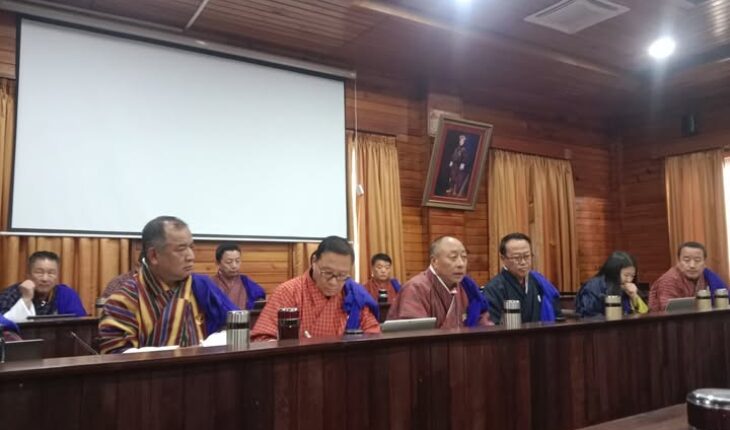
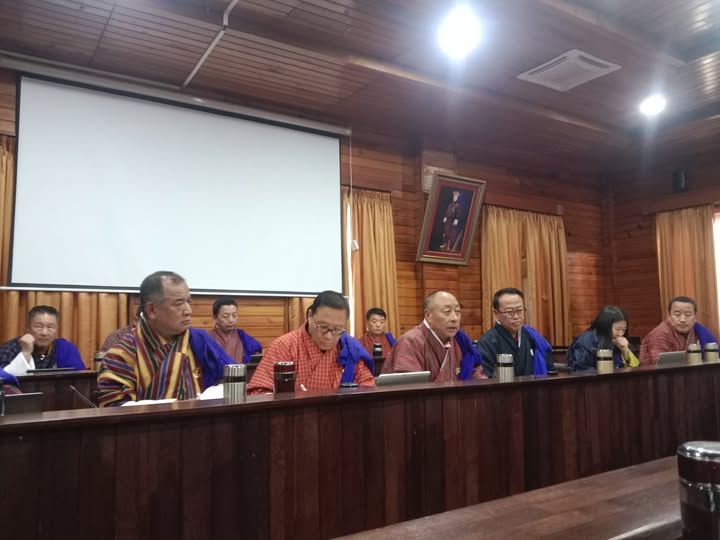
During a recent interaction with the media, MPs from the Bhutan Tendrel Party reiterated that amending the Financial Services Act is not a prerequisite for increasing the insurance coverage. MPs pointed to a precedent set during the government’s earlier tenure, when the RLIS coverage was raised from Nu 15,000 to Nu 30,000 through an executive order. According to the MPs, this demonstrated that the government has the authority to enhance the scheme using existing mechanisms.
The opposition further stated that the government could once again adopt the same approach to roll out the enhanced scheme. They noted that the Royal Insurance Corporation of Bhutan Limited (RICBL), which is the sole provider of rural life insurance in the country, already administers the RLIS. As such, they maintained that the government could implement the increase through RICBL, as it has done in the past. “This has been done before, and the option remains available,” the MPs said.
However, opposition members expressed concern over what they described as repeated delays in the government’s decision-making process. They said that despite raising the issue multiple times, progress on implementation has been slow, prompting questions about the government’s level of commitment.
MPs added that while the government has accused the opposition of causing delays, BTP members have been advocating for the increase since the beginning of the Fourth Parliament.
Opposition lawmakers said they have consistently followed up on the matter since Parliament convened.
During the first parliamentary session, when the issue was raised, the government responded that Bhutan’s economy was still in a fragile recovery phase. It cited challenges such as rising public debt and fiscal deficits, noting that these constraints limited the government’s capacity to immediately expand social welfare programmes.
In the second parliamentary session, the government allocated Nu 263 million in the 2025–26 fiscal year budget for a comprehensive review of the RLIS. This allocation was seen as an acknowledgment of the scheme’s importance. Nevertheless, the government also clarified that amendments to the Financial Services (Amendment) Bill of Bhutan 2025 would be required before the enhanced scheme could be implemented.
Despite this, the Financial Services (Amendment) Bill 2025 was not tabled during the third parliamentary session. As a result, there was no substantive update on the status of the RLIS during that session, leaving the issue unresolved.
During discussions in the fourth session of Parliament, concerns were raised suggesting that opposition parties were not supportive of the scheme, particularly in relation to the Financial Services (Amendment) Bill.
Opposition members rejected this assertion, stating that continued pressure from their side was what brought the issue to its current stage. They emphasized that their advocacy was driven by the importance of the scheme rather than political considerations.
National Assembly MP Rinchen Wangdi, Bartsham-Shongphu,Tashigang said that opposition members have consistently raised concerns and urged the government to act promptly. He described the RLIS as an essential programme for public welfare.
However, he also pointed out that there is currently a lack of detailed studies on key aspects of the scheme, including beneficiary coverage, premium structures, and implementation modalities. He called on the government to conduct a thorough review and proceed with implementation at the earliest possible time.
Another NA MP, Namgay Dorji, Khamdang-Ramjar, Trashiyangtse also stressed the need to increase the RLIS coverage. He noted that inflation has significantly increased the cost of goods and services across the country.
According to him, the current RLIS payout of Nu 30,000 is no longer sufficient to cover funeral expenses and associated rituals, which have become increasingly costly. He said these expenses often place a heavy financial burden on families during periods of grief.
Given the social importance of the scheme, both major political parties had pledged to increase the RLIS amount during their election campaigns. Opposition MPs reiterated that they have raised the matter consistently in Parliament, from the first session through to the fourth. “We have continued to follow up by raising questions in every session,” an MP said.
In addition to parliamentary discussions, the opposition has also submitted formal proposals to the government. These proposals request that the enhanced Rural Life Insurance Scheme be implemented starting from the first month of 2026.