National Council Clears BIMSTEC Mutual Legal Assistance Convention
TIL BDR GHALLEY | Thimphu
Bhutan has completed the ratification process for the Bay of Bengal Initiative for Multi-Sectoral Technical and Economic Cooperation (BIMSTEC) Convention on Mutual Legal Assistance in Criminal Matters following endorsement by the National Council on December 10.
The Convention provides a regional legal framework to facilitate cooperation among BIMSTEC member states in criminal investigations, prosecutions, and related judicial proceedings.
The convention was signed on March 30, 2022, at the Fifth BIMSTEC Summit in Colombo, Sri Lanka. It was subsequently ratified by the National Assembly during the third session of the Fourth Parliament before being transmitted to the National Council for review in accordance with parliamentary procedures.
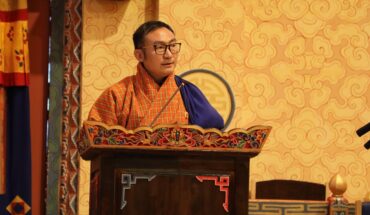
A detailed examination of the convention was conducted by the National Council’s Natural Resources and Environment Committee (NREC), which reviewed all 25 articles of the agreement. The Committee’s findings were presented to the House by NREC Deputy Chairperson and Member of Parliament for Dagana, Birendra Chimoria.
Introducing the convention, Birendra Chimoria said the agreement is intended to strengthen cooperation among BIMSTEC countries in addressing cross-border and transnational crime. He said the framework aims to improve collaboration in the prevention, investigation, and prosecution of criminal offences.
According to the convention, its objective is to “enhance the effectiveness of the Parties in the investigation, prosecution and suppression of crime through mutual legal assistance in criminal matters.” The scope of assistance includes criminal investigations, prosecutions, and judicial processes.
The convention outlines a wide range of assistance measures that member states may extend to one another. These include taking evidence or statements, serving judicial documents, executing searches and seizures, examining objects and locations, providing official records and information, tracing proceeds of crime, and freezing, seizing, or confiscating assets linked to criminal offences.
Its application is limited to offences punishable under the laws of both the requesting and requested states. The convention also specifies that assistance is not mandatory in cases involving offences of a political or military nature.
Under the Convention, each BIMSTEC member state is required to designate a Central Authority responsible for managing requests for mutual legal assistance. Requests must be submitted in writing and must specify the nature of the investigation, applicable legal provisions, and the assistance sought.
In Bhutan’s case, Birendra Chimoria informed the House that the Department of Law and Order under the Ministry of Home Affairs has been designated as the Central Authority. He said the Department was selected because it oversees numerous national laws and regulations and because the Royal Bhutan Police operate under the same ministry.
The convention allows a requested state to refuse assistance if compliance would affect its sovereignty, security, public order, or other essential national interests, or if the offence is political in nature. Any refusal must be communicated to the requesting state with reasons provided.
The convention includes provisions on confidentiality, allowing a requested state to require that information or evidence provided be used only for the purpose specified in the request. Any other use would require prior consent.
It further states that the convention is subject to national laws and does not apply to arrest or detention for extradition purposes. Implementation is required to respect national security and sovereignty.
Ordinary costs incurred in executing requests are to be borne by the requested state unless otherwise agreed. Disputes relating to interpretation or implementation are to be resolved through consultation and negotiation.
Several Members of Parliament raised questions regarding the Convention’s compatibility with existing laws and its operational implications.
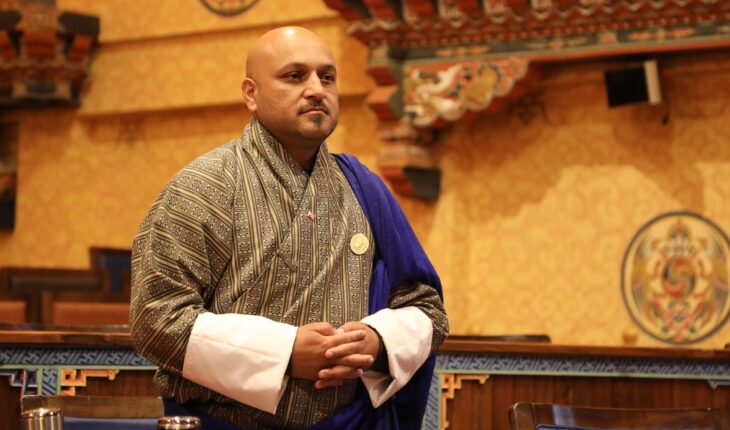
Member of Parliament for Paro, Ugyen Tshering, noted that Bhutan already has the Extradition Act of 1999 and an extradition agreement with India, and questioned how the Convention would align with these existing legal frameworks.
He also raised concerns regarding Article 4(III), which states that a request should not be refused on the grounds of bank secrecy, despite other articles subjecting assistance to national laws. He said that bank secrecy should be respected.
Responding to the concerns, MP for Lhuentse Kelzang Lhundup, a member of the Committee, said that relevant agencies had reviewed the Convention and that no risks were identified.
MP for Punakha Namgay Dorji sought clarification on whether the Convention could be applied in cases involving Bhutanese citizens who were defrauded abroad. The Committee responded that the Convention would provide a mechanism to address such cases once adopted.
MP for Trashiyangtse Sonam Tenzin pointed out that the Convention does not specify a timeframe for extraditing individuals involved in criminal activity and said that provisions allowing refusal or postponement could affect the delivery of justice.
MP for Samdrupjongkhar Tshewang Rinchen expressed concern that the Convention could place strain on bilateral relations if Bhutan is unable to meet its obligations.
He also highlighted potential budgetary and human resource implications associated with establishing a central authority.
Tshewang Rinchen further sought clarification on Article 11, which does not specify who bears the cost when assistance is requested during criminal investigations.
In response, Birendra Chimoria said cost-related issues would not pose a difficulty, as the Convention allows parties to accept or decline requests in accordance with Article 3.
The Convention applies to the seven BIMSTEC member states—Bhutan, Bangladesh, India, Myanmar, Nepal, Sri Lanka, and Thailand—and is intended to strengthen regional cooperation in criminal justice through structured legal assistance mechanisms.