DAWA ZANGMO | Thimphu
RENEW (Respect, Educate, Nurture, and Empower Women) has marked a major achievement in its ongoing effort to enhance community-based governance, following the successful conclusion of nominations, assessments, and Dzongkhag-level elections for its Community-Based Support System (CBSS) Coordinators across the country.
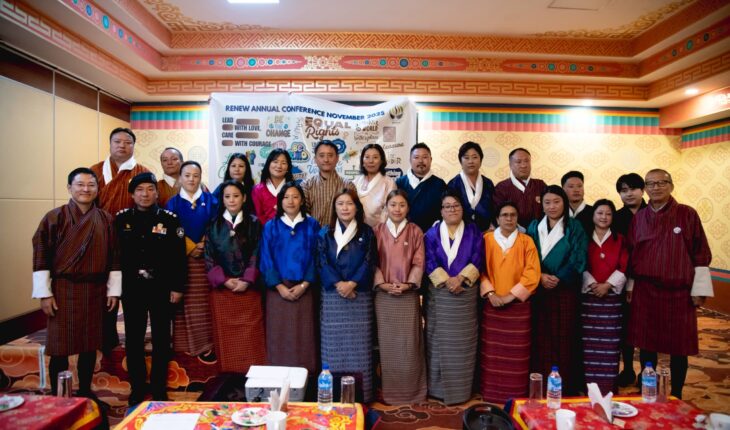
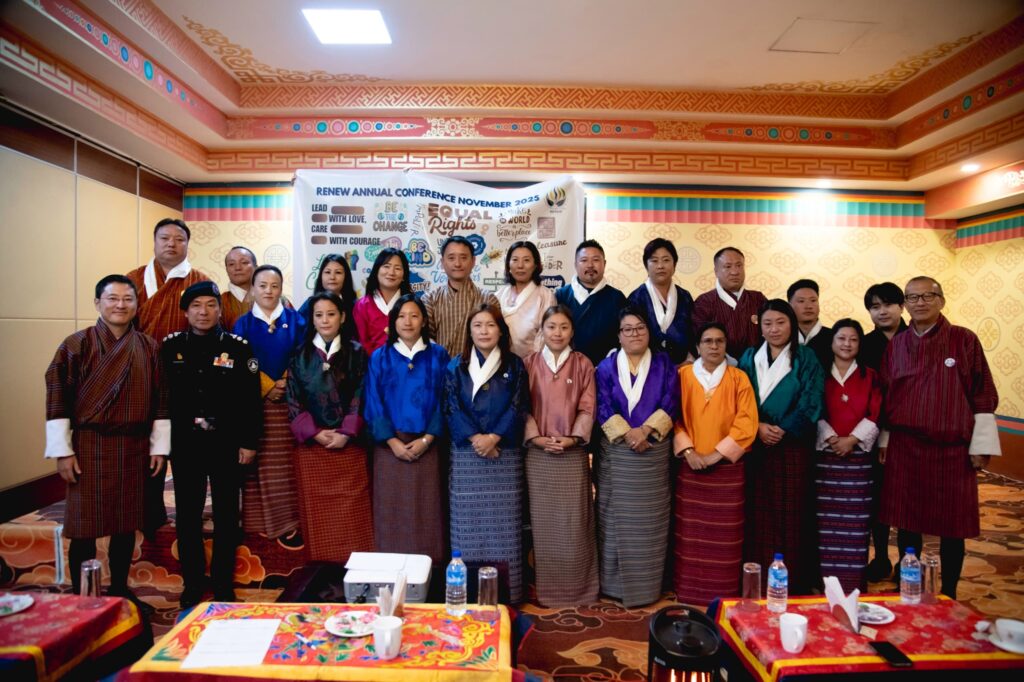
The process culminated during RENEW’s two-day annual conference in Thimphu from November 24–25, where the newly elected coordinators were formally endorsed.
The conference also saw the selection of new working board members from among the Dzongkhag coordinators.
For RENEW, these elections signify more than a structural requirement; they represent the organization’s sustained commitment to ensuring that community voices particularly those of youth remain central in shaping decisions.
By advancing local leadership, the organization aims to strengthen a system of governance that is inclusive, participatory, and accountable, thereby reinforcing the trust that communities have placed in its initiatives.
Dechen Choki, senior legal officer with RENEW, stated that the organization was “heartened by the commitment and strong involvement demonstrated by volunteers nationwide.”
She noted that “each Dzongkhag achieving full quorum clearly reflects the confidence and assurance that communities continue to place in the work we are entrusted with.”
According to her, such levels of participation highlight how trust is cultivated through continuous engagement, openness, and responsibility toward community needs.
RENEW has consistently underscored that strong governance frameworks are essential for furthering sexual and reproductive health and rights across Bhutan.
The organization maintains that governance structures that are accessible and inclusive form the basis for strengthening both community trust and program delivery.
“Effective governance enables communities to select leaders who reflect values rooted in dedication, empathy, and motivation,” Dechen Choki, added.
A key feature of RENEW’s governance approach is the intentional involvement of young people. Youth participants contribute actively to discussions on programs that impact adolescents and the broader community, helping to ensure that initiatives remain relevant and adaptable to social changes.
Their engagement not only improves program development but also supports the cultivation of future leaders, laying the groundwork for a long-term, community driven governance model.
Officials further highlighted that inclusive decision-making provides the clarity and structure required for RENEW to remain focused on its mission while adapting to emerging challenges.
Transparent governance, they noted, reinforces confidence among coordinators, partners, and donors, strengthening the organization’s long-term credibility.
RENEW’s leadership framework is guided by a straightforward vision bringing together diverse leaders to design programs grounded in compassion, ethics, and community realities.
As the organization moves toward its 2025 Annual Conference, preparations are underway for a leadership transition.
With the current Working Board’s term (2022–2025) coming to an end, four new Working Board Members will be elected from among the 20 Dzongkhag Coordinators.
Voting rights will be extended to all coordinators, along with ten youth representatives and ten members of the “Friends of RENEW” group, comprising eminent supporters.
In line with its Articles of Association, RENEW upholds fixed three-year terms for Working Board Members, with a maximum of two consecutive terms to ensure accountability and prevent prolonged leadership.
Since its establishment in 2004 under the patronage of Her Majesty the Queen of Bhutan, RENEW has become one of the country’s most trusted civil society organizations.
As an Associate Member of the International Planned Parenthood Federation (IPPF) since 2009, the organization has remained focused on supporting women, young people, and vulnerable groups facing social and economic challenges.
RENEW attributes much of its impact to its extensive network of volunteers, counsellors, and community coordinators, whose dedication continues to strengthen the organization’s connection with communities nationwide.
As preparations advance for new elections and leadership development programs, RENEW reaffirms its longstanding commitment to promoting an equitable, responsive, and compassionate society. The organization emphasizes that communities should not only receive services but be active contributors to change.
By prioritizing inclusion and trust, RENEW demonstrates that equitable governance is not merely conceptual it is a practical approach that empowers individuals, reinforces community resilience, and fosters sustainable social progress.
In a time of evolving social, cultural, and developmental dynamics in Bhutan, RENEW’s model of grassroots governance founded on accountability, transparency, and inclusiveness continues to play a pivotal role in building community confidence.
Guided by these principles, the organization aims to ensure that progress is experienced by those who need it most and that community voices remain at the forefront of decision-making processes across the country.