NGAWANG JAMPHEL | Samdrup Jongkher
The State Mining Corporation Limited (SMCL) continues to play a significant role in Bhutan’s economic development, community livelihoods, and environmental stewardship as it operates coal mines in Samdrup Choling Drungkhag.
Over the years, SMCL has emerged as a key contributor to national revenue while supplying coal to domestic industries and supporting local communities through jobs, contracts, and social programs.
In the calendar year 2024, SMCL earned a total revenue of Nu. 5,881.65 million. The corporation paid Nu. 1,093.01 million in corporate income tax and an additional Nu. 387.70 million in royalties, mineral rents, and surface rents.
SMCL also paid Nu. 325 million in mining license fees and distributed Nu. 2,209 million as dividends. In total, the company’s contribution to the national coffers in 2024 amounted to Nu. 4,014.71 million. Since inception until November 2025, SMCL’s total contributions reached Nu. 17.095 billion.
“This demonstrates how state-run mining operations can drive economic growth while ensuring revenues support the nation’s development priorities,” said a spokesperson for SMCL.
SMCL has committed to equitable benefit sharing and community development through Corporate Social Responsibility (CSR) initiatives.
In 2024 alone, the company engaged 1,547 individuals from local communities, disbursing a total of Nu. 1,133.69 million.
Nearly 44 percent of SMCL’s total expenditure went directly into the local economy through employment, contracts, and service procurement.
Key CSR initiatives included hiring 46 excavators, three rock breakers, and ten-wheel loaders through local contractors; employing 196 tippers for coal and mineral transport; and engaging 470 individual tippers for mineral logistics, including coal transport from Habrang to domestic consumers.
Local construction works, labour contracts, and daily wage employment also benefited over 700 residents in the surrounding gewogs.
Additional contributions of Nu. 2.43 million were made to support cultural and religious events, as well as schools and educational institutions.
“Through these initiatives, SMCL ensures that mining operations benefit both national development and local communities,” the company said.
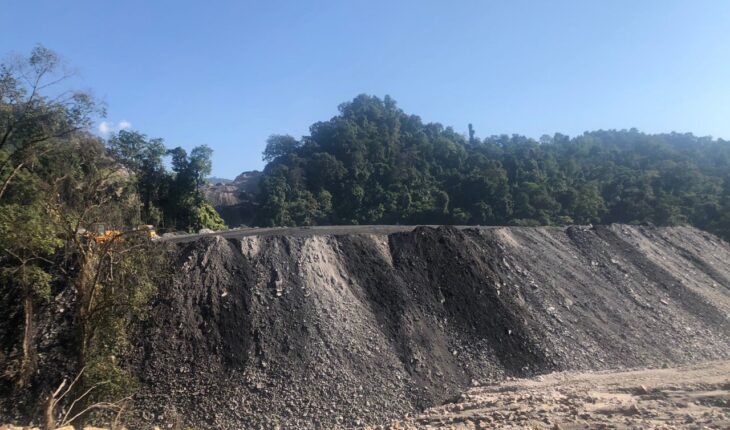
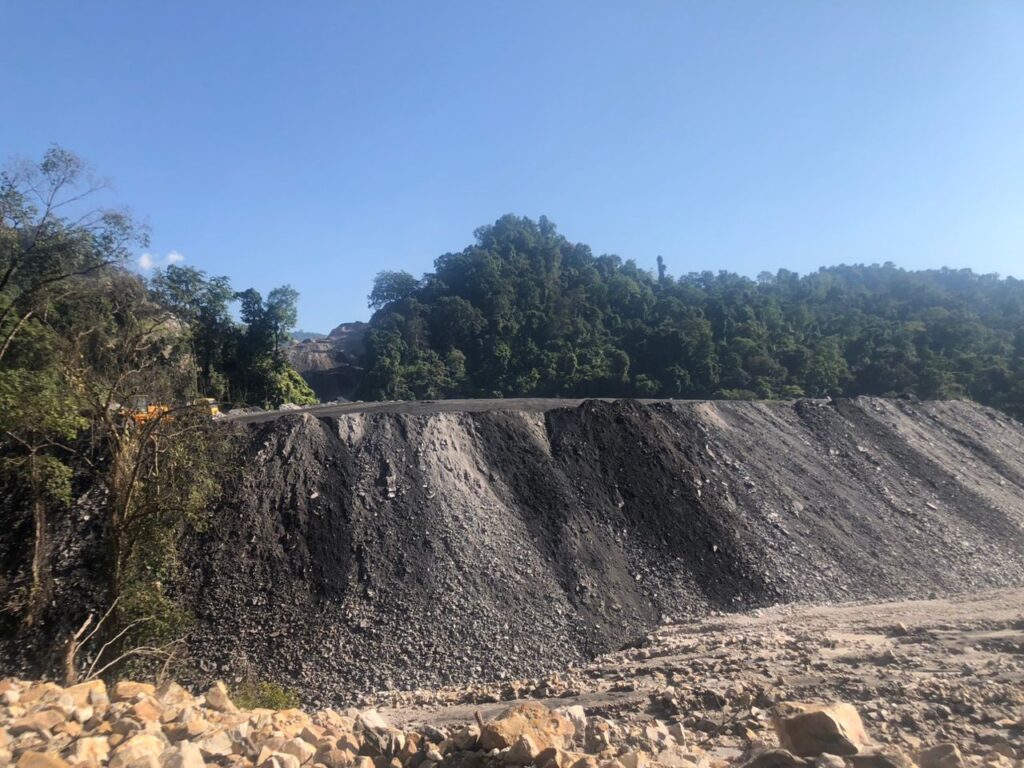
Coal production from Samdrup Choling’s three mines—Habrang Coal Mine (HCM), Tshophangma Coal Mine (TCM), and Majuwa Coal Mine (MCM)—has steadily increased over the years.
From 2016 to November 2025, total production reached 852,205 metric tons, with TCM being the largest contributor.
Under the MoU between the Ministry of Energy and Natural Resources and Druk Holding and Investments (DHI), SMCL is mandated to supply coal to domestic industries at prices set by the National Price Fixing Committee.
From 2016 to 2024, the company supplied a total of 631,632 metric tons to Bhutanese consumers, ensuring that local cement factories and other industries have reliable access to domestic coal.
“Providing coal to domestic industries reduces dependence on imports while supporting industrial growth and energy security,” SMCL noted.
SMCL operates under stringent environmental and mining regulations, having secured all necessary clearances and implemented approved mine and restoration plans.
The corporation is committed to structured mine rehabilitation, working with Green Bhutan Corporation Limited (GBCL) to progressively restore disturbed areas.
While surface mining generates carbon emissions from machinery and vehicles, SMCL offsets these impacts through post-mining land rehabilitation, biodiversity conservation, and socio-economic benefits.
For example, compensatory plantations have been undertaken on barren state reserve forest lands, including a 13.82-hectare area in Sukuni Gewog under Samdrupcholing Dungkhag, outsourced to GBCL in February 2025 at a cost of Nu. 2.673 million.
“Through systematic mine rehabilitation and revegetation, SMCL remains committed to contributing to Bhutan’s carbon-negative commitments,” the company said.
All mine-out areas are restored in accordance with approved plans to enhance carbon sequestration, support ecological resilience, and improve visual and environmental quality.
Employment remains a core pillar of SMCL’s community support. In 2024, the company engaged 49 coal raisers across multiple mines, 46 operators, 666 drivers, and 74 daily wage workers from local communities.
These initiatives not only provide livelihoods but also strengthen skills and promote local entrepreneurship.
SMCL’s approach reflects a broader strategy of balancing national economic priorities with environmental and social responsibilities. By combining coal production, revenue generation, CSR activities, and ecological restoration, the corporation aims to maintain a sustainable mining model that benefits Bhutan’s economy, its communities, and its carbon-negative vision.
With coal remaining critical for domestic industries, SMCL continues to ensure that operations are aligned with national development goals while minimising environmental and social impacts. “We aim to set an example in responsible mining,” SMCL said.
“By restoring mine areas, supporting communities, and contributing to national revenue, we are building a model of sustainable mining in Bhutan.”
Through ongoing collaboration with regulators, local communities, and environmental agencies, SMCL is demonstrating that extractive industries can operate in harmony with Bhutan’s unique development philosophy—prioritising Gross National Happiness, environmental conservation, and equitable economic growth.