
Finance and Procurement Hit Hardest
TIL BDR GHALLEY | Thimphu
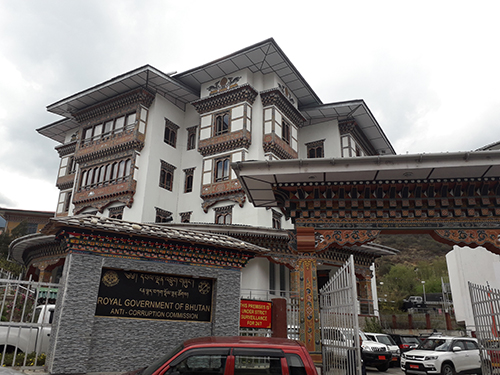
Corruption reports saw an upward trend during the 2024–2025 financial year, with the finance, procurement, and public property sectors emerging as the most affected, according to the Anti-Corruption Commission (ACC) Annual Report.
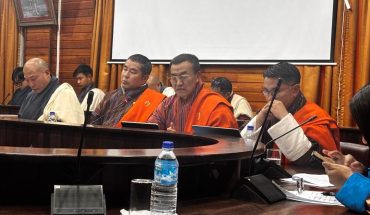
The findings were presented to the National Council’s Good Governance Committee by the Chairperson of the committee and National Council member from Bumthang Kencho Tshering on 28 November at the ongoing National Council session.
Chairperson Kencho Tshering stated that the ACC received a total of 364 corruption reports during the reporting period, averaging over 30 reports per month. “This marks an increase from 322 reports in the previous year,” he noted.
Out of these, over 200 reports came from identified sources, while 160 were submitted anonymously. The ACC website emerged as the most frequently used reporting channel, with over 160 submissions, followed by approximately 100 walk-in reports.
Of the 364 reports received, 196 were closed with no further action. The remaining 168 were categorized for different courses of action: 39 reports qualified for investigation, 29 were forwarded for administrative action, nine for administrative inquiry, 73 for awareness and sensitization, and 18 for information enrichment.
Finance-related complaints accounted for nearly 60 reports, making it the most reported sector. Procurement and contracts followed with over 30 reports, while public property accounted for close to 25. Other areas, including sports and election-related matters, saw minimal or no complaints.
By agency, ministries topped the list with over 45 reports, followed by gewog administrations with around 30 cases. The private sector accounted for more than 20 reports.
Categorized by offence, abuse of function represented the highest number of reports at 86, followed by embezzlement with 32 cases and bribery with 18.
Geographically, Thimphu recorded the highest number of incidents followed by Paro, Samtse, and Chukha, while Gasa and Pemagatshel reported none.
During the reporting year, the ACC managed close to 60 investigation cases, including nearly 40 newly opened cases and over 20 carried forward from the previous year. Approximately 40 cases were concluded, and around 25 were forwarded for prosecution.
The total restitution sought through ACC actions and subsequent court orders amounted to over Nu 57 million accounting to0.493 acres of land.
A total of 485 individuals were implicated during the reporting year, excluding repeated appearances in the same case. Private employees accounted for the majority, representing close to 350 individuals, followed by civil servants with around 40. Offences were concentrated in the private sector, involving approximately 365 individuals, highlighting the widespread nature of corruption across both public and private domains.
The committee emphasized persistent capacity gaps in law enforcement agencies, particularly in sectors identified as high-risk. “Many law enforcement agencies, especially in sectors prone to corruption, are poorly resourced and vulnerable due to structural and economic pressures,” Kencho Tshering said.
Kencho Tshering expressed concern that corruption was increasingly becoming normalized, particularly during elections.
“Penalties imposed by relevant authorities are perceived as insufficient deterrents, which contributes to a culture where corrupt practices are more easily tolerated,” he said.
To address these challenges, the committee recommended strengthening preventive systems in high-risk sectors, including procurement, construction, licensing, contract management, and public finance. Enhancing coordination among law enforcement agencies, increasing public awareness campaigns, and ensuring protection for media and whistleblowers reporting corruption were highlighted as key measures.
MP Kencho Tshering emphasized a shift from reactive investigations to proactive approaches, including risk mapping, behavioral insights, and vulnerability scanning.
“A culture of zero tolerance must be strengthened across all sectors,” he said.
The committee also recommended expanding ethics and integrity education across schools, universities, and local governments to ensure that anti-corruption values are instilled from an early age.
While Bhutan has made notable progress in global corruption rankings, the growing complexity of corruption requires a coordinated response across institutions and society.
“Preventive systems, robust inter-agency collaboration, and an informed citizenry are crucial to maintaining transparency and accountability. The fight against corruption cannot rely solely on detection and prosecution; it requires an integrated approach across all sectors,” MP Kencho Tshering emphasized.
National Council member from Paro, Ugyen Tshering, pointed out that certain cases have remained pending with the Office of the Attorney General since 2019. “If these delays are caused by staffing shortages and budget limitations, issues that have been raised in every parliamentary session, it is crucial to provide adequate support,” he said.
Similarly, MP for Dagana, Birendra Chimoria, drew attention to high turnover at the ACC and recommended offering staff allowances comparable to other government agencies to facilitate faster case processing.
The session revolves with a reaffirmation that while Bhutan has made progress in curbing corruption, the rising number of reports highlights the need for enhanced preventive mechanisms, greater public participation, and inter-agency collaboration.
The deliberations on the ACC Annual Report 2024–2025 are scheduled to continue on Monday.