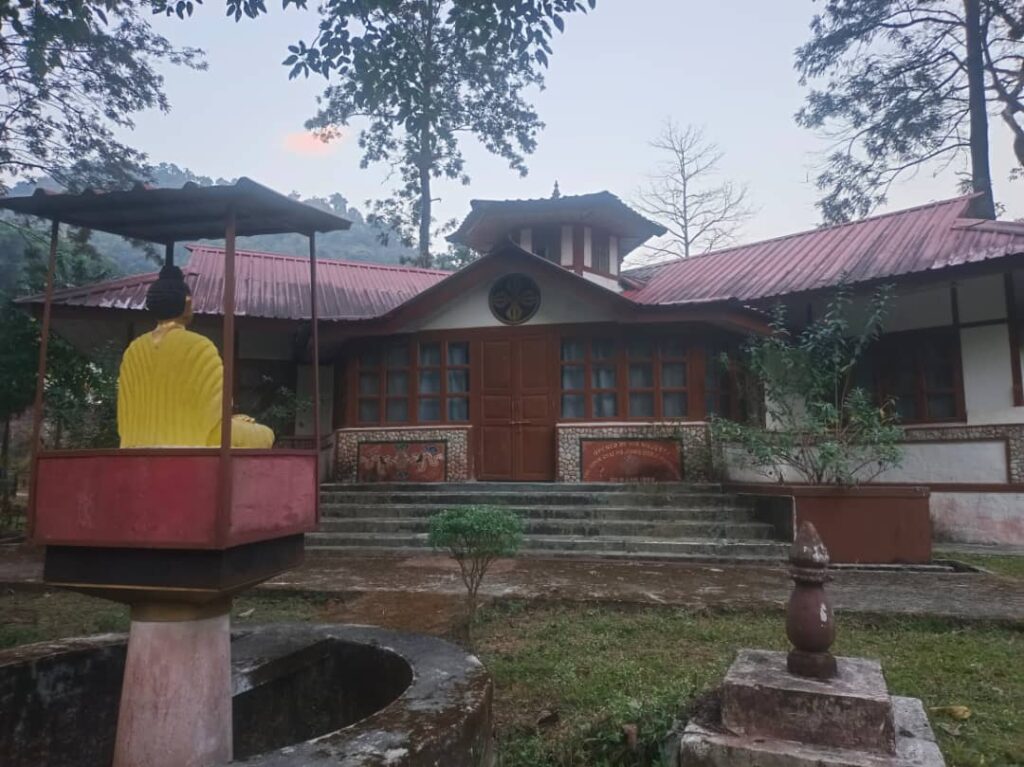
Nestled at the confluence of two rivers originating from the Black Mountain and Tamala Range, the Swiss-styled mini-palace of Gelephu Tsachu whispers tales of bygone glory.
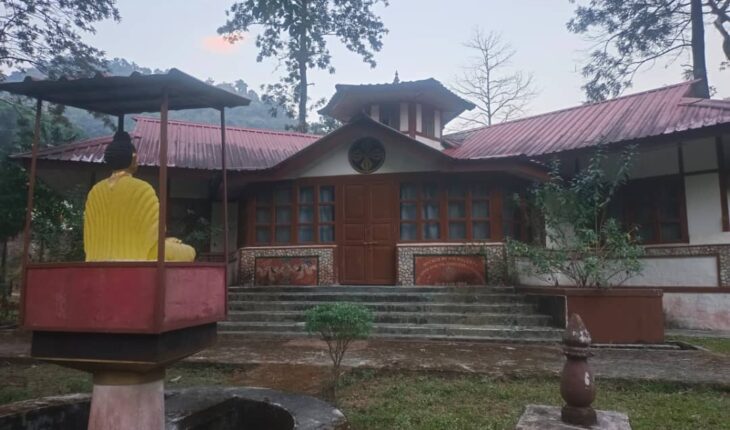
The two rivers meet near the palace and then flow down the large plain of Gelephu as Mao chhu. The small palace has a touch of Swiss-style architecture, such as sloped roofs and wooden decorations. The palace was opened by the Third Druk Gyalpo of Bhutan on 16th January 1968. This simple yet charming retreat has witnessed the footsteps of royalty and respected spiritual leaders.
In its prime, the palace served as a sanctuary for the royal family during their visits to the sacred Tsachu, a place of peace and healing. Later, it became a special home for great Lamas like H.H Dilgo Khyentse Rinpoche, who stayed there for three peaceful weeks in 1987. During his stay, his main task was to find the reincarnation of his Tsawai Lama, Adzom Gyalse Gyurme Dorji. He based this search on a letter written by Adzom Gyalse Gyurme Dorje, which described his rebirth.
Rigdzin Pema Tulku received this letter and presented it to H.H Dilgo Khyentse Rinpoche for confirmation. H.H Dilgo Khyentse Rinpoche verified the details, and a team was sent on a sacred journey to Bumthang to find and bring back the reincarnation of his Tsawai Lama, Adzom Gyalse Gyurme. Interestingly, the younger brother of Adzom Gyalsey was also recognized as a reincarnation of the great Lama Chung Rinpoche, adding a divine twist to the story of reincarnation and destiny.
The walls of the palace echo with the footsteps of many spiritual leaders, including H.H the 68th Je-Khenpo Tenzin Dondruep and H.H the 69th Je-Khenpo Geshay Gendun Rinpoche. They found comfort and inspiration within their humble rooms. The 68th Je- Khenpo was at Gelephu Tsachu in mid-December 1988, and later visited Gelephu, where he was the chief guest at the National Day celebration in Thubten Choekhorthang. The 69th Je-Khenpo loved music and enjoyed simple songs. While relaxing in the warm waters of Tsachu, he listened carefully as Jangchuk, the daughter of the caretaker, sang a Rigsar song. Though her voice wasn’t perfect, it was filled with pure joy, and the great being cherished her humble singing.
Standing quietly in this sacred space is an open-air Buddha statue in deep meditation, facing toward the palace. Its calm face seems to bless everyone around with peace.
Later, H.H the 70th Je-Khenpo also graced the palace with his presence during his tenure as Lam Neten of Sarpang Rabdey, seeking peace amidst the sacred waters. Many other great Lamas and Trulkus also took shelter in the palace during their visits to Tsachu, which is known only through the verbal records of elderly people who once worked or lived there.
Yet, over time, the grandeur and aroma of this once-glorious palace have waned. Its walls now stand silent, whispering memories of the past, as the sacred Tsachu gradually loses its serenity to crowds and chaos due to improved road access.
Dr. Choeda Gyaltshen
CRRH, Gelephu.